Night Soil and other euphemisms…

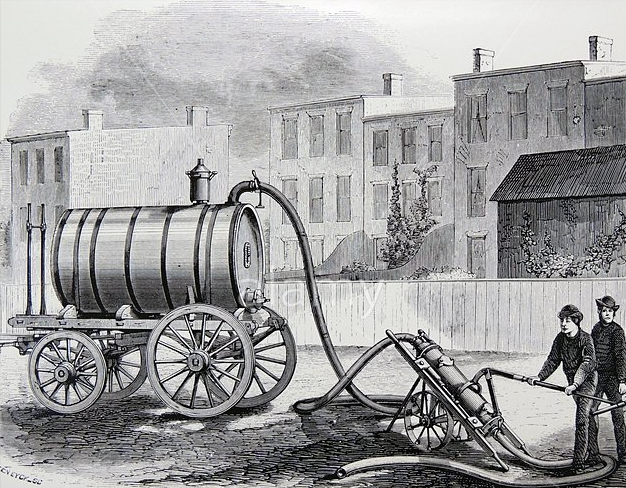
Vacuum pump for removing night soil from cesspools. From ''The Practical Magazine'', London, 1874

Vacuum pump for removing night soil from cesspools. From ‘The Practical Magazine’, London, 1874

We generally  think of the Victorians as very proper and respectable,  when even the  the legs of the piano were covered up,  and no risqué or unpleasant subjects were ever raised in polite society. So  it was a bit of a shock to discover that Shirley Hibberd the great Victorian garden writer wrote passionately about, of all things, sewage.  Indeed worse than that – he was vociferous in complaining about the waste of  human sewage.
19862_132469724288

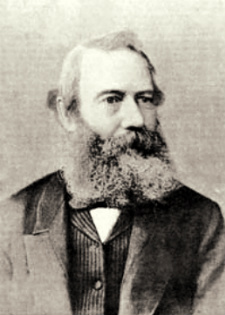
Shirley Hibberd, carte -de-visite, Lindley Library, Royal Horticultural Society

He argued in his book Profitable Gardening (1884), that it should be used as garden fertiliser,  as it was in many parts of the world.   So why wasn’t it?  What were the alternatives being used?  There was certainly no luxury of prepackaged multipurpose potting compost, and the fertilisers that existed were not clean granules in a neatly sealed plastic bag or colourful cardboard box with a handy measuring device, but usually had to be obtained as raw ingredients and mixed as needed. More on that in the next post but today, as the perfect reading for a steaming hot summer’s day,  read on to discover, [and I hope this doesn’t make you too squeamish] a history of the use of sewage in our gardens!   Continue reading

Posted in Uncategorized | Tagged , , , , | 2 Comments

Harry Wheatcroft : the red rose grower

Harry Wheatcroft, cover photo from his book In Praise of Roses, 19xx

Harry Wheatcroft, cover photo from his book In Praise of Roses, 1970

My father was very fond of roses and so I well remember the  flamboyant whiskery figure of Harry Wheatcroft from my childhood. He was everywhere in the press, radio and television, selling and promoting roses, especially new colourful hybrid tea cultivars, and we, like almost everyone else, had lots of them in our garden.

Wheatcroft looked as if he was a retired, eccentric, rather blimpish, sergeant-major, but as I discovered researching this post he was anything but that.  A brilliant salesman, with a ready wit and a definite ‘presence’ he was also a lifelong socialist and pacifist, strong internationalist and a man with a huge heart.

Read on to find out more about Harry Wheatcroft, the politically red rose grower.

Continue reading

Posted in Uncategorized | Tagged , | 1 Comment

Standen: a down to earth house and garden

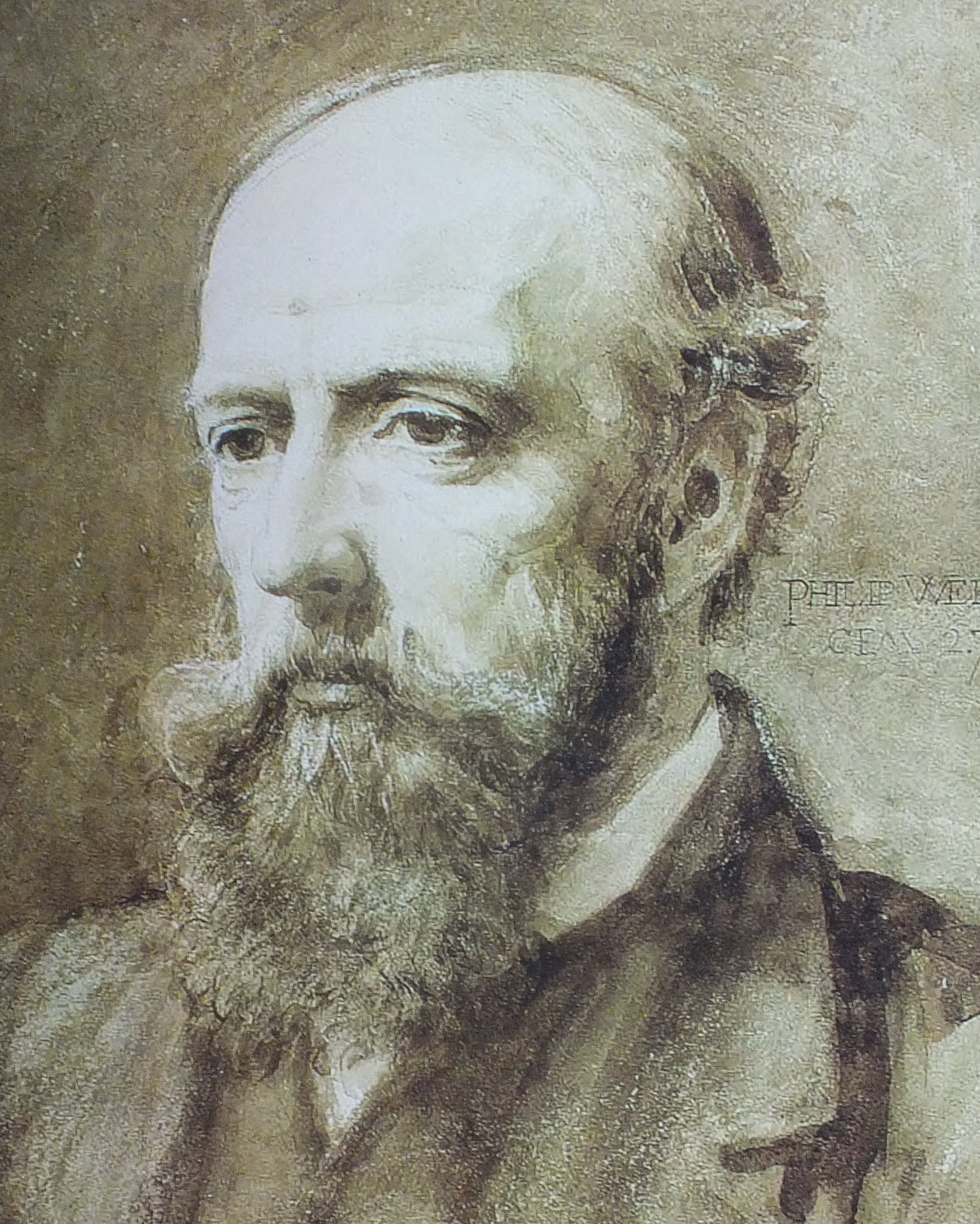
Philip Webb, by Charles Fairfax Murray, 1873 National Portrait Gallery

Philip Webb, by Charles Fairfax Murray, 1873
National Portrait Gallery

2015 marks one hundred years since the death of Philip Webb (1831-1915), the architect of Standen and one of the leading architects of his age. Sometimes the match between architect and client is made in heaven, and sometimes in hell.  Webb, the arts and crafts genius, knew  both kinds…   but at Standen in Sussex  both parties were lucky and the result is a homely down-to-earth masterpiece of both house and garden.

The Garden Front, Standen, by Arthur Melville, 1896 National Trust

The Garden Front, Standen, by Arthur Melville, 1896
National Trust

The relationship must have been good because when the house was finished his clients James and Margaret Beale presented Webb with a silver snuff box, engraved with the motto:  ‘When clients talk irritating nonsense, I take a pinch of snuff’”


Read on to find out more about Webb and the house, Margaret Beale and her garden,   and the National Trust’s project to revive the gardens at Standen….

Continue reading

Posted in Uncategorized | Tagged , , | Leave a comment

United by flowers ….but then divided by love!

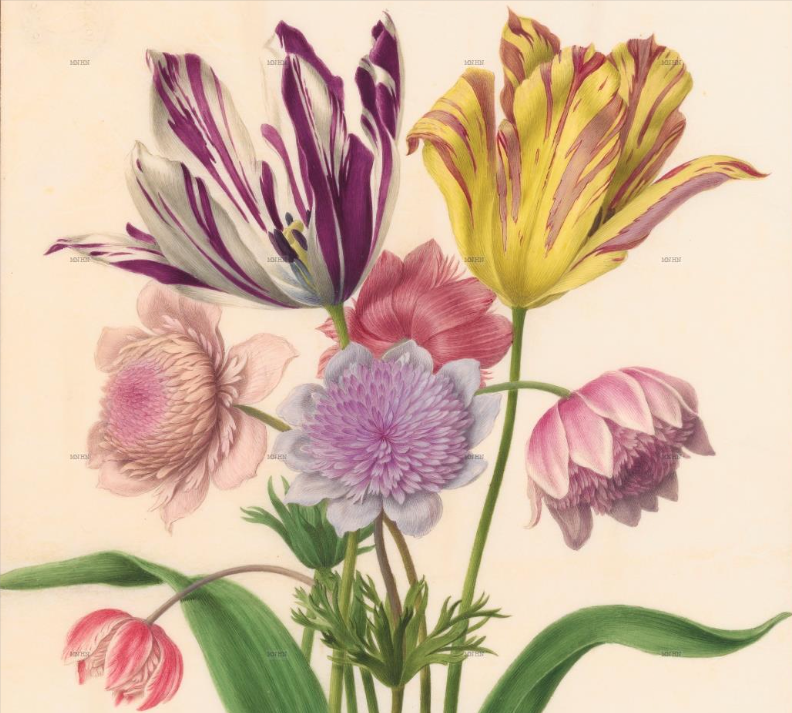
Details of tulips and anemones from Les Velins du Roi by Nicolas Robert, Museum of Natural History, Paris

Details of tulips and anemones from Les Velins du Roi by Nicolas Robert, Museum of Natural History, Paris

I’ve been doing some research over the past few years into the gardening interests of the aristocratic Hatton family  in the early modern period.   They were prominent royalists and had extensive estates in Northamptonshire  around Kirby Hall.

One of things that has emerged strongly is the way in which gardening  and plant collecting were, [as  indeed they still often are] activities that transcended all sorts of barriers. They allowed  men [and occasionally even women] from completely different social, economic and cultural backgrounds to find common ground in gardens and plants, in a way that few other interests could be shared  across such disparate  groups.

Today’s post is proof of that.  It is centred on a single  letter – one amongst thousands – in the Hatton archives in the British Library. Read on to be surprised not so much by its contents but its writer and its recipient. Continue reading

Posted in Uncategorized | Tagged | 1 Comment

The Great Geranium Robbery… part 2…and other plant thefts

detail from Thomas Rowlandson, The Old Bailey, from The Microcosm of London, 1808. © London Lives

detail from Thomas Rowlandson, The Old Bailey, from The Microcosm of London, 1808. © London Lives

This post is a continuation of last week’s, and is the  second half of the account of the trial of Charles Fairfield  in 1795 on charges of the theft of rare plants from Daniel Grimwood’s nursery in Kensington…. and then I’ve also  taken the liberty of adding some modern plant theft counterparts.

Witnesses testified Fairfield had been seen going into the hothouses shortly before some rare exotic plants were discovered to be missing.  Yet even though the missing plants had apparently been found in his greenhouse was that enough to convict him  or could his lawyer find a way of getting him acquitted?

They certainly tried. Expert witnesses debated whether a gardener could recognize a plant they had grown, and for how long, to determine if the plants found in Fairfield’s garden could be identified with complete certainty.  Were these particular plants rare enough to make them distinctive and recognisable?

Read on to find out…and to discover whether the jury thought Fairchild was a plant thief>


Continue reading

Posted in Uncategorized | Tagged , , , , , , , , | 3 Comments