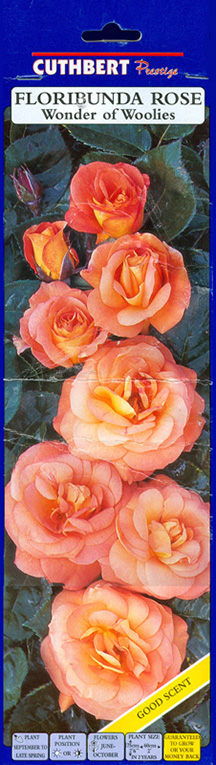
That’s the wonder of Woolies….

blm-WonderOfWW-RoseI’m taking a quick holiday from writing and instead, today’s post is largely based, with his permission, on some webpages originally written by Paul Seaton who runs a website about the history of Woolworths, called

http://www.woolworthsmuseum.co.uk.

WW-MuseumLogoAll the photos unless otherwise acknowledged come from his archive. So  if you’re feeling nostalgic  or interested in any other aspect of Woolworths and their history then go and take a look at Paul’s website and cheer yourself up!

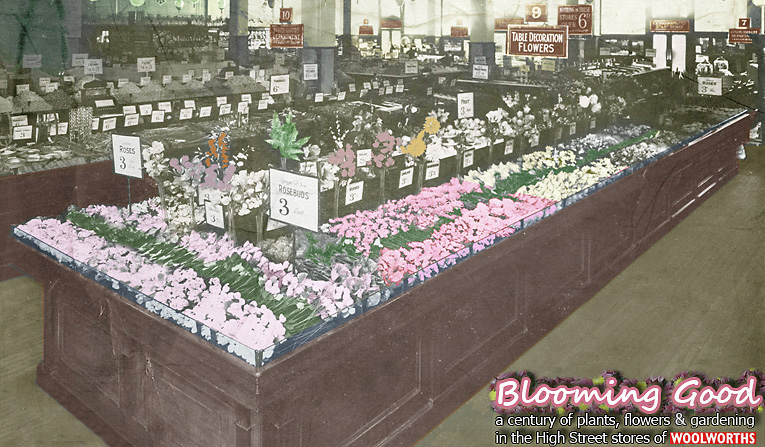
I found the website when researching my earlier post about Harry Wheatcroft the rose grower [see 4th July 2015] because Woolworths were his biggest single outlet. But it was not just roses they sold. It turns out that in their heyday Woolworths were probably the biggest horticultural supplier in the country. The High Street store chain sold flower bulbs, shrubs, plants and seeds for almost a hundred years and  even today, if you see a daffodil or tulip in bloom anywhere in the UK, there’s still a one in three chance that the bulb originally came from Woolworths!

Read on to find out more about Britain’s love affair with Frank Winfield Woolworth and his stores….and especially their gardening departments.
hg-bloominggood

Continue reading

Posted in Uncategorized | Tagged , , | 1 Comment

Moving the ‘bastard’ orange trees …

Jacob van Hulsdonck Still Life with Lemons, Oranges and a Pomegranate c1620 - 1640, Getty Museum

Jacob van Hulsdonck Still Life with Lemons, Oranges and a Pomegranate
c1620 – 1640, Getty Museum

And no I’m not being rude just for the sake of it! As I said in a recent post I’ve been doing some research over the past few years into the gardening interests of the Hatton family  who were prominent royalists and had extensive estates in Northamptonshire particularly around Kirby Hall.

By the end of the 17th century the gardens there were amongst the most impressive in the country, largely because of the partnership between the first Viscount Hatton and his younger brother Charles who acted as his   agent in London, supplying seeds, plants  and gardening supplies of all kinds, as well as almost everything else that a country house and its family might require.

This is just one story that I’ve uncovered in their extensive correspondence and tells how some unusual citrus trees  arrived at Kirby.  Although that might sound a bit dull, let Charles tell the story which begins in 1680… and discover the constraints under which 17th gardeners worked and how enterprising and resourceful they had to be to overcome them.

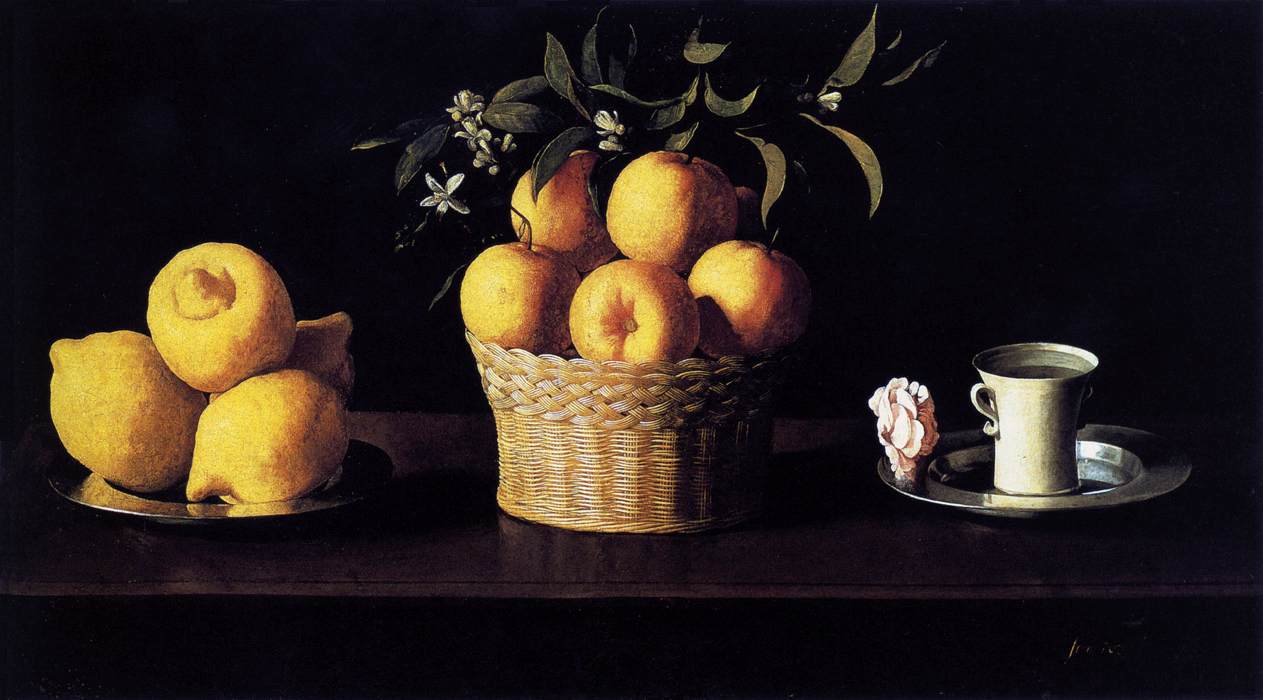
Still-life with Lemons, Oranges and Rose: Francisco de Zurbarán 1633, (Norton Simon Museum of Art, Pasadena)

Still-life with Lemons, Oranges and Rose: Francisco de Zurbarán 1633, (Norton Simon Museum of Art, Pasadena)

Continue reading

Posted in Uncategorized | Tagged , , , , | 1 Comment

Guano…

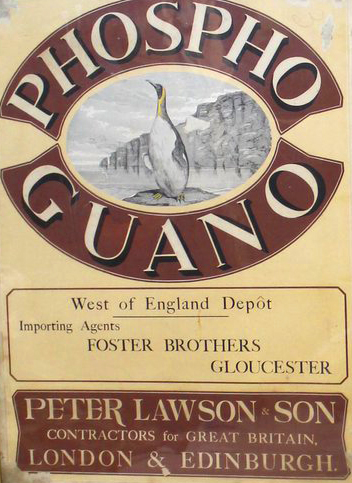
Guano advert, Gloucester 1860 http://bbprivateer.ca/?q=panther

Guano advert, Gloucester 1860
http://bbprivateer.ca/?q=panther

It’s hard to imagine the British Government getting excited about bird droppings. But in mid-19thc Britain it certainly did.  Of course ministers didn’t sit around discussing anything quite so vulgar as  bird poo but they did spend time talking seriously about  ways of increasing agricultural and horticultural production, and one of these was guano.  Guano was even considered important enough  to send the Royal Navy on probably its least exotic mission of all time – a hunt for new places where large quantities of avian dung  could be found, collected and exported to Britain to fertilize fields and market gardens.

Nightsoil, the subject of my last post, was still being used extensively for fertilizer in the garden and on farms in the early decades of the 19thc but campaigns to improve the water supply and public health,  the installation of new drainage and sewage systems, the invention of ‘artificial fertilizers and above all access to vast quantities of guano ended its pre-eminence and caused its use to decline rapidly.

From left to right: Peruvian Pelican, Guanay Cormorant, White-Breasted Cormorant, Peruvian Booby (Image courtesy of Jeff Lawrence) http://www.peruthisweek.com/

From left to right: Peruvian Pelican, Guanay Cormorant, White-Breasted Cormorant, Peruvian Booby (Image courtesy of Jeff Lawrence)
http://www.peruthisweek.com/

Read on to discover more about the Navy’s poo-hunting expeditions and how these massive imports of guano began to transform British agriculture and horticulture and made fortunes in the process… Continue reading

Posted in Uncategorized | Tagged , | Leave a comment

Night Soil and other euphemisms…

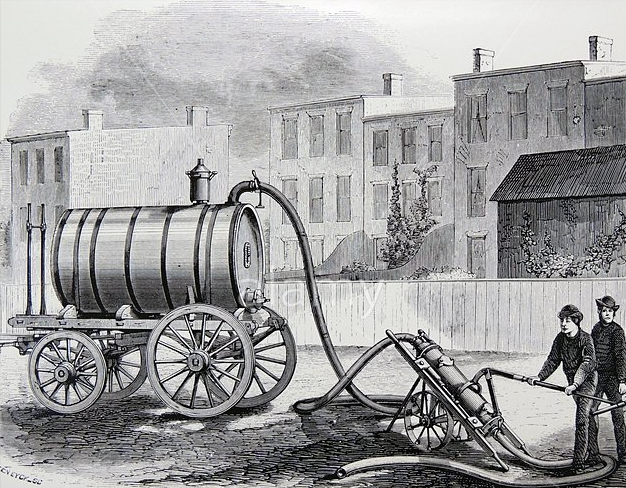
Vacuum pump for removing night soil from cesspools. From ''The Practical Magazine'', London, 1874

Vacuum pump for removing night soil from cesspools. From ‘The Practical Magazine’, London, 1874

We generally  think of the Victorians as very proper and respectable,  when even the  the legs of the piano were covered up,  and no risqué or unpleasant subjects were ever raised in polite society. So  it was a bit of a shock to discover that Shirley Hibberd the great Victorian garden writer wrote passionately about, of all things, sewage.  Indeed worse than that – he was vociferous in complaining about the waste of  human sewage.

19862_132469724288

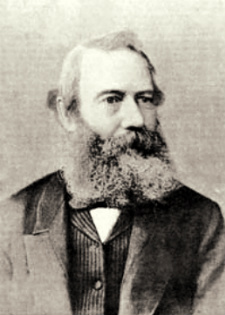
Shirley Hibberd, carte -de-visite, Lindley Library, Royal Horticultural Society

He argued in his book Profitable Gardening (1884), that it should be used as garden fertiliser,  as it was in many parts of the world.   So why wasn’t it?  What were the alternatives being used?  There was certainly no luxury of prepackaged multipurpose potting compost, and the fertilisers that existed were not clean granules in a neatly sealed plastic bag or colourful cardboard box with a handy measuring device, but usually had to be obtained as raw ingredients and mixed as needed. More on that in the next post but today, as the perfect reading for a steaming hot summer’s day,  read on to discover, [and I hope this doesn’t make you too squeamish] a history of the use of sewage in our gardens!   Continue reading

Posted in Uncategorized | Tagged , , , , | 2 Comments

Harry Wheatcroft : the red rose grower

Harry Wheatcroft, cover photo from his book In Praise of Roses, 19xx

Harry Wheatcroft, cover photo from his book In Praise of Roses, 1970

My father was very fond of roses and so I well remember the  flamboyant whiskery figure of Harry Wheatcroft from my childhood. He was everywhere in the press, radio and television, selling and promoting roses, especially new colourful hybrid tea cultivars, and we, like almost everyone else, had lots of them in our garden.

Wheatcroft looked as if he was a retired, eccentric, rather blimpish, sergeant-major, but as I discovered researching this post he was anything but that.  A brilliant salesman, with a ready wit and a definite ‘presence’ he was also a lifelong socialist and pacifist, strong internationalist and a man with a huge heart.

Read on to find out more about Harry Wheatcroft, the politically red rose grower.

Continue reading

Posted in Uncategorized | Tagged , | 1 Comment