
Standen: a down to earth house and garden

Philip Webb, by Charles Fairfax Murray, 1873 National Portrait Gallery

Philip Webb, by Charles Fairfax Murray, 1873
National Portrait Gallery

2015 marks one hundred years since the death of Philip Webb (1831-1915), the architect of Standen and one of the leading architects of his age. Sometimes the match between architect and client is made in heaven, and sometimes in hell.  Webb, the arts and crafts genius, knew  both kinds…   but at Standen in Sussex  both parties were lucky and the result is a homely down-to-earth masterpiece of both house and garden.

The Garden Front, Standen, by Arthur Melville, 1896 National Trust

The Garden Front, Standen, by Arthur Melville, 1896
National Trust

The relationship must have been good because when the house was finished his clients James and Margaret Beale presented Webb with a silver snuff box, engraved with the motto:  ‘When clients talk irritating nonsense, I take a pinch of snuff’”


Read on to find out more about Webb and the house, Margaret Beale and her garden,   and the National Trust’s project to revive the gardens at Standen….
Continue reading

Posted in Uncategorized | Tagged , , | Leave a comment

United by flowers ….but then divided by love!

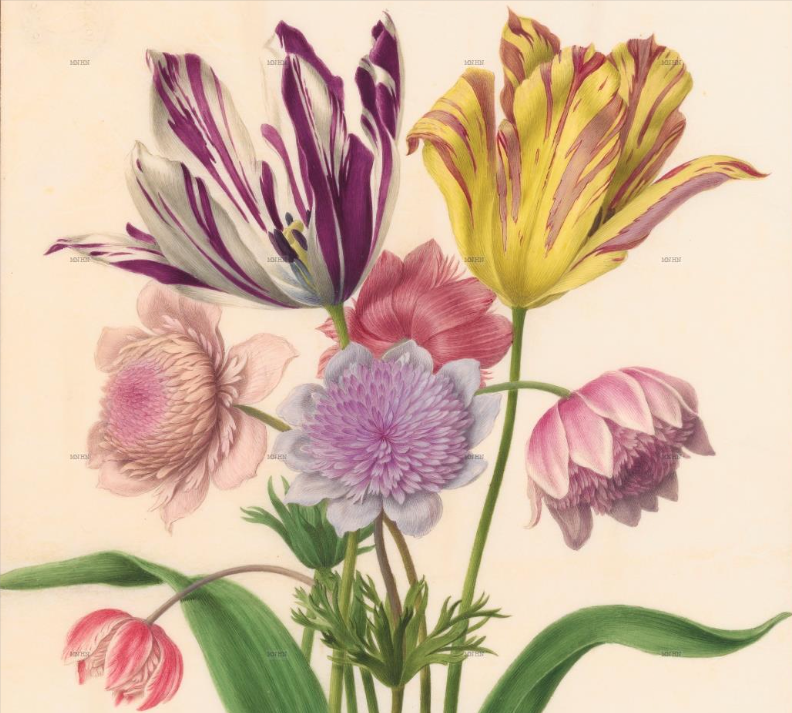
Details of tulips and anemones from Les Velins du Roi by Nicolas Robert, Museum of Natural History, Paris

Details of tulips and anemones from Les Velins du Roi by Nicolas Robert, Museum of Natural History, Paris

I’ve been doing some research over the past few years into the gardening interests of the aristocratic Hatton family  in the early modern period.   They were prominent royalists and had extensive estates in Northamptonshire  around Kirby Hall.

One of things that has emerged strongly is the way in which gardening  and plant collecting were, [as  indeed they still often are] activities that transcended all sorts of barriers. They allowed  men [and occasionally even women] from completely different social, economic and cultural backgrounds to find common ground in gardens and plants, in a way that few other interests could be shared  across such disparate  groups.

Today’s post is proof of that.  It is centred on a single  letter – one amongst thousands – in the Hatton archives in the British Library. Read on to be surprised not so much by its contents but its writer and its recipient. Continue reading

Posted in Uncategorized | Tagged | 1 Comment

The Great Geranium Robbery… part 2…and other plant thefts

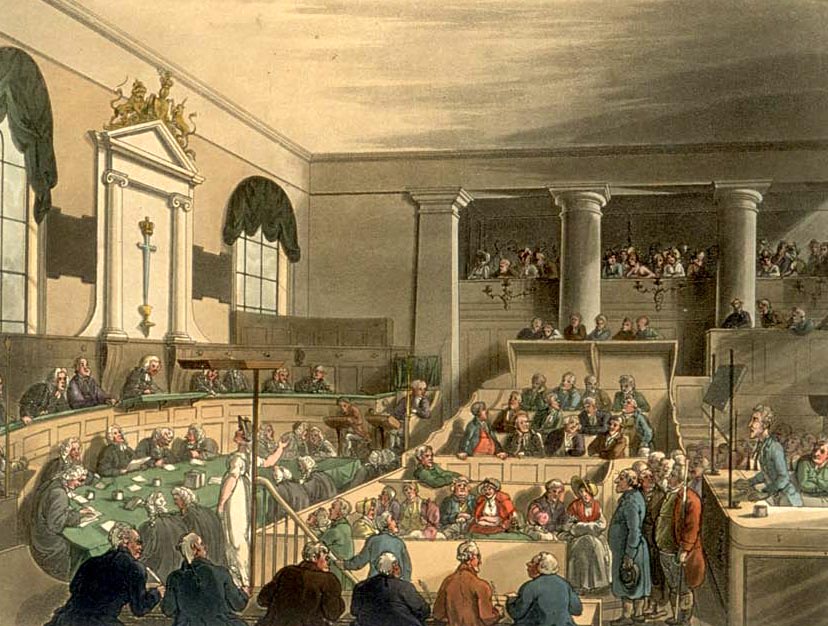
detail from Thomas Rowlandson, The Old Bailey, from The Microcosm of London, 1808. © London Lives

detail from Thomas Rowlandson, The Old Bailey, from The Microcosm of London, 1808. © London Lives

This post is a continuation of last week’s, and is the  second half of the account of the trial of Charles Fairfield  in 1795 on charges of the theft of rare plants from Daniel Grimwood’s nursery in Kensington…. and then I’ve also  taken the liberty of adding some modern plant theft counterparts.

Witnesses testified Fairfield had been seen going into the hothouses shortly before some rare exotic plants were discovered to be missing.  Yet even though the missing plants had apparently been found in his greenhouse was that enough to convict him  or could his lawyer find a way of getting him acquitted?

They certainly tried. Expert witnesses debated whether a gardener could recognize a plant they had grown, and for how long, to determine if the plants found in Fairfield’s garden could be identified with complete certainty.  Were these particular plants rare enough to make them distinctive and recognisable?

Read on to find out…and to discover whether the jury thought Fairchild was a plant thief>


Continue reading

Posted in Uncategorized | Tagged , , , , , , , , | 3 Comments

The Great Geranium Robbery…

oldbaileyjustice

The figure of justice on the Old Bailey

It’s not everyday that plant theft gets prosecuted or even really hits the headlines. BUT in 1795 there was a fascinating case that reached the Old Bailey and pitted a leading London nurseryman who dealt in exotic new imports against a plant collector who was accused of stealing from his nursery…..and the target plants included a rare geranium!

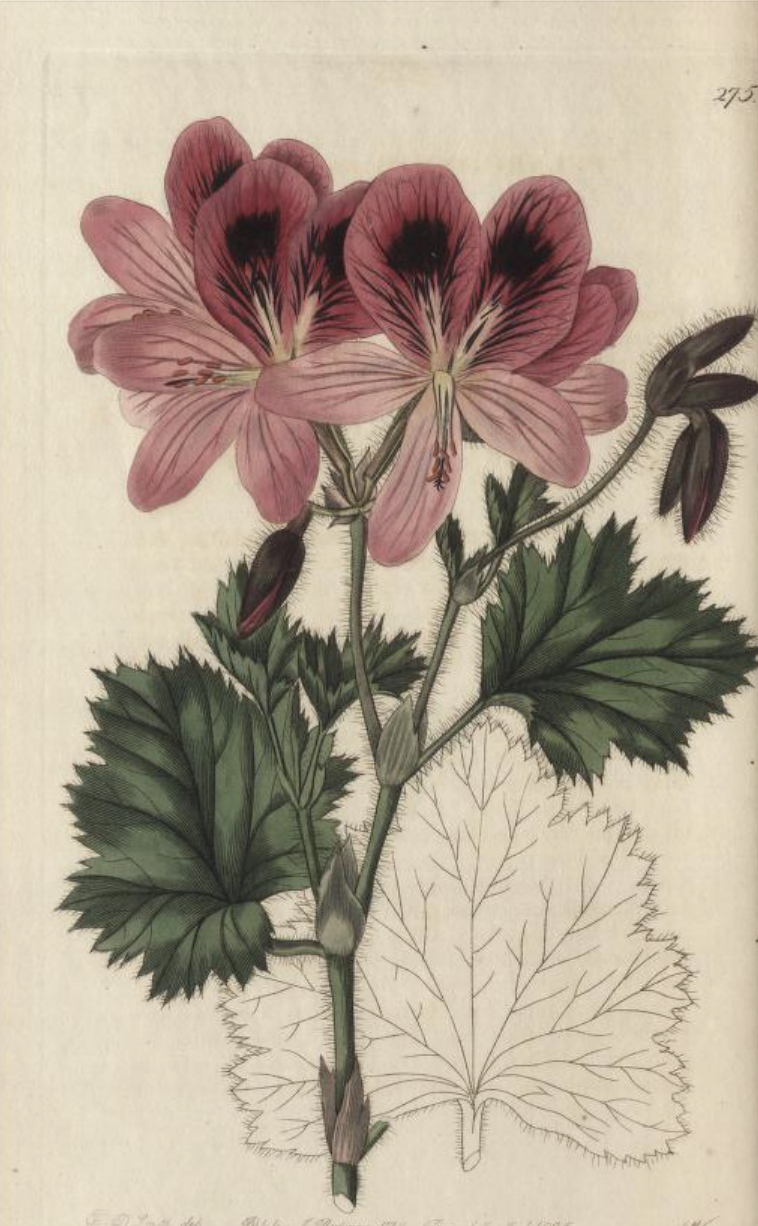
Pelargonium mucronatum from Robert Sweet's Geraniaciae, 1820/Users/davidmarsh/Library/Application Support/Evernote/quick-note/drdavidmarsh___Evernote/quick-note-Rmrk8O/attachment--oAj4G0/screenshot.png

Pelargonium mucronatum from Robert Sweet’s Geraniaciae, 1820/


The Geraniaciae, or geranium family includes several genera, notably Geranium [the cranesbills], pelargoniums [which confusingly are still commonly called geraniums], and erodiums.   Pelargoniums are indigenous to South Africa and, although a few species had reached western Europe because of the Dutch settlement at Cape Town, pelargoniums remained largely uncollected and unknown until the very late 18thc. So in 1795, despite the fact that most species propagate really easily, they were still rare and so highly prized and collectible – and  thus, of course, very expensive.

Read  the prosecution and defence evidence for yourself and decide whether the jury got the verdict right –  and in the process see what the court evidence reveals about the way that a nursery was run.

Thomas Rowlandson, The Old Bailey, from The Microcosm of London, 1808. © London Lives

Thomas Rowlandson, The Old Bailey, from The Microcosm of London, 1808. © London Lives

Continue reading

Posted in Uncategorized | Tagged , , , , , , , | 2 Comments

Eastbury

No it isn’t a disused rural railway station! Instead this intriguing arcaded house is all that remains of one of Baroque architect Sir John Vanbrugh’s greatest buildings.

Vastly expensive and taking over 20 years to complete, Eastbury at Tarrant Gunville in Dorset was only used for about 20 years before standing empty another 20 and then being dynamited because no-one could be found who wanted to live in it – even if they were paid!

Read on to find out more about Vanbrugh’s lost Dorset palace, its elaborate gardens designed by Charles Bridgman, and its owner George Bubb Dodington who was according to Horace Walpole: ” vain, fickle, ambitious, servile, and corrupt.”  (Memoirs of the Reign of George II, vol 1, p.437). Continue reading

Posted in Uncategorized | Tagged , , , , , , , | Leave a comment