A touch of festive red…

1774596-poinsettia-w-co-fIt’s that time of year again when the whole world seems to go red.    Love them or loathe them poinsettias dominate the Christmas flower market, and because of that they are are  the  most economically important potted plant world-wide.  Incidentally although less than 1 person in 5 buys one in Britain,  in Germany the figure is almost 1  in 2.: a frightening thought if you’re not that fond of them!

The scarlet monstrosity [maybe you can see where I stand on the like/loathe spectrum]  comes from Mexico and its surrounds, and is a member of the vast euphorbia family. It has the  scientific name euphorbia pulcherrima, (‘very pretty/beautiful) given in 1833.  So why is it always called Poinsettia and what’s it got to do with Christmas? Read on and find out more than you could ever possibly have wanted to know about them….

Poinsettia_2-704x318 Continue reading

Posted in Uncategorized | Tagged , , , , , , , , , , | 1 Comment

Dyffryn

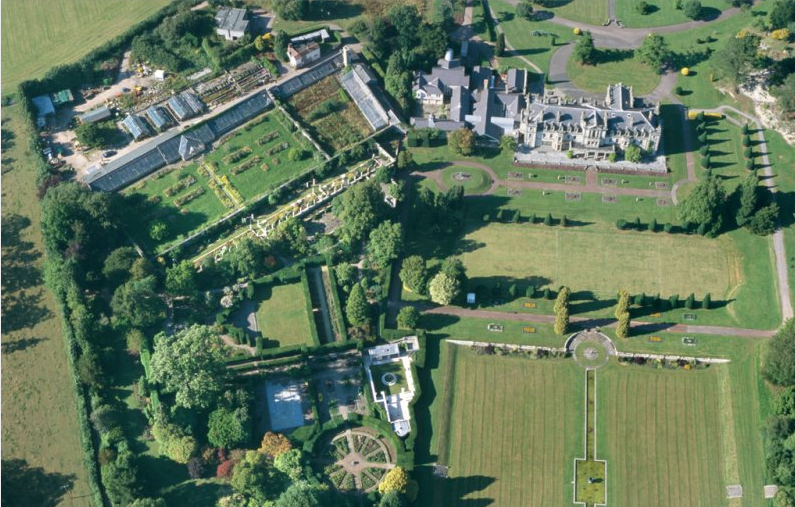
I’m always a bit suspicious when people use superlatives to describe something. It’s never usually quite as good as they make out. So initially that was my reaction when I started to hear/read about Dyffryn Gardens, near Cardiff.   Just shows how wrong one can be… because Dyffryn isn’t just  “one of the grandest and most important Edwardian gardens in Wales” and Grade 1 listed, it’s also one of the most surprising and enjoyable gardens I’ve visited in a very long time.  After a massive restoration project largely funded by the Heritage Lottery Fund it’s now also  the centre of a National Trust restoration project unlike most they have undertaken.

RCAHMW colour slide oblique aerial photograph of Dyffryn House, Toby Driver, 2000

RCAHMW colour slide oblique aerial photograph of Dyffryn House, Toby Driver, 2000

I visited with Liz Whittle, former inspector of Historic Parks and Gardens for CADW and I am very grateful to her for allowing me to use her notes as the basis for this blog.

Posted in Uncategorized | Tagged , , , , , , , , , , , , , , , , , | 1 Comment

Do behold the King in his glory…King Sequoia!

"Wellingtonia Gigantea," c. 1855. Lithograph, Bancroft Library

“Wellingtonia Gigantea,” c. 1855.
Lithograph, Bancroft Library

In 1849 a young Cornishman William Lobb arrived  in San Francisco. Not to take part in the famous Gold Rush but to hunt for green gold for his employer, the enterprising Exeter nurseryman, James Veitch.

gold-rush-view_of_san_francisco

San Francisco from Telegraph Hill, 1850 lithograph by Currier & McMurtrie. In public domain

What Lobb bought back created a wave of excitement and  made Veitch a fortune. It also had a great impact on the landscape of many great British parks and gardens, and, with luck,  will continue to do so for a very long time.  Lobb returned with seeds of  the biggest tree in the world: the Wellingtonia, or as it should now more properly be called,  Sequoiadendron giganteum.


Continue reading

Posted in Uncategorized | Tagged , , , , , , , , , , , , , , , , | 2 Comments

The Vicar and Gladi-mania…

Despite what you might think, it wasn’t Dame Edna Everage who was first to shout about the glories of the gladi, but a medal-winning vicar from Kent with a dry sense of humour, who rejoiced in the name of Henry Honeywood D’Ombrain… and I bet he’s someone else you haven’t heard of before now.

Henry Honeywood D'Ombrain http://www.dover-kent.com/Rose-Deal.html

Henry Honeywood D’Ombrain
http://www.dover-kent.com/Rose-Deal.html


His 1873 book on the gladiolus opens: “it is impossible  to be poetical in writing  on the Gladiolus, for it would be as difficult to find a rhyme for it as for porringer. I cannot be sentimental – no lover could call his inamorata, My Gladiolus.  To be learned is out of the question; the ancients did not know it, and so I cannot cog a list of quotations from Homer downwards; I have, therefore, only aimed to be practical.”

The Rev. D’Ombrain is  going to be the first in a series of occasional posts on gardening clerics… some serious and some just ever so slightly eccentric! Continue reading

Posted in Uncategorized | Tagged , , , , , , , , , | Leave a comment

“What God would have built if he had the money…”

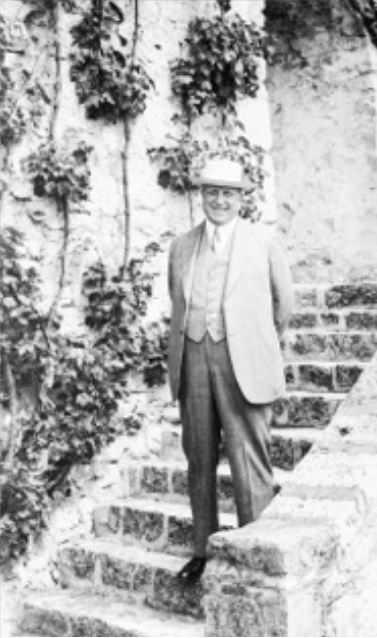
Willaim Randolph Hearst on the steps of St Donat's Cuntry Life Picture Librray

William Randolph Hearst on the steps of St Donat’s
Country Life Picture Library

“What God would have built if he had the money…” is what  George Bernard Shaw is supposed to have said on visiting William Randolph Hearst at St Donat’s Castle in South Wales.  It’s not surprising that Shaw was impressed!   St Donat’s  is a picture-book mediaeval castle that has been continuously occupied since the twelfth century.  Not far from Cardiff and set high overlooking the Bristol Channel  its gardens  are  quite simply amongst the most spectacular and outstanding Tudor gardens in Britain.

DSCF2026 - Version 2The home of the Stradling family from 1298-1738 the castle then  passed through several hands before eventually being bought in 1925 by American press magnate,  William Randolph Hearst, the model for Citizen Kane, who ‘modernized’ the castle without destroying its character. From 1962 the castle has been occupied by Atlantic College, the first of the United World Colleges founded by the German educationist Kurt Hahn.

Aerial view of St Donats Castle , 1934

Aerial view of St Donat’s Castle , 1934

I visited this summer with Liz Whittle, former Inspector of Historic Parks and Gardens at CADW, and I am very grateful to her for permission to use her notes as the basis for this post.

In the interests of historical accuracy I should also add that I have also seen Shaw’s words in a slightly different form used about his visit to Hearst Castle at San Simeon in California, and I have been unable to track down the source or veracity of either attribution – but its too good a quote to ignore! Continue reading

Posted in Uncategorized | Tagged , , , , , , | Leave a comment