

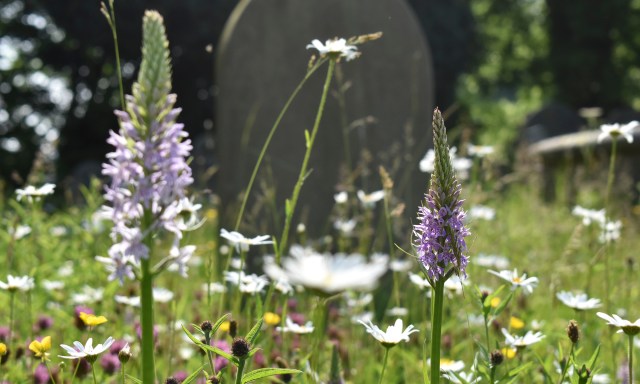
Lockdown walks in London cemeteries and some visits more recently to country churchyards set me thinking about how differently such sites are maintained these days. No more sterile hard-mown grass everywhere with just a few plastic flowers to brighten the scene but what seemed to be a more lightly managed approach. Wild flowers growing in longer grass with some cut paths through to get to graves but at the same time not by any means unkempt or overgrown.
It reminded me of an inspirational scheme called The Beautiful Burial Ground Project which aimed to reveal the hidden heritage of burial grounds across England and Wales, show their importance to biodiversity and encourage and support people to learn about, research and survey them.
 The title of the project’s website, Caringforgodsacre.com comes from the late 15th/early 16thc term God’s Acre to describe churchyards as literally God’s field, and that in turn reminded me of William Robinson’s book God’s Acre Beautiful published in 1880 in support of his campaign for beautiful gardens to hold ashes from cremation rather than burial of the dead.



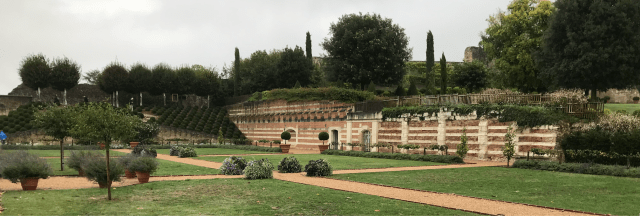
 I helped lead a Gardens Trust tour last autumn round gardens of the Loire Valley. Almost our last port of call was the great early Renaissance chateau of Amboise where a series of new gardens have been installed in recent years. It’s not often these days that money can be found for new garden projects like this especially in such a sensitive historic site. The chateau is former royal residence and overlooks a UNESCO World Heritage site, but its grounds were rather neglected until the great storm of 1999 wreaked such havoc that was no choice but a total rethink. It took a while to decide what to do but it was worth the wait and the new gardens have already been listed as being of national significance.


 The Garden History Blog
You must be logged in to post a comment.