Painting the Gardens of History with Eleanor Fortescue Brickdale

What’s in a name? Eleanor Fortescue Brickdale sounds like an escapee from a Victorian 3-volume bodice-ripper or maybe the wicked governess in a  1920s girls comic – well that’s what I thought when I first saw her name.  That will teach me to be prejudiced and  judge a book by its cover or somebody by their name.

In fact she was one of the most popular artists in Britain at the turn of the 19th and 20th centuries. She specialised in historical and legendary scenes often incorporating gardens into her work. Her work later fell from popular favour as tastes changed, and she was according to her obituary The Times  “the last survivor”  of the pre-Raphaelites. That may explain why after her death in 1945 her work largely  disappeared from sight.   That is, as I hope you’ll agree when you’ve read the post and seen some of her work, a great pity.
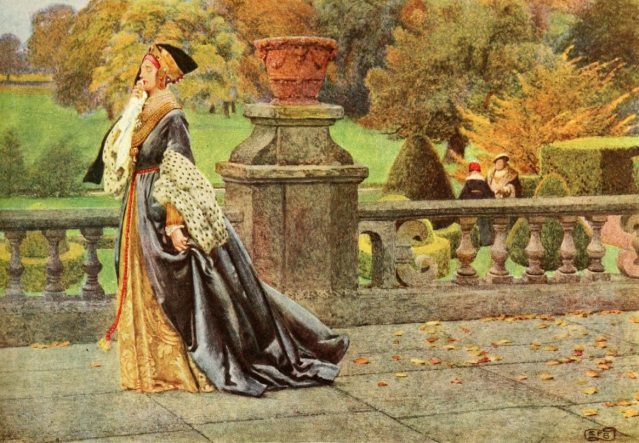
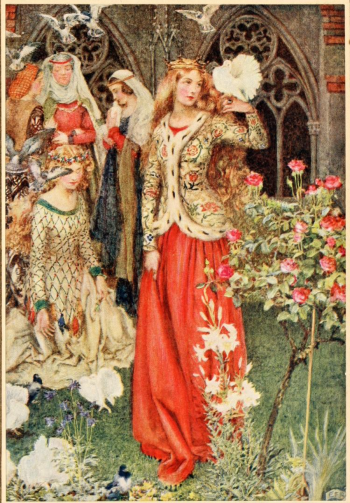
Queen Katherine – with Henry lurking in the background
Continue reading

Posted in Uncategorized | Tagged , , , , , , | Leave a comment

The Turf Maze

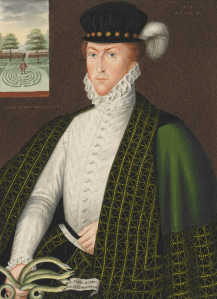
Way back in  April 2021  I wrote a piece about the  Elizabethan painting below, which as you can see from the detail, has a maze in the background.   It struck me as an unusual things to put into a portrait, although I soon discovered that it was almost certainly an allegory about finding the right path in life, rather than anything in the sitter’s own garden.


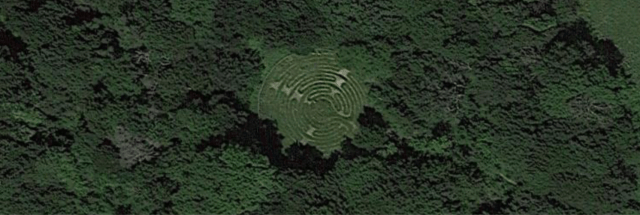
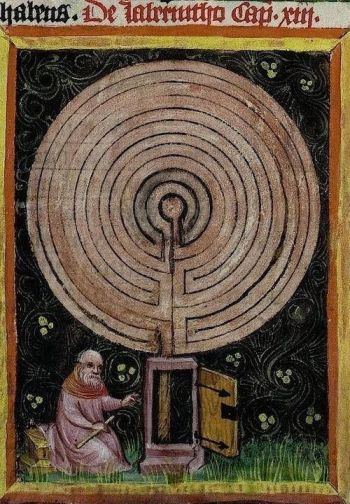
What I hadn’t fully realised then was that the idea of walking round a low-level maze  wasn’t actually that  strange  because  the English countryside was once dot­ted with earthwork labyrinths or turf-mazes of a similar kind, although not many survive today.

Nor did I realise quite how popular  mazes and labyrinths were, with many  intriguing  stories around them, although  usually with very little hard evidence to back them up.  Indeed there is an entire sub-culture debating their  origins and purposes, and as a result  the boundary between fact and fiction, or evidence and conjecture,  is “flexible” to put it mildly. There is sound academic research but also a lot  of “new age” fantasy where in the end you can almost believe what you want.  Today’s post is just going to wend its way  through the labyrinth looking at just a small part of this world: the turf maze.

Breamore mizmaze from Google maps

Continue reading

Posted in Uncategorized | Tagged , , , , | 2 Comments

Cutting Edge Technology

There can’t be many garden tools that have caused hundreds of people to demonstrate in the streets against their  introduction. But that’s precisely what happened in 1840 when a committee decided to test a new device against traditional methods and equipment.  The protests would be the other way round now if  gardeners were forced to give up what is probably the most popular and easy to use hand tool in the shed.

So what on earth am I talking about and if it’s so easy to use what caused the problem?

Apologies if you were hoping for a firework related post  but I did that last year with Here Be Dragons and Marvellous Contrivances so check them out!

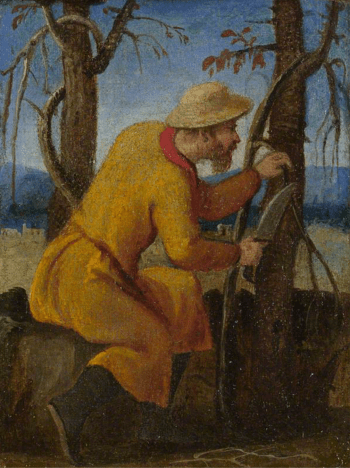
Noah at work in his vineyard, c.1350 Continue reading

Posted in Uncategorized | Tagged , , | Leave a comment

Gardening Advice from a Squint-Eyed Monk

I’ve written several posts on early gardening books, but today’s post goes back even further. It’s about the first gardening book in European history which dates from around 830-40AD.

It  was written by a Benedictine monk who spent most of life  on an island in the Bodensee [Lake Constance]  in south-west Germany. His name was Walafrid, although  he also called himself Strabo which means squint-eyed or cross-eyed. We know a surprising amount about him given the long time gap because he was quite a significant figure both theologically  and diplomatically. However most of his theological writing, has  been long forgotten and instead he’s remembered for another part of his life.  Yes you guessed correctly: Walafrid was a keen gardener.

Continue reading

Posted in Uncategorized | Tagged , , , , | Leave a comment

Margaret Waterfield

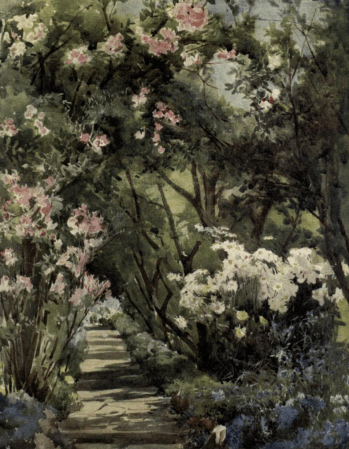
Some of the posts on here have been a long time in the making. Today’s is one such. When I was researching a post about garden writer Mrs Earle way back in 2015  I discovered that a piece she  written had been illustrated by an artist named Margaret Waterfield.  I liked the paintings and thought she might make another good subject.I then discovered that there was very little known about and after a quick browse of my bookshelves and several google searches I gave up until this summer when I decided to give it another more serious go.

Most of Margaret ‘s work seems to have been done in the late 19th and early 20thc  and then she faded from public view long before her death in 1953. Although there was a brief outburst of interest in her and her work in the late 1980s which led to two short articles, I’m still unable to put together anything like a full biography but when you see the range and quality of her work  I hope you’ll agree that she deserves renewed attention and further research.

Continue reading

Posted in Uncategorized | Tagged , | Leave a comment