Early Garden Picture Books

When printing first reached western Europe books rarely had illustrations, and when they did they tended to be simple rather crude woodcuts which were few and far between. The quality of images improved gradually and by the mid-16thc books of architecture and even garden design were beginning to appear, beautifully illustrated and sometimes even with very little text.  The coffee table book had arrived except that of course at that point there was no coffee.


Amongst the earliest and finest of these books were several  by Hans Vredeman de Vries, a Dutch engineer, architect and artist.

He was the first person to present the garden as a work of art in its own right, so  it’s with him that I’m going to start this look at early images of garden design. His influence soon spread far and wide and copies and echoes of his work can be found all over western Europe.


Continue reading

Posted in Uncategorized | Tagged | Leave a comment

Know Your Onions….

Let’s start with a startling fact. What’s the world’s most global food crop? Is it Wheat? Rice? Potatoes?  or even the tomato that I wrote about recently? It’s nothing so obvious, rather it is the humble brown, red or yellowish bulb that you’ve probably got piled up in your kitchen right now: the onion. According to the UN onions are grown in virtually every country on earth. They tolerate almost every climatic zone,  and are widely used in all major cuisines, making them arguably the only truly global ingredient.

You might also think that an onion is an onion is an onion, although you’d probably recognise there are ones with brown papery skins,  others with red and some with yellow or white. And when you start to start to think about you’ll probably recall that the insides also vary in colour, and shape and that maybe the taste and strength can vary too.
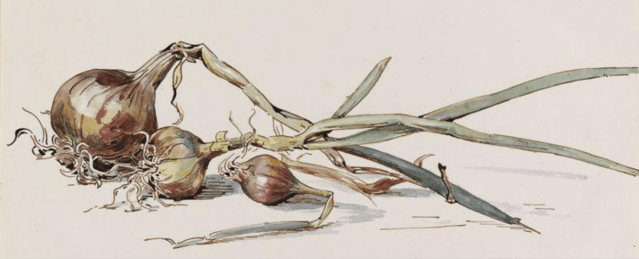
But have you heard of Birmingham’s Onion Fair ? Do you know where the phrase in the title comes from?  Who or what is an Onion Johnny? Do you know your Ailsa Craig from your James Keeping or Bedfordshire Champion?  Like most of us I’d guess probably not,  So read on to find out more about them and their history…

Continue reading

Posted in Uncategorized | Tagged , , , , | 1 Comment

Fontainebleau

France is famous for its  grand gardens such as Versailles, Vaux le Vicomte and Fontainebleau  which  are the living proof of the superiority of man over nature and -only half in jest – of France and the French over everybody else.

I’m a Francophile but even I sometimes wonder whether some of these gardens are almost “too great and grand for their own good” and need to be re-assessed afresh.


I visited Fontainebleau again earlier this week with a group of Gardens Trust members as part of a tour looking at important French gardens mainly in the Loire Valley. Fontainebleau was our first port of call. It’s just over 30 miles [55km] south east of Paris and is unusual because its gardens, created over  the last 500 or so years,  include examples of most of the most important stylistic developments in garden design.  Unsurprisingly Fontainebleau is  not merely  a national monument but a UNESCO World Heritage site.But is what you see today anything like they were when they were  created and are they worth their reputation?

Continue reading

Posted in Uncategorized | Tagged , , , , , , , , , | Leave a comment

EVB

Any idea who or what EVB might be?

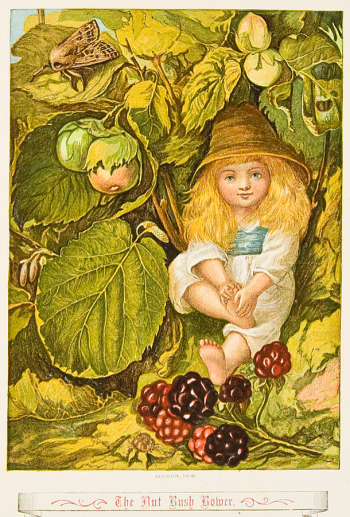
I’ll save you the trouble of googling it – and tell you its not a German rail and bus company, nor an electric vehicle battery or an empirical valence bond whatever that might be. Instead it’s the name used by an aristocratic woman who wrote and illustrated books but used her initials rather than her own name as she was afraid such work would be considered beneath her status. Although most of her early work was for children, the last thirty or so years of her life she turned her attention to gardens and gardening books.

So read on to find out more about EVB : Eleanor Vere Boyle.


Continue reading

Posted in Uncategorized | Tagged , , | Leave a comment

The Company’s Garden

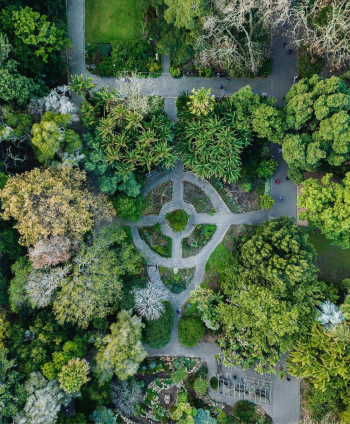
I’m writing this post in Cape Town the home of the oldest European garden in Africa.  Known as The Company’s Garden it  lies near the heart of the modern city just four hundred metres south of where Jan van Riebeeck and his party from the Dutch East India Company  landed on Table Bay in 1652 with plans to establish the first European  foothold at the Cape. Apart from a fort for defence and shelter, laying out the garden was their first priority. But, of course, that was for food not flowers.

Transformed from purely a utilitarian  garden to a much more horticulturally interesting one in the 18thc  it became one of the most significant gardens in the world, before sinking into decline under British rule in the 19thc when much of the original ground was appropriated for grand institutional buildings.

What survives today, although listed as a national monument, is a much smaller modern  public park but it still contains many historic trees  and the re-imagining of a small fraction of the original Dutch kitchen garden. And as we’ll see in another post soon it has been the inspiration behind one of grandest new gardens in the world.

Continue reading

Posted in Uncategorized | Tagged , , | 4 Comments