Gibside

The Orangery ruins

I wonder what George would have made of the children picnicking or playing football on his lawn?  He’d probably be more concerned that both his house and orangery lie in ruins and wonder how his wonderful estate came to such a sorry state.

That was my first thought on my second ever visit  to Gibside  – the first was about 40 years ago when I was almost the only person there, and  very little was accessible or even visible of  what is one of just a handful of grand – indeed outstanding – 18th-century designed landscapes in Britain.  This time it was teeming with people. What had happened?

Gibside, August 2022
Continue reading

Posted in Uncategorized | Tagged , , , , , , , , , , , | 1 Comment

Pulham on the Prom

The early seaside promenades  I wrote about last week were artificial creations, designed to separate land and sea, and often ornamented or disguised with  gardens and other features.

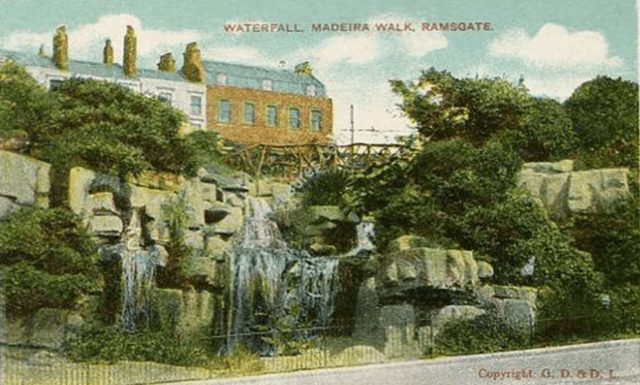
Later in the 19thc another form of artificiality began to make its appearance there: the mock rock invented by James Pulham and by the early 20thc this was being used to create seaside landscapes on a grand scale.

Continue reading

Posted in Uncategorized | Tagged , , , | Leave a comment

Oh I do like to stroll along the prom prom prom…

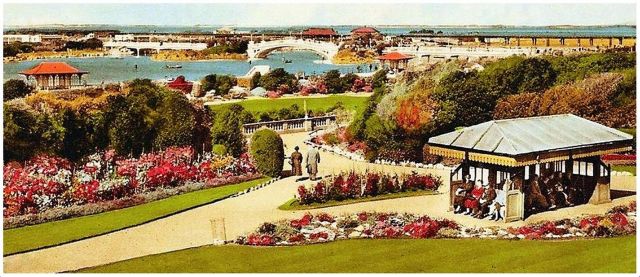
For the last in my summery seaside related posts I thought I should move on to the next line of the famous song and think about strolling “along the prom prom prom where the brass bands play tiddily-om-pom-pom.”   And in particular  look at the wonderful gardens that can often be found there.

Thats because almost every resort worth its name has from Victorian times boasted of its parks department – indeed many were laid out  in prominent central positions and used as a  way of attracting visitors and boosting civic pride.  They remain one of the outstanding features of the British seaside and many have been registered  by Historic England as worthy of protection.

Continue reading

Posted in Uncategorized | Tagged , , , , , | 2 Comments

Oh I do like to SIT beside the sea-side

Seaside holidays in Britain conjure up a whole range of images… beaches, sandcastles, piers, amusement arcades, rock and candy-floss, boarding houses and their landladies, rainy days, as well as all those lovely seaside gardens, but maybe the one building that sums  it all up is the seaside shelter. What could be more summery in Britain than a few hours  spent sitting in a doorless shed watching the waves  in the howling wind or pouring rain?  And to prove how central to the British life they are, some of those shelters are now listed buildings, even though the names of their architects or designers are often forgotten.

Largely overlooked by architectural historians – after all you wouldn’t think there’s much one could say about a seaside shelter  – but look hard enough, and the variety is astounding. Things have begun to change recently and a couple of books coupled with some  listings by Historic England show they are now being recognised as  the  icons of  the British  way of life that they really are!  So what’s their history?


Continue reading

Posted in Uncategorized | Tagged , | Leave a comment

Oh I do like to TICK beside the seaside …

More August seaside fun! My post a few weeks ago about the origins of Floral Clocks proved popular so here’s a follow-up about their heyday in the inter-war years when they became tourist attractions and when seaside towns almost felt they had to have one to keep up with rival resorts.

I’ve been surprised to find that very little has been written  about these very popular features and  I can’t  even find a list of places that had one, so I’ve started to compile one which you’ll find at the end of this post.

Maybe the time is right for a revival of interest? or even a Ph.D thesis? [I’m now an honorary Senior Research Fellow at the University of Buckingham and would be very happy to supervise one!]


Continue reading

Posted in Uncategorized | Tagged , , , , | Leave a comment