Hats off to Hyde Hall

The cover of the first RHS guide 1994

A couple of weeks ago, as the lockdown started to lift and gardens began tentatively to re-open, I was taken to Hyde Hall, the Essex garden of the Royal Horticultural Society. I’ve been several times before and have always come away slightly disappointed  but this time things felt different. Partly obviously because it was good to be back outside after so long being confined to the house but also because Hyde Hall is developing into a much more interesting garden. That’s quite strange since according to Matthew Wilson, the former curator “There probably shouldn’t be a garden at Hyde Hall, given the challenges and complexities of the site, soil and climate. The fact that there is gives hope that even the least promising site can be gardened.” [FT 25th May 2018] Continue reading

Posted in Uncategorized | Tagged , , , , , , , , , | Leave a comment

Angling for attention…

You don’t have to be the slightest bit interested in fishing to be attracted to some of  the buildings associated with it.  Because of their settings, many are delightful places to spend time in: after all what’s nicer than sitting by water and watching the world go by.

Way back in 2016  I wrote a couple of posts about  fishing lodges and temples.  The first was on the earliest  surviving ones, from the mediaeval and early modern periods, then a second about early 18thc  ones. But I kept finding more so today’s post is a brief look at 3 more historic sites, associated with angling and dating from the later 18thc.

Continue reading

Posted in Uncategorized | Tagged , , , , , , , , , , | Leave a comment

The Empress’s Greenhouse

Last week’s post about Josephine and the landscape at Malmaison left out any discussion of the plants grown there, so today’s post is going to make up for that, because  it was plants that really captured her imagination. That meant, of course, they had to be housed properly.  Her dream came true in 1805 with the opening of what was to become the centrepiece of the plant collection.  But it was more than that.  The new building is thought to have been the largest area of glass yet erected, and it became the ancestor of the grand conservatories of 19thc Europe.

Josephine’s passion went way beyond new and tender  exotics that needed hot house conditions. The rest of the gardens were also filled with rarities from every corner of the globe. She became the French equivalent of Joseph Banks and Malmaison the French equivalent of Kew.


Continue reading

Posted in Uncategorized | Tagged , , , , , , , , , , , , , , , , , , , | Leave a comment

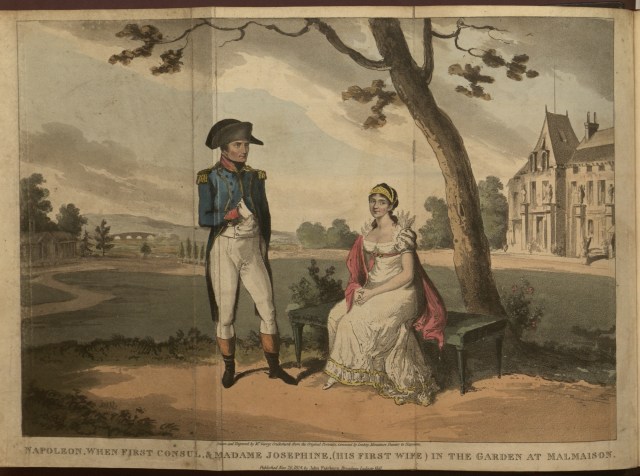
Josephine @ Malmaison

The story of how a 32 year widow from Martinique escaped the guillotine and then met and fell in love with the a young Corsican general during the French Revolution is the stuff of romantic novels. It’s one of the great celebrity love stories of history. Most gardeners and art-lovers will also know of Josephine’s passion for roses and the famous book about them with its illustrations by Redouté.  But there’s a lot more to Josephine’s interest in horticulture and natural history than that.

Marie-Joseph-Rose de Tascher de la Pagerie  married Napoleon in 1796, and they bought Malmaison with 60ha of land in 1799.  She rose to power alongside him and Malmaison effectively served as the seat of government  between 1800 and 1802.

Josephine was crowned Empress in 1804, and although Napoleon divorced her 5 years later for dynastic reasons [there was no the heir – and Napoleon wrote of his new wife that he had married a womb”]  she maintained her rank and her title of Empress, and she kept the Malmaison estate together with all of its collections.  There she devoted herself to natural history, particularly botany, becoming in some ways France’s answer to Joseph Banks and turning Malmaison into a miniature version of Kew.


Continue reading

Posted in Uncategorized | Tagged , , , , , , , , , , , , , , , | 1 Comment

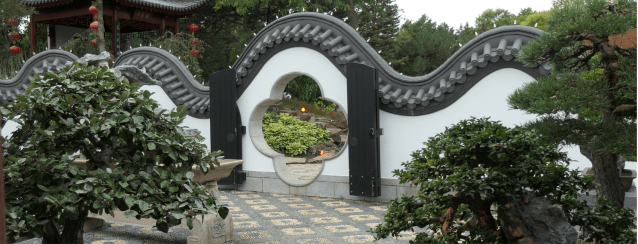
The Chinese Garden in Montreal

It was just about the last thing I expected on a short visit to  Montreal last October: a Chinese Garden.    In Europe we’ve been used to Chinoiserie  for over 300 years but while some examples are genuine imitations [if that makes sense]  most are  really just, at best, bastardised forms of Chinese architecture and design, whilst at worst they are comical misuses of the form and details…. and  none of them are  gardens.
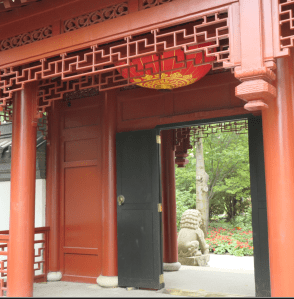
I should say at the outset too that I knew nothing about Chinese gardens, and even now I still only know next to nothing. After all, while we have plenty of Japanese gardens in Britain I can’t think of a single Chinese one.
When I was writing this, obviously without access to the British Library,  I turned to Maggie Keswick’s The Chinese Garden which I bought shortly after it came out in 1978 [how to make yourself feel old!] She grew up in China and was a regular visitor as an adult, visiting many historic gardens there, and did huge amounts of research.  The book is full of insights into what for most westerners is an unknown world.

Let me quote from the preface: “Whoever heard anything special about Chinese gardens? Even in the East they are something of a lost art form; in the West the words seldom conjure up any image at all – or if they do it is likely to be one of a Japanese garden with its exquisite arrangements of moss and stone, its manicured pines and dry streams, and above all, its sense of being so perfect in itself … Chinese gardens are not like this.”   How true that is, so be prepared for a surprise or two…

Continue reading
Posted in Uncategorized | Tagged , , , , , , , | Leave a comment