At the end of last year I wrote about the work of William Goldring, a prolific landscape and garden designer who died in 1919. Apart from his private commissions and work on public parks he was also involved in the design of landscapes that have been generally overlooked by garden and landscape historians: those of hospitals and asylums. A large number of these were being built in the later 19thc so I thought, with the Victorian love of order and record keeping, this would be an easy subject to research but once again I’ve been proved wrong.
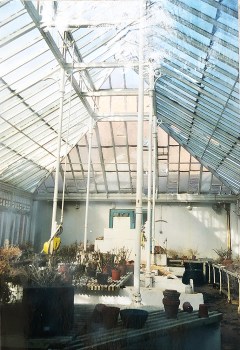
The Conservatory at Rauceby after closure © Steffie Shields 1999
The grounds of these new hospitals, particularly those for mental illness, were seen as having equal therapeutic value to the buildings where the patients were housed. But whereas architects are almost always known, landscape designers are not. This is surprising considering that many were mainly on large rural or semi-rural sites and in many way can be seen as a continuation of the planning and layout of great landed estates in earlier times.

William Goldring from The Journal of the Kew Guild, 1913
Sarah Rutherford attempted to uncover these lost designers in her PhD thesis about the landscapes of asylums but says that when she started her research “of all the 115 public asylum sites begun by 1914 only one was known to have a named designer.” Luckily that one was by William Goldring and she went on to show that he designed at least two more. These three sites, Napsbury near St Albans in Hertfordshire, Hellingly in Sussex and Rauceby, near Sleaford in Lincolnshire, are the subjects of today’s post.

The remains of Rauceby Hospital from Google Street View
Continue reading →






 The Garden History Blog
You must be logged in to post a comment.