The Jardin du Roi

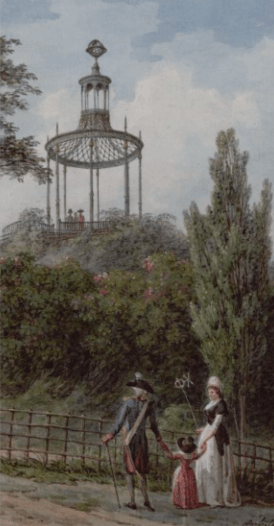
I was supposed to be researching something serious the other day, when, as so often, I saw something much more interesting and decided to follow that lead instead. It was an image of the Jardin des Plantes in Paris that had been painted at the very  height of  the French Revolution.  You might have expected it to be a scene of chaos and destruction but far from it. Instead it was a scene of tranquility and calm, with apparently well cared for gardens and garden buildings.

A bit more investigation revealed that far from damaging the former royal gardens the revolutionaries recognised their importance and made them a key part of their programme for cultural and scientific advance…and there wasn’t just one but a whole series of paintings which show the gardens in great detail.  So I decided to investigate the story behind them and the gardens…


Continue reading

Posted in Uncategorized | Tagged , , , , , , , , , , | 7 Comments

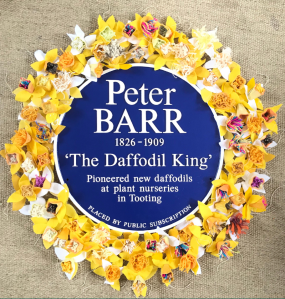
The Daffodil King of Tooting

Inspiration for this week’s post came from daydreaming & looking out of the window and noticing some daffodils coming into flower.  I  remembered that ages ago I wrote a couple of posts about their  history:  The Daffodil most dainty and their use in decoration: The Daffodil most dainty2

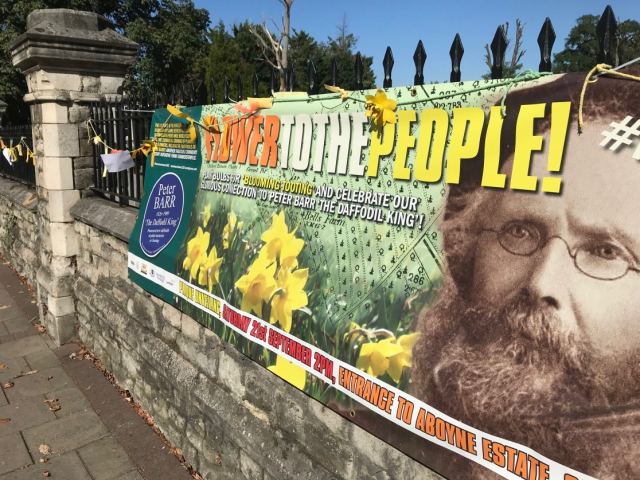
So I reread them and saw  that I’d  mentioned Peter Barr a  Victorian nurseryman  who I’d said  was “the unsung daffodil hero” and “who deserves an article of his own”  A bit more research led me to a very lively local history blog and then I finally got down to writing about Barr.  It’s only taken 5 years but here it is!
 

Continue reading

Posted in Uncategorized | Tagged , , , , , , , , , , , , , , , | 2 Comments

Dinomania

It’s not just children who love dinosaurs, everybody seems to, and that includes Historic England  who have just put several of them on the 2020 Heritage At Risk  Register. And no… that’s not because our leading heritage body is about 65 million years too late, but because a group of slightly more recent ones in a London park are falling to bits and are in danger of becoming as extinct as their ancestors.

If you’re confused about how  and why these “antediluvian monsters” got  there in the first place  and  how they became, and indeed still are, one of the city’s most popular attractions then you might be surprised by their story,

Continue reading

Posted in Uncategorized | Tagged , , , , , , , , , | Leave a comment

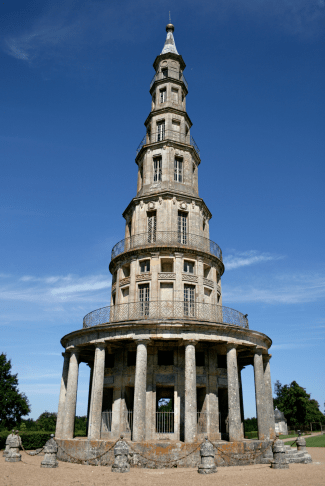
The Pagoda at Chanteloup

If I asked you to think of a pagoda in  a European garden I suspect your automatic reaction would be to think of the one at Kew. But there is another, perhaps inspired by it, in an imposing position in the Loire Valley near Amboise.
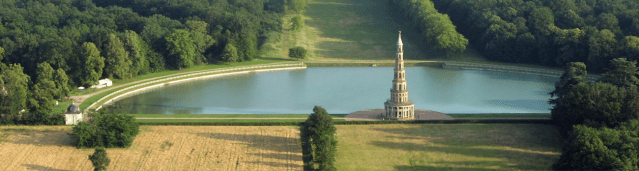
It’s virtually all that remains of the great palace of Chanteloup, home to Louis XV’s prime minister, the Duc de Choiseul, who fell from grace in 1770. While the palace was destroyed like so many others in the aftermath of the French Revolution, the pagoda remains standing on the highest point of the estate. Although not for the faint hearted it can still be climbed and gives fantastic views over the surrounding countryside.

The pagoda overlooks a large formal semi-circular lake and [now dry] canal which was once part of the 8000 acres of the original park and formal gardens, and nearby are two pavilions,  with another lodge remaining nearer the town.


Continue reading

Posted in Uncategorized | Tagged , , , , , , , , | Leave a comment

Sylva Old and New

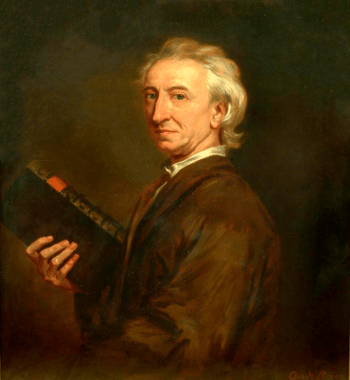
If you’ve heard of John Evelyn before now it’s probably because of his diaries which are one of our major sources of information about  the major events of the mid/late 17thc, and much much more besides. They gives a really good insight into of the life of an educated gentleman who was in the midst of public life. But Evelyn’s diaries were private and in his lifetime his fame rested on his writing – particularly about horticulture and gardening. Todays post is about one of his most important works, Sylva, and its contemporary update, The New Sylva.

The 1664 title page may look dull and you have to accept there are no nice pictures BUT is still the first major book about forestry and trees in Britain. To make up for it The New Sylva has stunning drawings by Sarah Simblet. Even if you’re not interested in reading the whole post I’d strongly advise that you scroll down to find the video link to Sarah Simblet talking about her work and the background to the book.

Sylva did not just shape people’s knowledge of trees but the way in which they were understood and valued.  Evelyn himself argued that “We had better be without gold than without timber.” [Sylva ch.31] and he seems to have persuaded a lot of others of that truth.

Continue reading

Posted in Uncategorized | Tagged , , , , , | 1 Comment