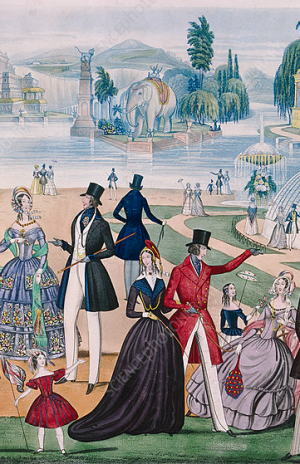
A couple of weeks ago I wrote about the new menagerie that was set up during the French Revolution in Paris’s Jardin des Plantes which helped put science rather than entertainment centre stage. This led to pressure for London to have an equivalent [or better!] , and in 1822 the Linnaean Society resolved to form a “Zoological Club of the Linnaean Society of London” which in turn led to the establishment of London Zoo.
Up until then the only way most people could see any “exotic” animals was to visit a travelling menagerie or one of the large indoor menageries on London. The most famous of these was at Exeter Change on the Strand, which from 1814 was run by Edward Cross.
But the tide was turning on such cruel conditions. The public mood shifted towards seeing animals given a little more space and better treatment. Menageries slowly began to close and zoological gardens began to open around Britain: Dublin in 1831, Liverpool in 1832, Manchester in 1836, and Edinburgh in 1839. But the first amongst them was created with the animals from Edward Cross’s menagerie and became London’s other zoological garden, and as far as I’m aware the only one that had a parachuting monkey…

The Tortoise enclosure, detail of a painting by E.J. Capel, 1831



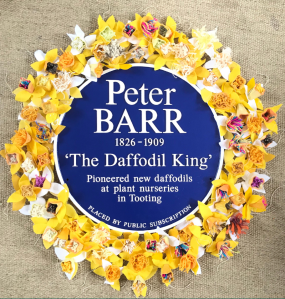
 So I reread them and saw that I’d mentioned Peter Barr a Victorian nurseryman who I’d said was “the unsung daffodil hero” and “who deserves an article of his own” A bit more research led me to a very lively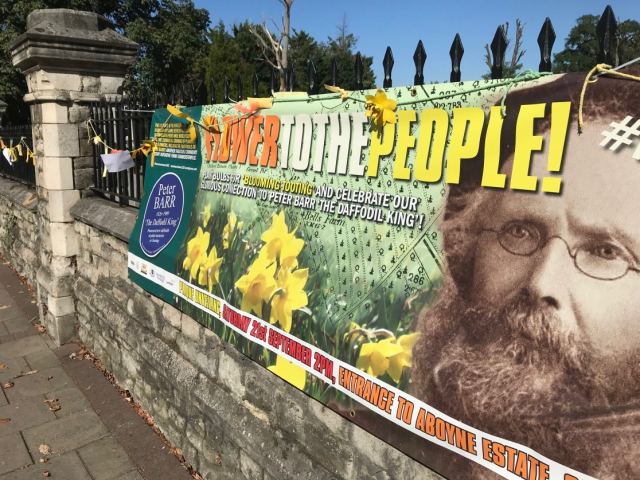


 The Garden History Blog
You must be logged in to post a comment.