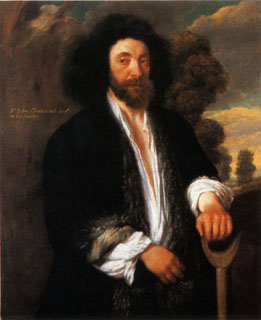
Hard Graft and Devastation

We tend of think of garden history being just about the history of gardens but not really much about the history of gardening itself ie how things are done rather than what is actually done.  I was reminded of that sharply  when someone got in touch about last week’s post.

When, they asked, did people realise that not only might trees fuse naturally  but that they can be deliberately grafted.

I admit I was stumped as I don’t know the history of every gardening technique off the top of my head but I went away to find out the history of grafting and  I hope this goes some way to providing the answer.

And by way of a diversion  what’s this little bug  got to do with it?


Continue reading

Posted in Uncategorized | Tagged , , | Leave a comment

Growing a 4 Legged Giant

As gardeners we all know that woody plants are very adaptable.  Think  of topiary or cloud pruning, of pleaching or hedging where with a little bit of effort we can manipulate trees and shrubs into doing what we want, using  their natural instincts to keep growing to our own advantage.

When I saw this 16thc miniature  I wondered what was going on but as I started looking closer I realised that our manipulation of plants can be taken to a completely different level.

from My Father Talked to Trees, Wilma Erlandson, 2001


And then I found these much more modern images and they  inspired this post.

Continue reading

Posted in Uncategorized | Tagged , , | 1 Comment

The Tradescants and their Tomb

Carved tree on the corner of the tomb

Just before the virus struck I was at the Garden Museum in Lambeth helping out on a course. We were in the new Clore Learning Centre which overlooks the  courtyard garden designed by Dan Pearson, [featured in March edition of Gardens Illustrated]. I sat at the back listening to the speakers but also watching the rain lash down outside on the two large chest tombs standing amongst the greenery. One is that of  Admiral Bligh of Mutiny on the Bounty fame and the other that of the family of the 17thc plant hunters John Tradescant senior and his son John junior. [If you’re not sure who they were check last weeks post which was an introduction to today’s]

Luckily the rain stopped during the lunch break, so I went to take a closer look.  Whilst Bligh’s monument is imposing but relatively austere that of the Tradescants is anything  but plain.

The view from the Clore Learning Centre, in the rain, Feb 9th 2020.  Bligh’s monument is the centre, the Tradescant’s tomb on the right.

In fact, as you can probably tell from even from the photo above,  their tomb is a work of art, or rather a series of works of art, and the more I looked at it and researched it afterwards the more intriguing and unusual it became.

Continue reading

Posted in Uncategorized | Tagged , , , | 9 Comments

The Tradescants

I’d just finished writing a post about something I’d seen at the Garden Museum when I  realised there might be some readers who wouldn’t know anything about the subject and would need a bit of background. So I started writing that and of course the piece became so long that I had to split it  into two… so  today’s is the introduction to next weeks!

It’s about the 17thc gardeners John Tradescant and his son, also John. They were an extraordinary pair: Gardeners to the aristocracy and royalty, plant hunters, nurserymen and founders of the first museum to be open to the public. Famous in their own  lifetimes, and  continuously in the centuries since, their lives have even been romanticised by a modern novelist.

But how much do you actually know about them? Continue reading

Posted in Uncategorized | Tagged , , , , , | Leave a comment

William Goldring and Asylums

At the end of last year I wrote about the work of William Goldring, a prolific landscape and garden designer who died in 1919. Apart from his private commissions  and work on  public parks he was also involved in the design of landscapes that have been generally overlooked by garden and landscape historians: those of hospitals and asylums.   A large number of these were being built in the later 19thc so I thought, with the Victorian love of order and record keeping, this would be an easy subject to  research but once again I’ve been proved wrong.
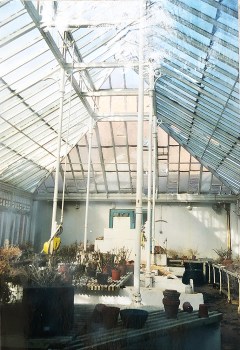
The Conservatory at Rauceby after closure © Steffie Shields 1999

The grounds of these new hospitals, particularly those for mental illness, were seen as having equal therapeutic value to the buildings where the patients were housed. But whereas architects are almost always known,  landscape designers are not.  This is surprising considering that many  were mainly on large rural or semi-rural sites and in many way can be seen as a continuation of the planning and layout of great landed estates in earlier times.

William Goldring from The Journal of the Kew Guild, 1913

Sarah Rutherford attempted to uncover these lost designers in her PhD thesis  about the landscapes of asylums but says that when she started her research “of all the 115 public asylum sites begun by 1914 only one was known to have a named designer.” Luckily that one was by William Goldring and she went on to show that he designed at least two more.  These three sites, Napsbury near St Albans in Hertfordshire, Hellingly in Sussex and Rauceby, near Sleaford in Lincolnshire, are the subjects of today’s post.

The remains of Rauceby Hospital from Google Street View

Continue reading

Posted in Uncategorized | Tagged , , , , , | 3 Comments