Oronsay

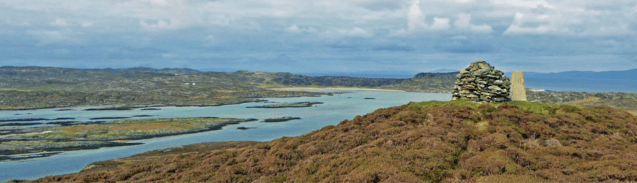
The priory ruins, house and garden from Ben Oronsay from Jane Smith, Wild Island

I don’t often write about places I haven’t been but this is an exception for a place I’d like to go to. Like most of us I get magazines and newsletters from all sorts of organisations and usually just glance through them, so I wasn’t expecting anything wildly different when I saw the last issue of the Professional Gardener, the journal of the Professional Gardeners Guild. However when I started flicking the pages I noticed an article which made me go online as soon as I’d finished reading, to see what else I could find.

It was about a Penelope Hobhouse garden being baby-sat by a retired member of the PGG for a fortnight last summer.  Nothing strange maybe about that, but this garden was on one of the remotest inhabited islands in Britain, home to the ruins of a medieval priory,  a bird sanctuary,  a protected species of bee and normally just 2 people. I’m very grateful to Derek Hosie for permission to use his article as a starting point for this post about the Island of Oronsay.
And apologies if you were looking for a Valentine’s Day piece. Couldn’t think of anything romantic enough this year, but why not check an earlier post:  Romance in the garden…

Continue reading

Posted in Uncategorized | Tagged , , , , , | 3 Comments

On the Life of a Jobbing Gardener

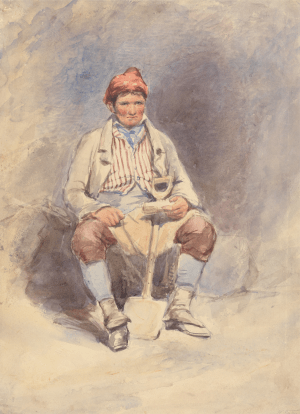
I was giving some lectures recently on one of my favourite horticultural characters, John Claudius Loudon, who, having already written a shelf-load of books, in 1826 founded The Gardener’s Magazine, the first real piece of regular horticultural journalism. I had only just started  browsing through the first few issues looking for examples of gardeners wages and working conditions that I could use in one of  the lectures when I  discovered a letter written to Loudon by Mr Archibald M’Naughton of Hackney on 29 November 1825 entitled “On the life of a Jobbing Gardener”. By the time I’d finished reading it I had already decided that Archibald’s story needed to be better known…

…and what better way of doing that than by sharing it here… Continue reading

Posted in Uncategorized | Tagged , , , , | Leave a comment

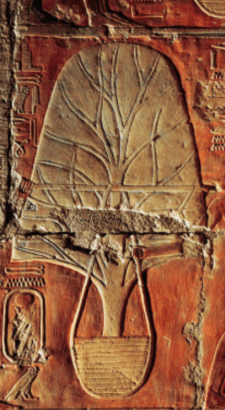
Hatshepsut and Thutmosis

We tend to think of Botanic Gardens as being very much a western invention, and that the earliest ones  were founded in  northern Italy in the 16th century.  Of course it all depends what you mean by a botanic garden,  but there’s certainly an arguable case for saying that botanic gardens in the widest sense of the word – as large deliberately gathered large collections of plants – existed hundreds, indeed thousands of years, before the foundation of the botanic gardens of Padua, Pisa or Oxford.

The earliest example I can find of plants being deliberately hunted down  and collected come from ancient Egypt around 1500 BC where two pharaohs were so proud of their achievements that they not only ordered the deliberate  collecting of plants but put them on their temple walls.

Continue reading

Posted in Uncategorized | Tagged , , | Leave a comment

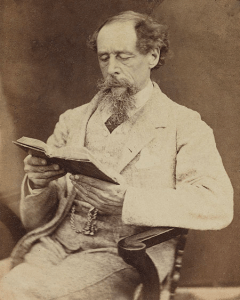
Dickens and his Garden

Charles Dickens,  1863, The Morgan Library & Museum,

I don’t suppose many of us think of Charles Dickens as being a gardener. Novelist, Social reformer, commentator, even actor/performer  yes, but gardener, probably not. Yet Dickens was very interested in gardens and gardening and thought England itself was  ‘the one great garden’, with its ‘changes of glorious light from moving boughs, songs from birds, scents from gardens, woods and fields’.

Although he did not claim to be a gardener he wrote of “the repose and delight to be found in gardening” adding “probably there is no feeling in the human mind stronger than the love of gardening.”
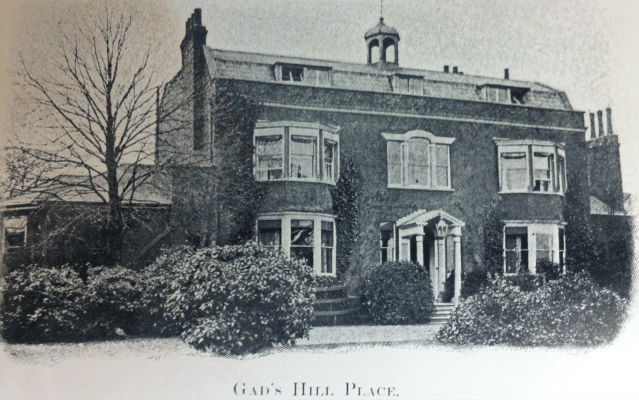
And once you start to think about it, gardens and the love of plants play an important role in several of his novels.  They are a place to escape the harsher reality of the world many of his characters inhabit. So my idea was to look at some gardens in his books, but on the way I began investigating Dickens own garden at Gad’s Hill Place and that’s as far as I got for reasons which will I hope become apparent.

But why the red geraniums?

from Gad’s Hill Place & Charles Dickens, by Edwin Harris, 1910

Continue reading

Posted in Uncategorized | Tagged , , , | Leave a comment

A Triple Portrait

I often get asked to lecture about gardens and landscapes in art, and although I like talking about pictures that people probably don’t know, I always like to include one that everybody thinks they know very well but actually probably don’t.

As you will probably have gathered it’s Gainsborough’s famous double portrait Mr & Mrs Andrews.  Despite its popularity I think there still a lot of things that viewers don’t always notice, and certainly the background story to the painting is usually something of a surprise.

Continue reading

Posted in Uncategorized | Tagged , , , , | 4 Comments