Piranesi and the Gardens of Rome

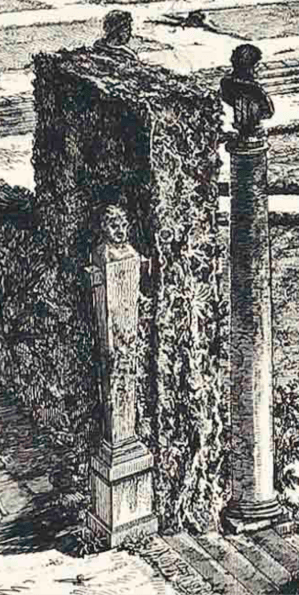
detail from the Villa Albani

Italy has always been famous for its classical monuments and, since the Renaissance,  for its gardens too.  Both attracted tourists in growing numbers, particularly as the Grand Tour became an essential part of the education of almost every young northern European member of the elite.

Aristocratic or not  tourists have always  wanted souvenirs. Some wanted to take home antique sculptures, others to have their portraits painted in Italian settings by Italian artists, but others less wealthy had to be content with buying prints, and so the production of engravings of the major sites, towns and landscapes became a lucrative business.

The greatest exponent of these views – or vedute as they are known – was Giovanni Battista Piranesi  who possessed “one of the most imaginative minds ever to have brooded on the visual arts”.

detail of the Villa Pamphili
Continue reading

Posted in Uncategorized | Tagged , | Leave a comment

Spheres of Influence…

There is a long history of philanthropic and/or paternalistic  industrialists  providing recreational and garden space for their employers. We’ve all heard of Bourneville, Port Sunlight and Saltaire, while Helena Chance’s recent book  ‘The Factory in a Garden’.  (2017) gives a comprehensive overview of such schemes in both  Britain and the United States if you want to know more.

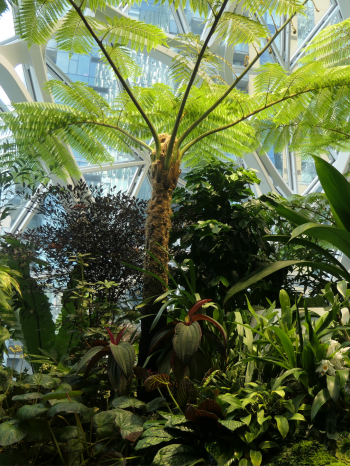
However research, including by of all people, the American Space Agency [NASA] over the past 50 years or so  clearly shows that it’s not just plants outside but those inside that are beneficial so houseplants are more than just green ornaments, they are good for your health too.

A 1989 NASA report  concluded : “If man is to move into closed environments, on Earth or in space, he must take along nature’s life support system.”  That’s because plants essentially do the opposite of what humans do when they breathe. They absorb carbon dioxide and release oxygen, and in the process  refresh the air, and remove toxins.  Other research shows that indoor plants  reduce stress levels, make people feel good,  promote concentration and as those earlier industrialists knew only too well, they help create a more contented workforce and increase productivity.

Today’s post is about a new post-industrial workspace packed with over 40,000 plants from all over the world in a group of three connected glass buildings which opened last year, and which I was lucky enough to be able to visit last weekend. You might be able to guess from the typeface and logo where I was and whose workforce this was designed for.


Continue reading

Posted in Uncategorized | Tagged , , | 3 Comments

Prior Wibert’s Waterworks

One subject that always seems to raise a lot of interest on the courses I run about the history of gardens is the mediaeval garden.  Although most of us will have a vague picture of what we think they were like, the quest for the reality of mediaeval gardens and green open spaces is tantalising.
When I ask  what might be the best source for finding out about them  given that unsurprisingly, there are no actual mediaeval gardens left,  most people say illuminated manuscripts.  Unfortunately these really only begin to show details of daily life such as gardens from the late 14thc onwards. Next on the suggestion list is archaeology which is increasingly sophisticated and these days  can indeed reveal all sorts of things that would never be recorded by documentary sources. Analysis of the contents of rubbish pits and sewers, pollen and soil samples add a huge amount of detail to the physical remains of buildings and hard landscaping.  Other options offered are literature, poetry,  account books and even evidence from the countryside where many mediaeval practices were perpetuated long after the end of the Middle Ages, and can still be identified.

The one thing nobody has ever replied is a drainage plan. Yet today’s post is about just that.

Continue reading

Posted in Uncategorized | Tagged , | 1 Comment

Percy Cane

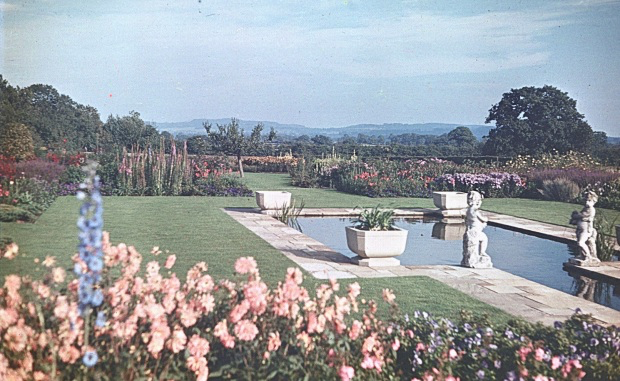
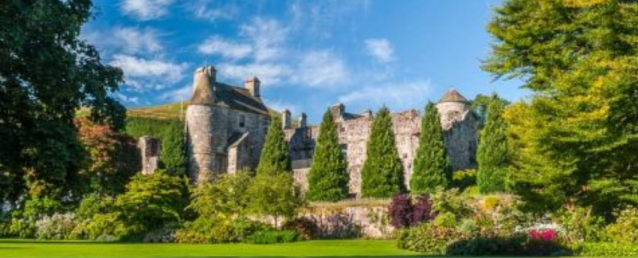
Last week’s introductory post about Percy Cane –  An Unsung Hero?  – looked at his work pre-war, while today’s is going to discuss some of his later commissions. Like much of the architecture and most of the  designed landscapes and  gardens of the second half of the 20thc these have not always been well recorded.  I’m pleased to say that  attitudes are beginning to change in part at least thanks to an initiative by the Gardens Trust and supported by Historic England: Compiling the Record.  Although many of Cane’s designs  (including the three covered in today’s post) are   obviously appreciated and well-cared for, others are not, and have suffered from ignorance and neglect and his involvement in their design is often not even mentioned in associated websites.
Continue reading

Posted in Uncategorized | Tagged , , , , , , | 2 Comments

An unsung hero?

Welcome to our 300th post!

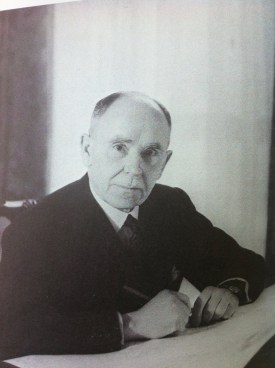
Hands up if you recognize the man in the photo. As  a clue he  wrote: “Designing gardens is an art… As in all the arts there are periods of growth and changing fashion, but the principles remain constant. To make  a beautiful garden the garden-maker must not only know what he is going to do, but also why he is doing it.”

So congratulate yourself if you do know but, if like most people outside the very small world of garden design and garden history you don’t, read on and maybe you can see why Anna Pavord called him   “the Thirties’ answer to Edwin Lutyens,”  although “he  has yet to find a champion to set him up in the garden designer’s pantheon where he belongs.”


Continue reading

Posted in Uncategorized | Tagged , , , , , | 2 Comments