
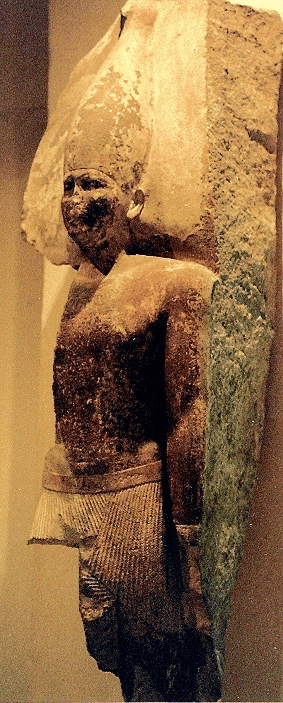
Limestone figure of Sneferu, from Egyptian Museum, Cairo
No… it’s not an old English dialect swear word, or a disease of sheep or anything remotely similar, instead Sneferu was an early Egyptian pharaoh who ruled around 4500 years ago. Like Ozymandias he would have been long forgotten but for the fact that he left behind an extraordinary funeral monument or two.
When we think of the pyramids I’m sure everyone thinks of the famous ones at Giza which were built by Sneferu’s sons and grandsons. In fact they were based on a new architectural form which Sneferu had pioneered and almost perfected.
But this a blog about the history of gardens and designed landscapes so why am I waffling is on about the evolution of pyramids in Egypt? It’s because archeology has now shown that Sneferu’s pyramids were not designed in isolation and in fact sat in the middle of a complex of buildings and gardens which is [I think] the earliest known example of large-scale landscape design.


 La Bourdaisière is just one small chateau in the Loire Valley among dozens and dozens of others. It sits on a rise dominating its immediate surroundings, and in the middle of its parc classé [the equivalent of a registered historic park in Britain] and a 90 hectare estate. In itself that does not mark it out much from the other chateaux in the region. Its history is, like its architecture, nothing particularly special. Yet it is has become a remarkable place for one reason and that is its large kitchen garden, and what now goes on inside its walls. And that’s all down to a Prince and his tomatoes…


 The Garden History Blog

You must be logged in to post a comment.