A Very British Revolution

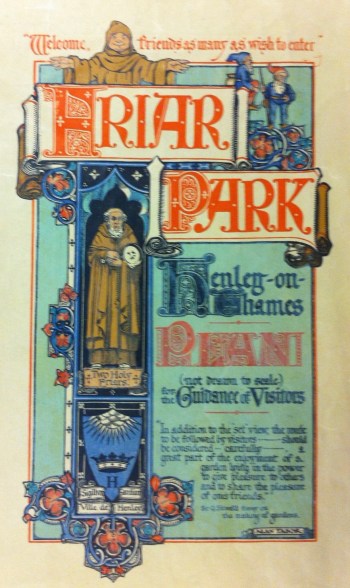
The front cover of the guide book

51 years ago in May and June 1968 there was  a revolution  in Britain.  It did not include  rioting students on the streets as in Paris but  took place in the grounds of one of Britain’s grandest stately homes, Syon Park in Middlesex.   55 acres of the Duke of Northumberland’s  estate was set aside “for the establishment of a National Centre for Gardening, where all that is best in British horticulture will be on permanent display.” It was Britain’s first garden centre.

Plans for this had been announced in 1965 when the 10th Duke went into partnership with ICI.  They were soon joined in this venture by Percy Thrower, “known to millions of people in Britain as a broadcaster and writer on gardening topics” who became  a director of The Gardening Centre Ltd, and by Roy Hay, gardening correspondent of The Times, who chaired the advisory committee to set it up.  Continue reading

Posted in Uncategorized | Tagged , , | 1 Comment

Lawnmowers on Legs

from Country Life, 25th march 1954

As regular readers will know many of these posts are sparked by a chance discovery while researching something completely unrelated. Todays is certainly one of those odd quirks of fate.

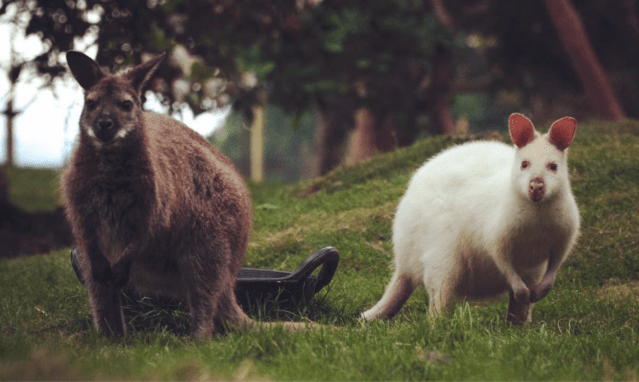
I was looking at an article in a Country Life from 1954, but there on the following page was a much more intriguing short piece, which once I’d read it,  I knew I had to follow  up one day. Then I forgot.  But a few days ago I saw its counterpart, also in Country Life, from  some 50 years earlier, in 1903.  So that was that it. I had to down tools on everything else and get researching kangaroos  and wallabies in the British garden!

Continue reading

Posted in Uncategorized | Tagged , , , , | Leave a comment

The Bucks stopped here…

detail from A Prospect of Carmarthen

For about three decades in the mid-18thc two  brothers from Yorkshire, Samuel and  Nathaniel Buck, toured Britain every summer. They sketched towns, landscapes, estates and antiquities, and every winter they turned their sketches into engravings for publication.

Their work is an important source of evidence of what there was, and what has gone – including gardens – but it is also an important factor in understanding the development of the whole idea of what it meant to be British in the 18thc.

The Buck Brothers, 1774, British Museum

Continue reading

Posted in Uncategorized | Tagged , , | 2 Comments

Crackerbox Palace

Guess who…
from darkhorserecords

You probably recognize the title of this post and  know where it comes from. If you do you probably  recognize the man in the boater too. But anyone who knows me will be amazed  that I’ve used it because I have very little knowledge and even less interest in “modern popular music” and never have had.  So why have I been reading the lyrics of a couple of Beatles songs as well as the biography of one of the Fab Four?  And why am I writing about it on a blog about garden history?

The clue is in the  last 2 posts which  have looked at the extraordinary garden at Friar Park in Oxfordshire created  by Sir Frank Crisp between 1889 and his death thirty years later. Today I want to conclude the story with the story of  what happened to the estate after his death in 1919, before finishing  up [for a change] with some good news.  Because  Friar Park and its amazing alpine garden was saved by the man in the boater. It became “Crackerbox Palace” and then  paid its benefactor  back by showing him how wonderful gardening is and  making it his overwhelming passion. Continue reading

Posted in Uncategorized | Tagged , , , , | 8 Comments

The Henley Matterhorn

The front page of Alan Tabor’s fold-up map/guide to the garden c.1914

You might like to know there is a lecture about Friar Park on Wednesday 3rd Feb at 6.00 with a. recording available for a week  afterwards.

Booking via Eventbrite:

Last week’s post gave an introduction to Friar Park at Henley, the madcap garden project of Sir Frank Crisp.  Crisp was not only rich he was also imaginative and ambitious  – a good combination for someone never satisfied with what he had achieved in his garden.  As Gardeners Chronicle  said in 1899 “small wonder… Mr Crisp.. is ever making such alterations and additions as shall render it ever more interesting and beautiful.”

The whole site was eclectic, drawing on his interest in  medieval and Tudor history, but also his openness to new ideas and directions such as the fashion for the Japanese.  But it’s his Alpine garden which really bought the garden to public attention. It might make you want to giggle as much as admire but there’s no doubt that Frank Crisp had panache and a pronounced sense of humour… as well as a collection of gnomes.

Continue reading

Posted in Uncategorized | Tagged , , , , , | 3 Comments