
Academic Research and Professional Networking in Garden History

An early example of professional networking by women gardeners

I know that I normally only publish a new post on Saturday mornings but there a couple of things coming. up soon that I thought some of you might like to know about which justifies breaking my habit.

The first is a free on-line introduction to the MA and PhD opportunities in Garden History at the University of Buckingham for the academic year starting in October.

A RECORDING OF THE INTRODUCTION IS NOW AVAILABLE AT

https://us06web.zoom.us/rec/share/BOXjZHWUTGUocMlrgZRx3F3T_aiZj7YbRDjwMb5S8g1t1S0y33FVjDKFbDUmhAya.KNFnZuda9RGfTU2F?startTime=1755538172000

YOU’LL ALSO NEED THE PASSCODE
Passcode: ^^p&ed8C

The other is a survey organised by the Gardens Trust to see if there is interest in  establishing a network for those who  work, study or volunteer in historic gardens and related sectors, or are thinking about doing so.

Some of the MA students on a list to Eltham Palace in 2024. with Christopher Weddell, Senior Gardens Advisor at English Heritage


Continue reading

Posted in Uncategorized | Leave a comment

Reginald Arkell and Old Herbaceous

August is traditionally the silly season in the media, so in keeping with that the next few posts are going to look at garden-related humour, beginning today with the work of Reginald Arkell.
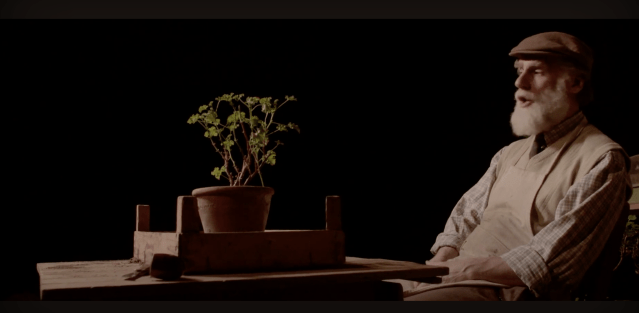
I can hear the muttering already.  Who on earth was he?  Unless you’ve read his work the name Reginald Arkell probably doesn’t ring many bells today, but until his death in 1959 he was a well-known and successful editor, playwright and later screenwriter, television commentator, lyricist for musicals, novelist and poet.  He was also a keen gardener and amongst his works were a series of books of comic garden verse [I hesitate to call them poetry] including Green Fingers and Other Poems and a comic novel Old Herbaceous  all of which were in their day best sellers.

As the publishers blurb says: “Anyone who loved the England of Goodbye Mr. Chips and Mrs. Miniver will love Mr. Arkell’s England, too. But the central character is not peculiar to the English countryside; wherever there is a garden, there you will find Old Herbaceous.”

Let’s see if his humour still appeals…


Continue reading

Posted in Uncategorized | Leave a comment

Dr Kniphof and his red-hot pokers

One of the things that almost never ceases to amaze me is how many plants have been named after people who had little or no connections with them, and often wouldn’t even have known they existed let alone seen them. I was reminded of that this morning when looking at a glorious stand of red-hot pokers in my garden.  It’s a family of plants that I’ve grown to love over  the years, especially once I’d discovered there was more to them than the bog-standard orange variety.

But why on earth is their botanical name Kniphofia? Was there a Mr Kniphof? and who decided he should have his name attached to this extraordinary group of African plants? It turned out to be a bit of a confusing roller-coaster of names and classifications in the days before the internet and not helped by the fact that red-hot pokers are really rather promiscuous…

Continue reading
Posted in Uncategorized | 1 Comment

Deck the House or Flower Arranging with Beverley Nichols

As regular readers will know I’m very fond of the work of garden writer Beverley Nichols, but until recently I hadn’t really taken much notice of his interest and involvement in flower arranging. True the subject crops up in several of his semi-fictionalised accounts of his gardens but in 1967 he also published an entire book on the subject which he described as “an art — a minor art perhaps but a fascinating one nevertheless – and one with some similarities to music and painting.”

But a book, a whole book on flower arranging and its history, surely isn’t really possible. Well, its not only Nichols but several others who’ve proved that it is!


Continue reading

Posted in Uncategorized | 1 Comment

Gunnersbury and the Rothschilds

The Rothschild family have long had a reputation as great garden makers but while Waddesdon, Exbury or Ascott might be the sites that immediately spring to mind,  it was actually Gunnersbury Park bought by Nathan and Hannah Rothschild  for £17,000 in 1835  that was the first to be laid out by the great banking dynasty.

Although Nathan died shortly afterwards, Hannah, their son Lionel,  and grandson, Leopold completed the mansion and  transformed the gardens and grounds, notably creating  one of the earliest Japanese gardens in Britain.  Together with  their skilled and creative staff they made Gunnersbury one of the most celebrated gardens of its day.

The Orangery by the Horseshoe Pond

Continue reading

Posted in Uncategorized | Leave a comment