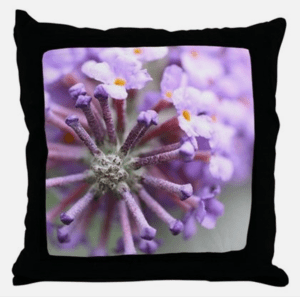
Once the Queen of the Parlour…

Aspidistra
Samuel John Peploe (1871–1935)
Aberdeen Art Gallery & Museums

Everyone’s maiden aunt and granny had one, and Gracie Fields sang of having the biggest one in the world. A dreary, dark green, flowerless clump in a pot in a corner of the parlour. Often forgotten about for weeks on end they tolerated heat, drought, coal and gas fire fumes and could hover apparently on the verge of expiry for years on end, before responding gratefully to a  splash of water or a quick dusting. It’s not surprising they were known as the cast-iron plant.
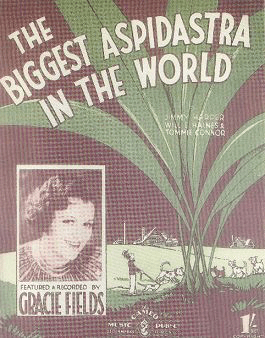
Famous as a joke plant aspidistras were, according to the OED “often regarded as a symbol of dull middle-class respectability” – thanks largely one suspects to George Orwell’s novel Keep the Aspidistra Flying. BUT how and why did they become so popular and where on earth have they all gone?

After all you’d think a cast-iron plant would be just the sort of thing that would appeal to time-poor and knowledge-lacking modern generation. Yet it’s cacti and succulents that are all the rage not the Aspidistra?   What has the poor plant done wrong to be so ignored? Continue reading

Posted in Uncategorized | 3 Comments

John Evelyn’s Elysium Britannicum

Wax impression of John Evelyn’s seal,    National Portrait Gallery

John Evelyn is, like his friend Samuel Pepys, best known for his diary,  detailing life in the second half of the 17thc. He was a landed gentleman, government official and a high Anglican of uncompromising piety but also a man beset by curiosity.

As a result he investigated and wrote about a huge range of subjects, but particularly gardening. He not only translated and commented on several  major French texts  on gardening but also wrote several key ones of his own.  

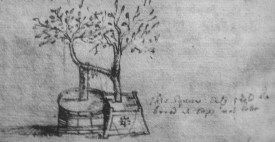
Method for propagating plants by layering into a pot full of earth

Evelyn saw horticulture as the form of knowledge and expression that by its very nature could include all other arts and sciences, and developed  a pious understanding of the workings of Nature, so revealing God’s infinite wisdom. Indeed so convinced of this was he that he spent much of his life from the 1650s onwards working on a book intended to cover every aspect of the subject that he could. He’d already written about 1000 pages when he died in 1706.

Instructions for grafting rare fruit trees

Now in the British Library and catalogued as Add MS  78432 it’s better known as Elysium Britannicum or The Royal Gardens.  It remained virtually unknown until 2001 when it was finally transcribed and published.  Continue reading

Posted in Uncategorized | Leave a comment

East comes West

Panel from the Chinese House at Stowe, photo by Peter Vallance, 2008

Dr Johnson wrote in 1738 : “There are few nations in the world more talked of, or less known than the Chinese.”  He was reflecting on the latest book about China to be published, one which Patrick Conner in Oriental Architecture in the West suggests that inspired the first “Chinese” building in Britain.

This was a massive 4 volume work by the Jesuit priest Father Jean-Baptiste Du Halde who had not visited China himself but collated the unpublished reports  of 17 of his fellow priests. It first appeared in France in 1735, but was translated into English as  The General History of China the following year, and went into its 3rd edition by 1741.


Unlike Nieuhof’s account of the Dutch Embassy which I mentioned  a couple of weeks ago there are  very  few illustrations.  However the artist, Antoin Humblot, crucially shifted the emphasis of his Chinese sources, from reality to something rather more playful and elegant,  and in the process he made China appear almost  to be rococo.  Such books helped feed the growing fascination for all things “Chinese” including gardens and architecture, which Tim Richardson has called  “one of the wonderful eccentricities of the age.”

Continue reading

Posted in Uncategorized | Tagged , , , , , , , , , , , , , , , , , , , , , , , | 2 Comments

Adam’s weed

An obscure 17thc botanist cleric is very prominent in many  gardens at the moment because of a plant, that as so often in the weird and wonderful ways of botanical names,  he never saw, didn’t even know existed  and had absolutely no connection with in any shape or form.   Yet his is one of the few botanists names that really are well-known. That’s because because the plant is also renowned as a colonising weed, which grows rapidly in the poorest ground, filling waste ground, lining railway embankments and even cracks in walls, roofs and gutters where its hard to imagine how anything survives let alone thrives. It has no predators to munch its leaves, but unlike the other invasive plants such as Japanese knotweed or Himalayan balsam, that this description applies to, it instead attracts butterflies and insects and fills the air with a wonderful honey-like fragrance.

The Guardian in an editorial called this plant “the ragamuffin of the natural world” saying  “It is common as muck and as easy as dandelions to grow”  ….


Continue reading

Posted in Uncategorized | Tagged , , , , , , , , , , , , , , , , , , , , , , | Leave a comment

Looking East …

What’s the best known – and certainly most instantly recognizable – garden building in Britain?
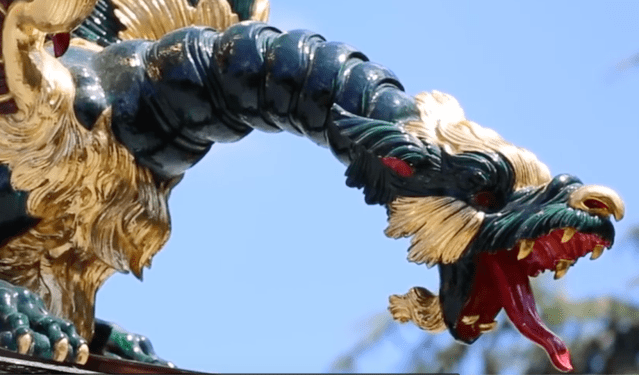
I ought to think of something clever to say at this point, or perhaps provide a list to choose from but I suspect that for the general public, and probably garden historians too there really is one possible choice.  The fact that it’s just been reopened to the public for the first time in years following a massive restoration project, and the return of its 80 dragons is a good excuse to sing its praises and ask a few questions.


I can’t think of any other garden building that is so well-known and has such an immediate  wow factor  as the Pagoda at Kew which is now 256 years old.  Which poses the next obvious question: Why is there a Chinese inspired building in what was once a private garden for the royal family? What drove William Chambers, effectively the newly appointed ‘royal architect’, to suggest the construction of this extraordinary building?   The answer is quite a long one, but one which Chambers was eminently suited to provide.

Continue reading

Posted in Uncategorized | Tagged , , , , , , , , , , , , , , , , , , , , , , , , , , | 1 Comment