Arthur Hellyer: the greatest garden writer of his generation?

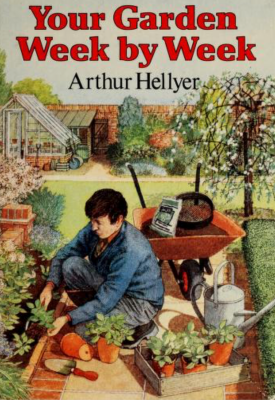
When I was growing up, and it was the same for  my parents’ and even grandparents’ generations,  one of the great names in the gardening world was that of Arthur Hellyer, whose books were on every amateur gardeners shelves and whose life spanned almost the entire 20thc. He was a practical hands-on gardener, a highly respected gardening journalist and author and a professional to his fingertips.  

Arthur Hellyer, from The Garden 1993

In his obituary in  in The Garden in 1993 Alan Titchmarsh wrote‘Anyone who knew Arthur Hellyer will tell you two things about him. First that he was one of life’s gentlemen, and second that he had an all-round knowledge of gardening that few could rival…. his articles continued to be enquiring and erudite to the end”,  so read on to find out more about  “a man who must rank as one of the busiest gardening writers ever, but who was never too busy to be nice.’


Continue reading

Posted in Uncategorized | Tagged , , , , , , , | Leave a comment

The other Chelsea Flower Show…

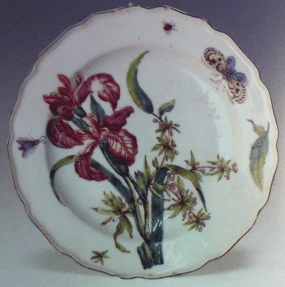
Iris latifolia, c.1755, Salisbury Museum

As the eyes of high society and the horticultural  world turned to Chelsea, the doyenne of all flower shows world-wide, this week I thought it was time to turn my attention towards another  even older connection between the plant world and Chelsea. These date back to about 1743 and the foundation of the Chelsea porcelain factory, sited close to the river and the even older-still Chelsea Physic Garden.

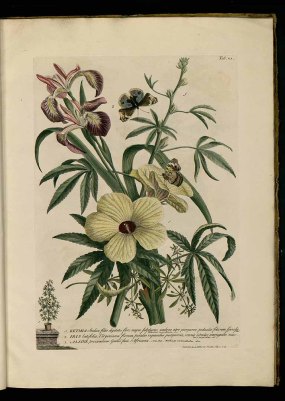
from Georg Ehret’s Plantae et Papiliones Rariores, 1748-59

If you’re wondering what plants have got to do with porcelain china you’ve obviously never eaten soup from an iris, custard out of a cabbage or drunk tea from a cauliflower.

detail of iris latifolia from Georg Ehret

Still puzzled? Then read on…


Continue reading

Posted in Uncategorized | Tagged , , , , , , , , | 2 Comments

Repton through the window…

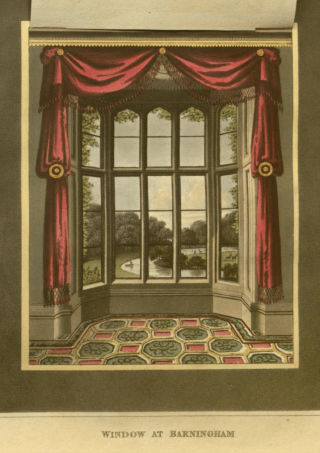
The “improved” Gothic window at Barningham. Notice the parterre carpet! from Fragments

Repton is well-known as our first landscape gardener but he was much more than that. It’s often overlooked that he was an architect too, [although with less obvious success and renown] and much of his writing is concerned with the marriage between the two arts.

If you’ve read anything  about Repton before now you’ll know although he was a good judge [and manipulator!]  of clients, but underneath his willingness to compromise  he had very fixed views about many aspects of design, and one of his particular obsessions was glass.

He hated it!  Well, of course, that’s not literally true but he ceratinly had very decided views about windows, [and the views from them] and hated to see visible glass in many situations.

Continue reading

Posted in Uncategorized | Tagged , , , , , , , , , , , , | Leave a comment

The Last Post: Rebranding the Blog

No you haven’t misread the calendar. It isn’t Saturday. And no your eyes haven’t deceived you – it is a post from P&G – although, in fact, it’s  the last one.   But before you start wailing and gnashing your teeth about what you are going to read over breakfast on Saturday mornings,  and all the fascinating bits of garden history you’re going to be missing in future don’t despair. The blog is going to continue but under a new name and address.   Let me explain why…

I’ve been writing this blog since it started in 2013 as part of my role as a trustee of Parks and Gardens UK.  As you may know the Parks and Gardens database has been transferred to the Hestercombe Gardens Trust who are undertaking a major overhaul of the site and planning to relaunch it later this year.  My official connections with P&G is about to come to an end with the winding up of the charitable company that used to run it.

However I am also a Trustee of the Gardens Trust, where I am co-chair of the Education and Events Committee, and so I’m moving the blog’s home  from P&G to the Gardens Trust.  This means that it will be hosted on, and linked to,  the Gardens Trust website.

The banner will obviously change from the current P&G one to this shiny new green one and posts should still arrive in your inbox  but from this address:

thegardenstrustblog.wordpress.com

Searches and links to the old parksandgardenuk.wordpress.com site and its URL should be automatically redirected. The only thing you might need to do is to make sure that the new address is included in your contacts so that future emails don’e end up in your junk mail folder.

The changeover will start as soon as I’ve sent this final P&G post  and so its possible there might be a slight interruption of service today or even tomorrow  but I’m hoping that everything will be sorted very quickly.  Do get in touch  via education@thegardenstrust.org  if you have any concerns or questions.

Normal posting – from the new address – will resume on Saturday!

 

Posted in Uncategorized | Leave a comment

Gardening in Miniature

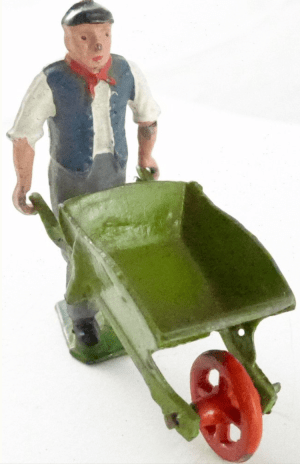
A gardener with his barrow from               Britains Miniature Gardening, c.1930-36
Lilliputworld

Sorry to disappoint you if you thought you were going read a post about gardens in bottles, on saucers, mini-flower pots or bonsai.  Instead it’s a potential walk down Memory Lane for everyone who grew up between the wars, and had their first chance  to turn their hands to gardening.  But not the hard way. You didn’t have to get your fingers dirty, you didn’t have to any backbreaking digging or weeding. You didn’t have to deal marauding slugs and snails, your plants didn’t get munched by greedy caterpillars and you didn’t have to encounter any stinging or biting bugs or noxious  plant diseases.  Indeed you could garden on the kitchen table or your bedroom floor.

The opportunities stopped during the war when you really did have to dig for Victory, but started up again for another generation in the 1960s and 70s although once again it didn’t last that long.

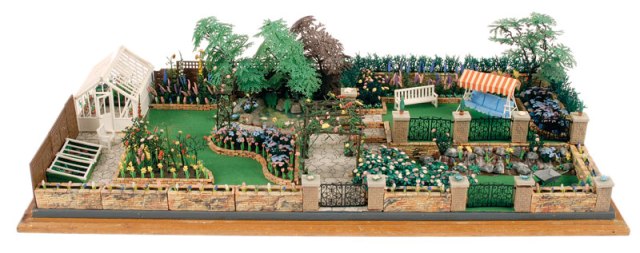
How come all this gardening the easy and blisterless way was possible?  It was originally all thanks to a man named William Britain whose company created  the first mass-produced models that allowed children [and consenting adults!]  to create a miniature version of their parents back gardens and to rearrange it at will.

Britains – Floral Garden Range – Retailer Display, early 1960’s  Vectis Auctions

Continue reading

Posted in Uncategorized | Tagged , , , | 5 Comments