Belsay: “A self-contained Eden”

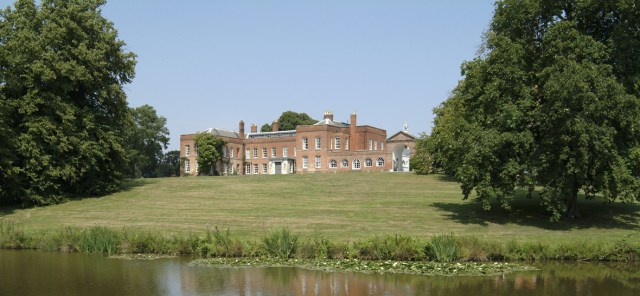
Belsay Hall, Historic England

Belsay is an extraordinary match made in heaven, or rather in the green rolling hills of Northumberland.  The estate is most famous for its stunning but stark Grecian revival mansion finished just 200 years ago in 1817, but tucked away in the grounds there is also a once important but now semi-ruined mediaeval castle that was enlarged and ‘domesticated’ in the early 17th century.

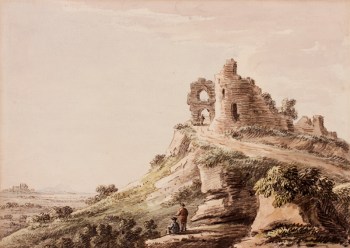
Belsay Castle, Historic England

But best of all the two buildings are linked by an extraordinary  garden created in the 19th within the the quarry from which the stone for the new hall was cut.

The Quarry Garden, English Heritage

Belsay was owned by the same family – the Middletons –  from the 13thc up until ownership passed to English Heritage in 1984. Although its buildings are now empty and echoing Belsay still maintains the same special quality that led Christopher Hussey, the architectural and garden writer, to describe it in 1940 as  “a self-contained Eden”. It is definitely  one of the architectural and horticultural  highlights of not just North East England but the whole country. Continue reading

Posted in Uncategorized | Tagged , , , , , , | Leave a comment

Ella and Florence Du Cane & their own gardens in Essex

“Spring in the Wild Garden” based on a painting by Ella  Du Cane of her  garden at Beacon Hill from J.Coutts, A Complete Book of Gardening, 1930

Last week’s post was about Ella and Florence du Cane two adventurous aristocratic young women who, in pre-war Edwardian England, wrote and illustrated garden-related travel books.  

Despite their popularity before 1914,  by 1918 the story was different. There were far fewer travel books published – and none at all for the sisters – but there may well have been other factors at work.   The family estate, Braxted, had to be sold to pay their brother’s debts, so after her war service Florence returned to live with their mother at Mountains, the former dower house. She also took seriously to horticulture, not only taking over the running of Mountains but making a career of garden design. Meanwhile,  although some of Ella’s  paintings continued to be  used to illustrate books she spent most of her time at nearby Beacon Hill House, painting and creating a new garden around what was  once a small, but soon enlarged, cottage.

Extract from OS 25″ series: Essex n XLVI.13 
showing both Mountains and Beacon Hill House                                                                                       Revised: 1920 Published: 1923. National Library of Scotland


Both gardens were soon being recognized as interesting and significant and were reported on by Christopher Hussey in Country Life, almost in tandem, in 1925.  All the photos come from the articles on  14 March & 2nd May respectively and have the original captions unless otherwise stated.

Continue reading

Posted in Uncategorized | Tagged , | 1 Comment

Two Essex Girls & the exotic: Ella & Florence Du Cane

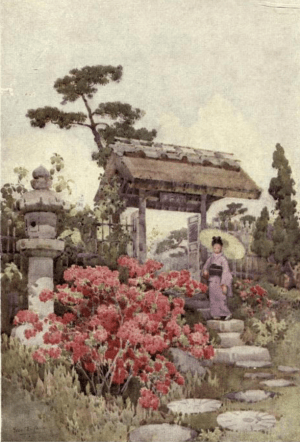
Azaleas from Flowers and Gardens of Japan by Ella and Florence du Cane, 1908

My title is a bit unfair. The Essex Girls I’m going to talk about are not those caricatured on TOWI or in popular comedy but two aristocratic young ladies from the county who not only created gardens there but also travelled the world and wrote and illustrated a series of travel books. These were mainly about gardens and introduced a touch of the exotic and colour, to their British readers.

Aristocratic women in the 19thc were conventionally taught to paint and draw but few made a living out of it. That would have been thought shocking. But one woman who did was Ella Du Cane. The daughter of a Tory MP and colonial governor, after the death of her father, she set off with her elder sister Florence to travel the world.

Continue reading

Posted in Uncategorized | Tagged , , , , | 5 Comments

The Picturesque Traveller discovers the Lakes

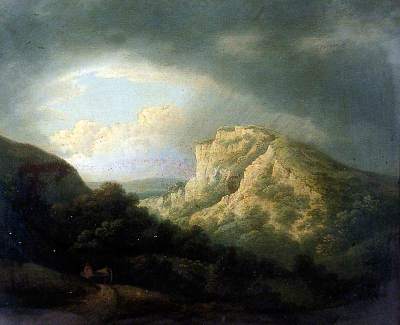
Lakeland Landscape, unknown artist,  York Museums Trust 

Last week’s post about Anthony Devis showed how our understanding and appreciation of the landscape has changed radically over the centuries.  Until the beginning of the 18thc wilderness and untamed nature, was generally unappreciated with most art, literature and aesthetic taste focused on the tranquillity of pastoral scenes.  However philosophers like the Earl of Shaftesbury then began to take more interest in wild nature.

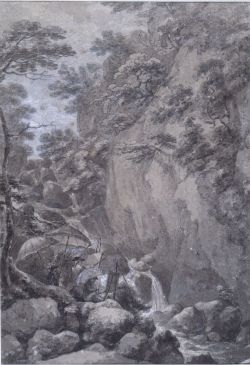
Sir George Beaumont and Joseph Farington painting a waterfall,by Thomas Hearne, 1777,           Wordsworth Trust

This developed as the century progressed and saw the emergence  of a new aesthetic category which explained how wild and untamed  scenery could evoke a response which was not the displeasure associated with ugliness, but pleasure mixed with fear.

Previously unregarded parts of the country  such as the Lake District, the Peak District, Wales and Scotland began to attract visitors. As transport and roads improved so more and more travellers  toured the country  seeking “picturesque beauty” and “the sense of the sublime” in nature.

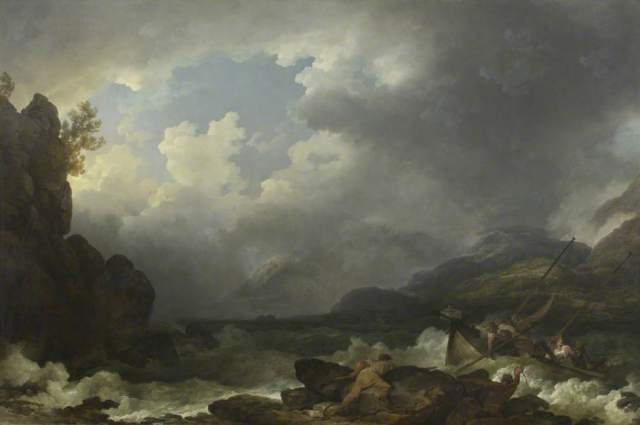
Who for instance, would previously have thought that Windermere, looking like an outpost of  the North Atlantic coast in a force 9 gale, would be a suitable subject for a painting?

Belle Isle, Windermere, in a Storm,  Philip de Loutherbourg, Lakeland Arts Trust


Continue reading

Posted in Uncategorized | Tagged , , , , , , , , | Leave a comment

Anthony Devis: Georgian topographical artist

No it’s not a repeat. It’s true there was a post about the 18thc artist  Arthur Devis a few month ago but this one is about his half-brother Anthony.  While Arthur specialised in conversation piece portraits Anthony turned to topography and became one of the country’s first successful landscape painters.

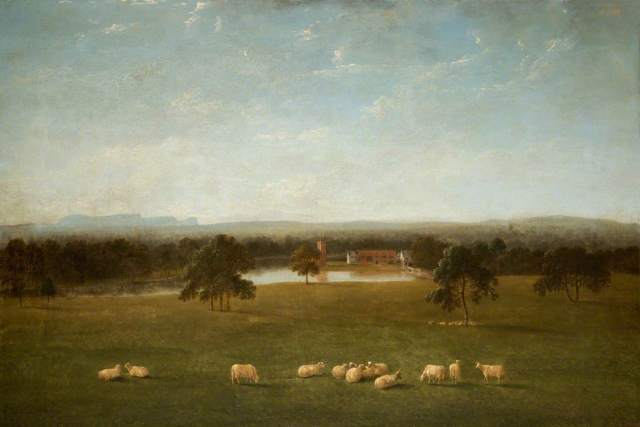
The Old Hall from the Park, TableyHouse, Cheshire.  

Anthony’s career spanned more than 60 years and unlike his half-brother he managed to adapt his style to changing Georgian taste and fashion both in painting and appreciation of landscape.  Read on to discover how his works  give us an insight into the changing perception of nature and the countryside in the 18thc.

Continue reading

Posted in Uncategorized | Tagged , , , , , , , , , , , , , , , , , , , | Leave a comment