Boys Toys and Shanks’s Ponies

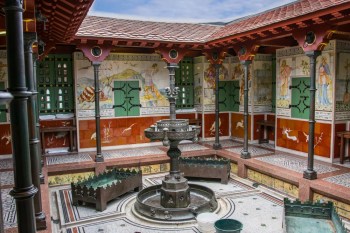
What on earth is this? And what’s it got to do with cutting the grass?

Sitting on the terrace overlooking my garden a few weeks back in the heat wave I was watching the lawn go yellow and then brown, except of course for all the pesky weeds which continued to grow cheerfully and provided a bit of height and colour. Now autumn has arrived it’s all change and I’m sitting at my desk  watching the rain pour down for the third day running and watching the lawn turn green again, with all the pesky weeds looking even happier. So as soon as it stops it will be time to cut the grass again…

Trust John Claudius Loudon to be the first to notice  the solution that will save me having to get out the scythe…
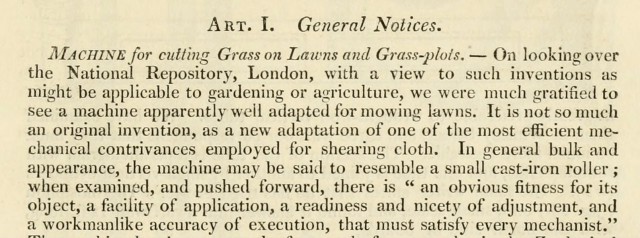
from The Gardener’s Magazine 1831, p.611


So today’s post is an as-little-technical-jargon-as-possible look  at one of the first “boys toys”: Edwin Budding’s  lawn mower  and some of  its descendants… Continue reading
Posted in Uncategorized | Tagged , , , , | 2 Comments

Coleton Fishacre: The Garden by the Sea

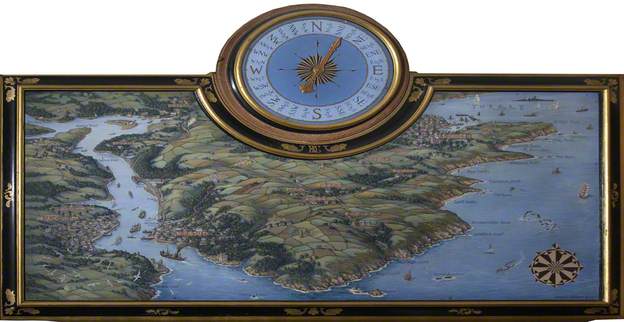
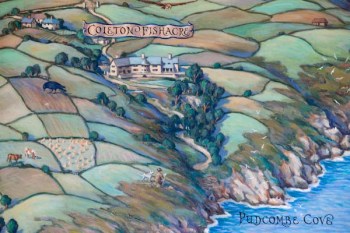
detail from A Bird’s-Eye Map View of the Kingswear Peninsula by by George Spencer Hoffman.  © National Trust Images

Imagine sailing gently along the coast of Britain and spotting a nice little steep-sided valley running down to the sea…no buildings in sight, just a few sheep and wizened wind-battered trees… deciding that would make a good place for a house… buying the land and building a mansion.  These days it would be impossible, even the idea would be laughable.

fom Country Life, May 31st 1930

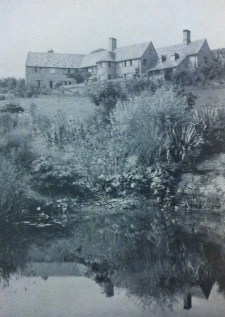
If I told you it had happened you might think  it must have been in the dim and distant past – perhaps when some marauding baron was looking for a defensive site after the Norman Conquest.  In fact it happened less than a hundred years ago in Devon and it wasn’t a marauding baron but the son of a London theatre impresario and hotelier. The result was the wonderfully romantic Coleton Fishacre.

A Bird's-Eye Map View of the Kingswear Peninsula with a Wind Dial by George Spencer Hoffman © National Trust Images

A Bird’s-Eye Map View of the Kingswear Peninsula with a working Wind Dial, which is over a fireplace in the house. by George Spencer Hoffman.  © National Trust Images

Coleton Fishacre, said Christopher Hussey in Country Life in May 1930, “belongs to the sea… here is a retreat from land-sickness, a spot where hurries and worries and work do not come.”

Read on to find out about one of the great houses and gardens of the age [now listed Grade 2], and the people who built it…. Continue reading

Posted in Uncategorized | Tagged , , , , | Leave a comment

An unlikely Michaelanglo: John Buonarotti Papworth

Sketch for a vase  for the pedestals of the gate piers, Oxford Lodge, Basildon Park, RIBA

The wonderfully named John Buonarrotti Papworth, was an architect , interior and garden designer and a near contemporary of John Claudius Loudon, Humphry Repton and Frederick Crace.  You may not have heard of him, or if you had, maybe like me you hadn’t realised how ubiquitous and influential he was. He spans the difference  in taste and fashion between the late Georgian and the  early Victorian periods  and  I hope this post will help raise awareness of his importance.

John Buonarotti Papworth
by William Brockedon, NPG


Papworth’s clients were, like Repton’s largely “new” men – bankers, industrialists, and businessmen— who wanted designs for  their estates, villas, and business premises. He was successful,  able to combine architecture with  internal furnishing and decorations and crucially, as far as we are concerned,   gardens.

Continue reading

Posted in Uncategorized | Tagged , , , , , , , , , , | Leave a comment

John Weeks: Horticultural Architect

Advert from Lodge’s The Peerage and Baronetage of the British Empire as at present existing.. 1861

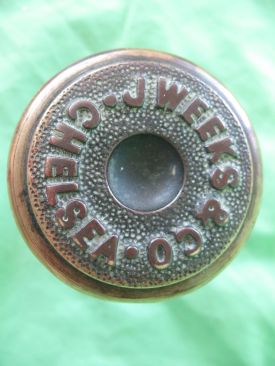
I’m always amazed by the way that some now fashionable upmarket residential areas have a different, more working class past  often with horticultural connections. Belgravia, for example, is built on the site of the Neat Houses, once London’s largest concentration of market gardens. Chelsea too was once home to market gardens but also to a large number of commercial nurseries for ornamental plants.

I’ve already written about Joseph Knight’s Exotic Nursery on the King’s Road and today’s post was intended to be about another of these once great, but now largely forgotten, establishments, John Weeks and Co. However, as usual, the research proved diverting… and so, as usual, I allowed myself to be diverted Continue reading

Posted in Uncategorized | Tagged , , , , , , , , , | 3 Comments

Cardiff Castle

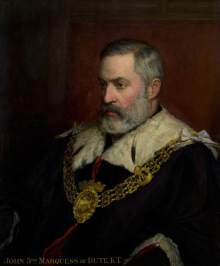
John Patrick Crichton-Stuart, 3rd Marquess of Bute (1847-1900),         Bute Museum

I hardly ever watch television but my eye was caught recently by a programme on John Patrick Creighton-Stuart, 3rd Marquess of Bute, who was one of the wealthiest men of his day, but one with a social conscience and a sense of humour  as well as an eye for beautiful things. He was responsible for commissioning William Burgess the eccentric architect and designer to help him create or redesign some of the most wonderful – and bizarre –  buildings in Britain including Cardiff Castle.

I’d visited a couple of years back with the Garden History Society but, as so often happens on organized trips, there just wasn’t enough time to explore it and neighbouring Bute Park  properly so the programme made me think its time to go back to Wales and take another look.

Read on to find out why…

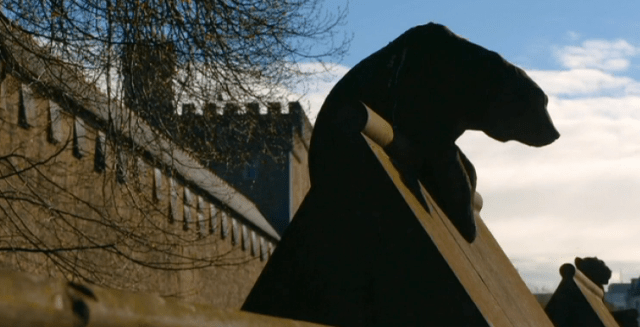
screenshot from Bute: The Scot Who Spent a Welsh Fortune, BBC2 8th July 2017

Continue reading

Posted in Uncategorized | Tagged , , , | Leave a comment