
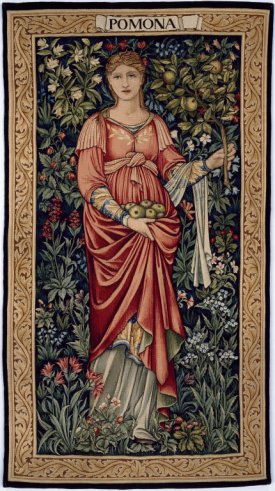
Pomona (From Flora and Pomona), Figure design by Sir Edward Burne-Jones and a background design by John Henry Dearle
Merton Abbey Tapestry Works, 1906, Chicago Institute of Art
It’s a sign of how seriously classical imagery and culture underlines western civilization that many of the characters associated with gardens and gardening are derived directly from it. A few like Flora and Ceres, who were major deities, are widely known but have you heard of Pomona? If you have you’ll probably know she’s associated with orchards and fruit. She was actually a nymph, famously beautiful and, because of that, was pursued by many of the gods. However she was devoted to her orchard and spurned all their advances.
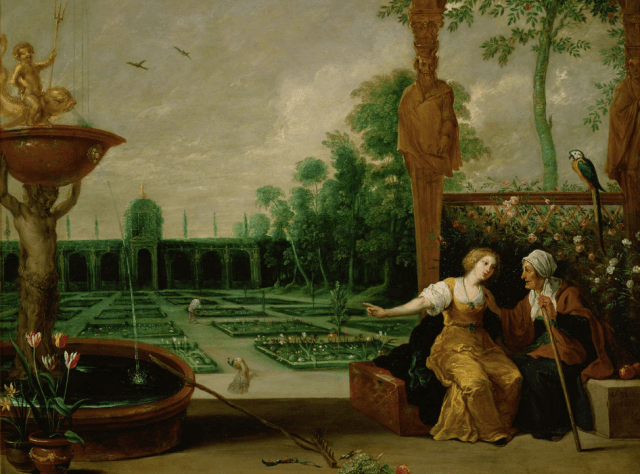
And what do you know of Vertumnus? I’d guess not much and if I tell you he was a minor Etruscan deity adopted, like so many others, by the Romans you’ll probably be none the wiser. In fact he was in charge of seasonal change, and generally associated with the growth of plants, gardens and orchards. He had one great advantage over most other gods: he could change his shape and appearance whenever he wished.
So why am I writing about them? Why are they linked together? and who is the old lady in the picture below? Read on to find out…
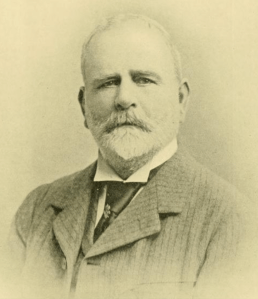

 But having started researching and writing, as usual I got sidetracked. However, as the sidetracking gave useful insights into some of the gardens where Owen Thomas worked I’m making two posts rather than just a single one, so to begin with read on to find out about the great Anglesey estate of Bodorgan and its glass walls, as well as some idea of the early career path of an outstanding Victorian horticulturist…
 We had a bit of a fight on our hands yesterday. Sophia, Dorothy, Blanche and Rose were arguing in our courtyard. Then they started to argue with us too. It was a row about figs. We have a beautiful small fig tree against a south facing wall and this year for the first time it is covered with pale green ‘White Marseilles’ figs.
 The girls have developed a taste for them and have been eating those which have fallen or which they can reach but I was determined they weren’t going to have any more. Luckily I’m bigger than them so I won in the end. HURRAY!


 The Garden History Blog
You must be logged in to post a comment.