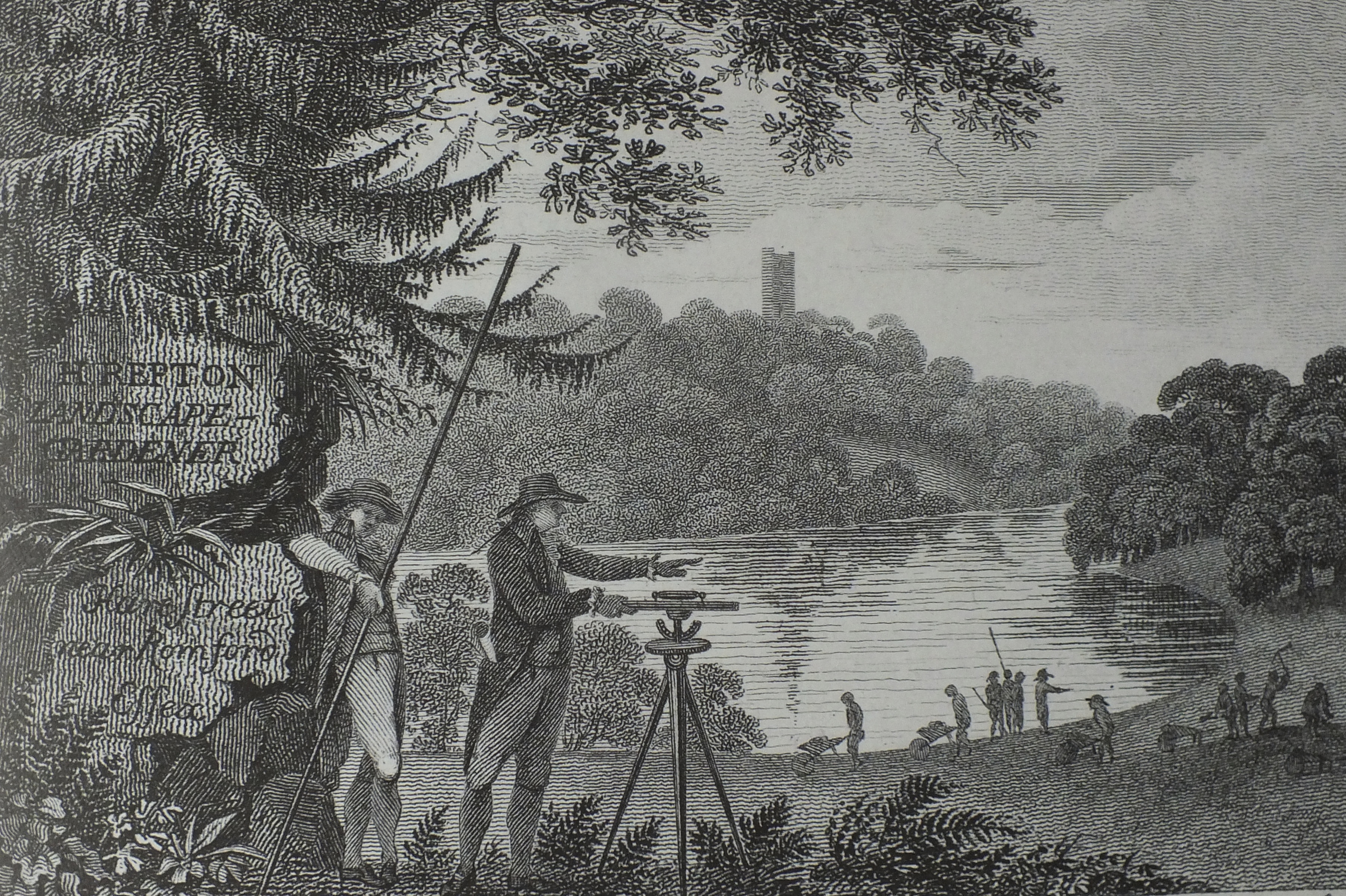
Humphry Repton at Ashridge

Portrait Humphry Repton c1790 Miniature on Ivory by John Downman (1750-1824) Bridgeman Library

Portrait Humphry Repton c1790 Miniature on Ivory by John Downman (1750-1824) Bridgeman Library

A few weeks after Repton’s death  in 1818 an obituary appeared in the New Monthly Magazine which I thought, when I first read it, summed him up rather neatly: “Mr. Repton was an artist of elegant attainments and good taste, more calculated to follow than to lead, and more attached to the beautiful and pretty than to the grand style of art.”    It was probably written by his successor as the “great man” of English gardening, John Claudius Loudon, but on reflection I think it is a little dismissive of Repton’s achievements.

Repton was the first garden designer [as far as I am aware] to deliberately create new gardens in what he called the ‘ancient style’.   He combined these with more contemporary gardens in a new ‘Mixed Style’.    In many accounts of garden history  this approach  is attributed to John Claudius Loudon but as Tom Turner points out, Repton actually got there first.

For a more detailed discussion of the origins of the ‘Mixed Style’ see:   http://www.gardenvisit.com/history_theory/library_online_ebooks/tom_turner_english_garden_design/mixed_style_of_garden_design 

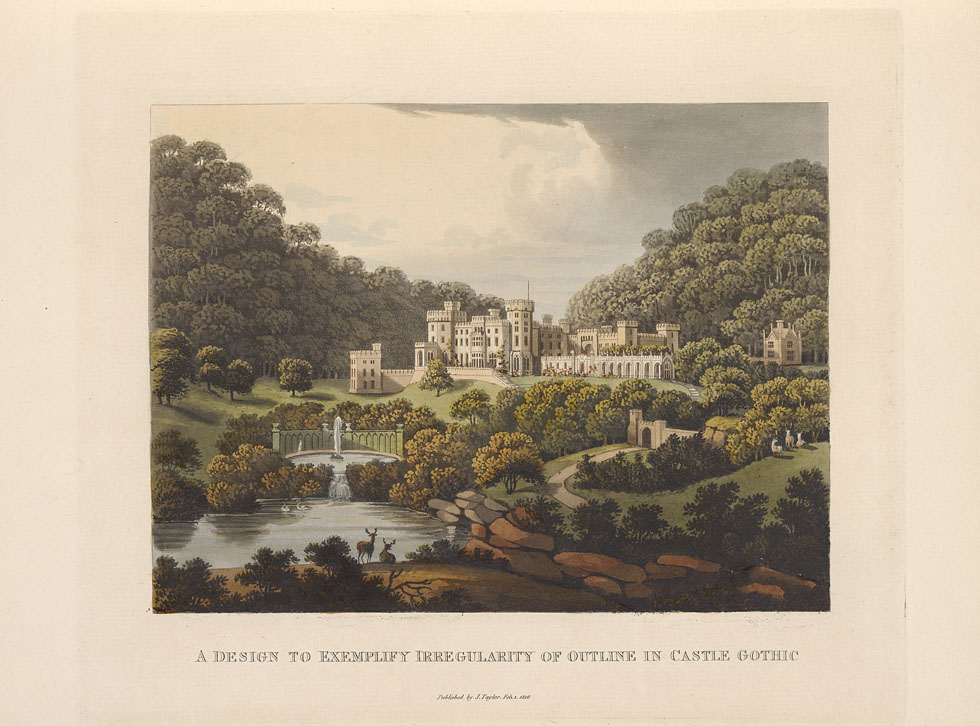
In his last book, published in 1816, and which rejoices in the lengthy title of Fragments on the theory and practice of landscape gardening: including some remarks on Grecian and Gothic architecture, collected from various manuscripts, in the possession of the different noblemen and gentlemen, for whose use they were originally written; the whole tending to establish fixed principles in the respective arts, Repton writes about his designs for  Ashridge in Hertfordshire.

The opening page of Fragment XXVII

Page 137, the opening page of Fragment XXVII in Fragments on the theory and practice of landscape gardening, 1816

Repton clearly regarded Ashridge as one of his greatest projects, although, to be honest, he wrote flatteringly in almost every Red Book of his appreciation for the property he was designing.

0228

Page 138 of Fragment XXVII, in Fragments on the theory and practice of landscape gardening, 1816

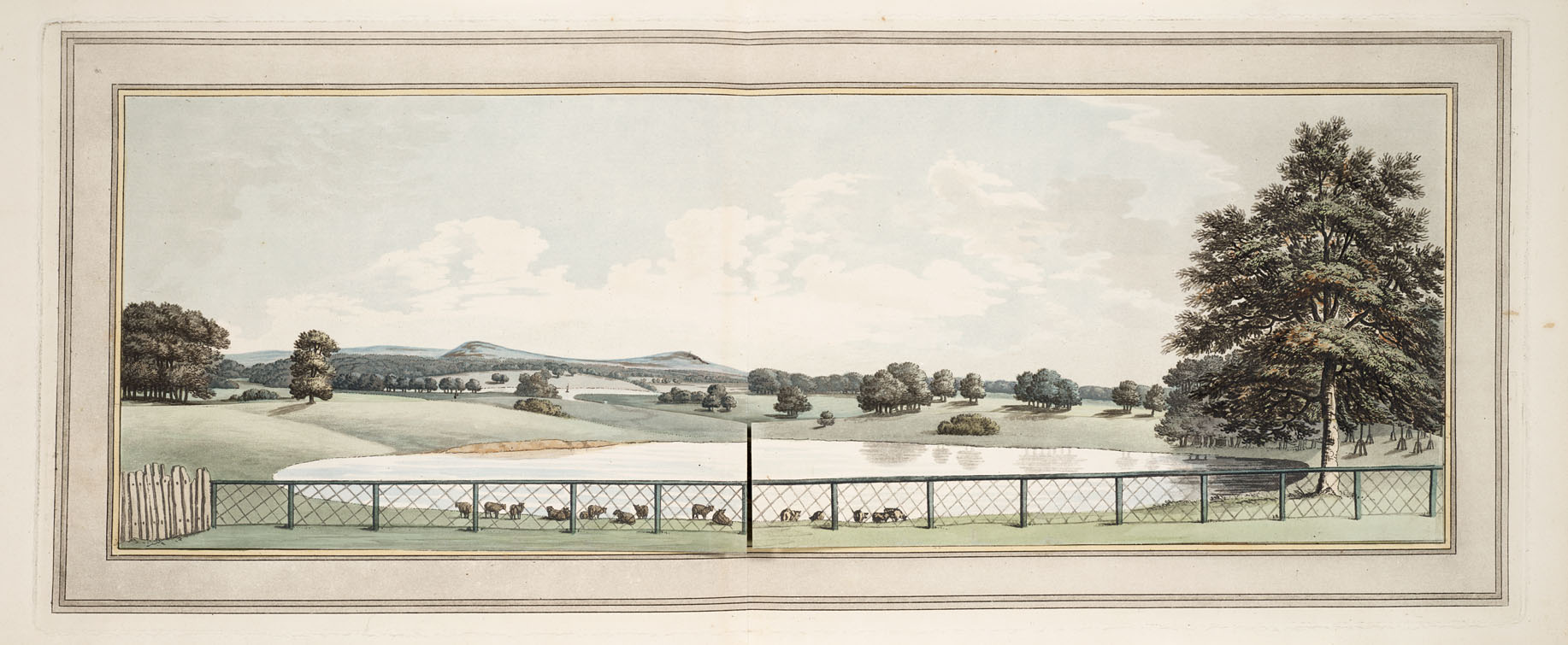
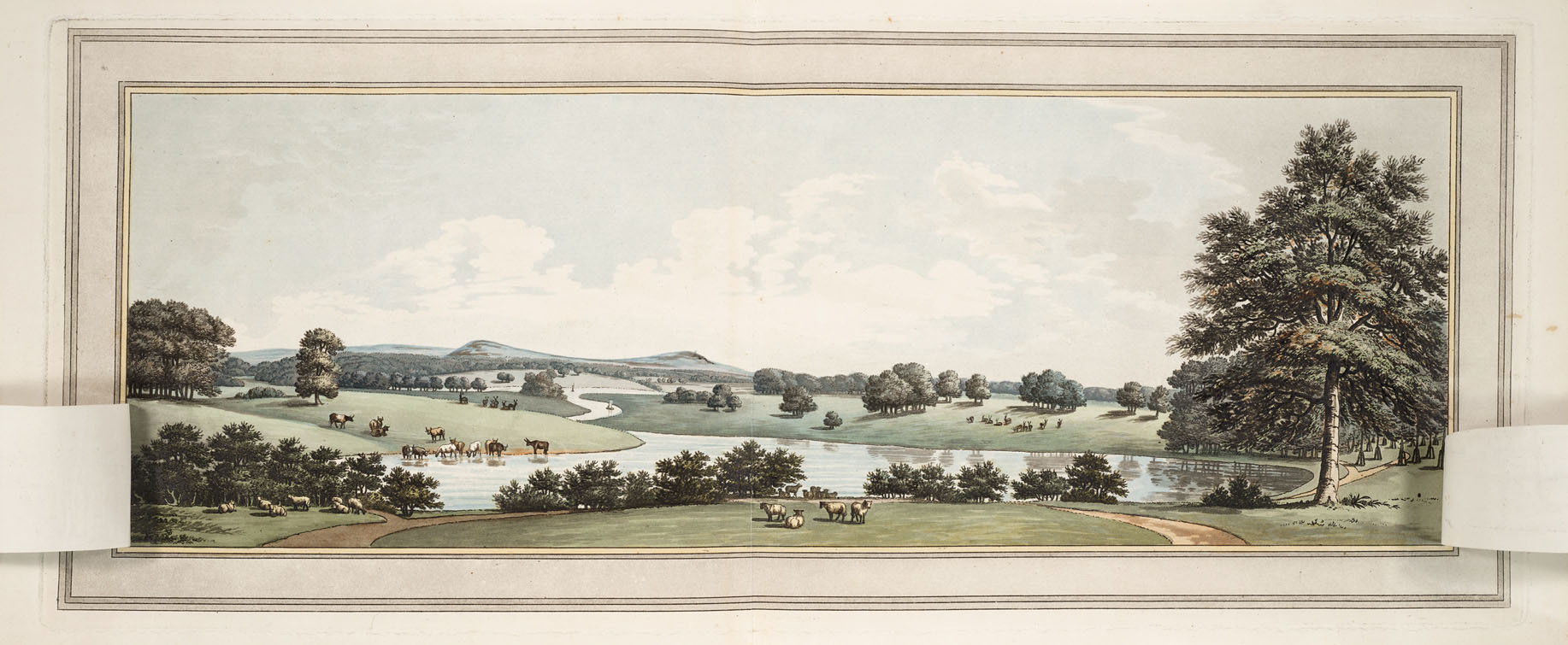
You can however see his disappointment with the banality of the setting of the grand new mansion, and that much had already been decided about the landscape before he was asked to be involved.  He could not even perform his usual trick of removing the park fence to improve the view since it had only just been put up at the express wish of the owner.

0228 - Version 2

Page 138 of Fragment XXVII, in Fragments on the theory and practice of landscape gardening, 1816

Instead he turned the restrictions into an advantage and arguing that

0229 2

Page 139 of Fragment XXVII, in Fragments on the theory and practice of landscape gardening, 1816

he suggested no less than 15 gardens of differing types. Five of them ‘belong to the modern type of pleasure-ground, but all the others are different: some sounding distinctly ‘historic’ in title at least.  ‘ As can be seen from his plan there were to be a sheltered arboretum of exotic trees, an American garden, a ‘cabinet de verdure’, an embroidered parterre, a mount garden and a garden for rock plants.

0235

Repton’s proposals for Ashridge from Fragments on the theory and practice of landscape gardening, 1816

Repton was criticized for this “novelty” but argued “there is no more  absurdity in collecting gardens of different styles, dates, characters, and dimensions, in the same enclosure, and placing the works of Raphael and Teniers in the same cabinet, or books sacred and profane in the same library.”   He was extremely proud of what he done calling it the  ‘child of my age and declining powers’, although sadly he died before all his designs were implemented. Many of his remaining ideas were adapted and completed later by Jeffrey Wyatville.

ashridge_fountain_photo_original

The Monks Barn, 1891 by Godfrey Bingley Leeds University Digital Library

Repton was clearly inspired by the monastic origins of Ashridge.  James Wyatt’s new house for the 7th Earl of Bridgewater was built over the monastic cellars whilst the late 14thc Monk’s Barn was remodelled and  converted into  a cloister.

Ashridge fountain [with the Rosary in the background] from Fragments on the theory and practice of landscape gardening, 1816

Design for a Conduit proposed at Ashridge, with distant view ofthe Roasry and Monks Garden,  from Fragments on the theory and practice of landscape gardening, 1816

Facing this  across a ‘winterwalk’ and ‘pomarium’ Repton suggested a Monks’ Garden with its clipped box hedges, ‘decorated with flowers in vases’ which  “ventured boldly to go back to those ancient trim gardens, which formerly delighted if the venerable inhabitants of this curious spot”.

Nearby he proposed a canopied ‘Holie Well’  enclosed in ‘rich masonry’  outside  the new conservatory. These plans were amalgamated and amended after Repton’s death but still bear the hallmarks of his ideas.

He added a few lines of poetry by the Honorable Mrs Erskine…

“The Close clipt box, th’ embroider’d bed

In rows and formal order laid,

And shap’d like graves (for mindful still

Of their last end, the church  doth will

E’en in their joys her sons should be

Pensive in very gaiety.”

The Armorial Garden and Monks Barn, Ashridge House. © Chris Reynolds & licensed for reuse under Creative Commons Licence
The Armorial Garden and Monks Barn, Ashridge House. © Chris Reynolds & licensed for reuse under Creative Commons Licence

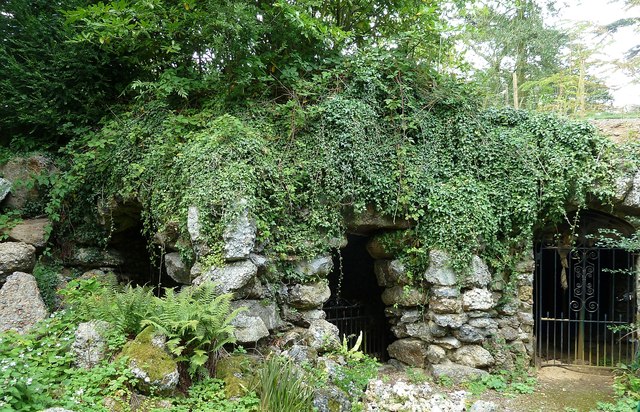
The Grotto © Rob Farrow and licensed for reuse under Creative Commons Licence.

The Grotto
© Rob Farrow and licensed for reuse under Creative Commons Licence.

Another ‘retrospective’ feature was a new grotto.  Built of local Hertfordshire puddingstone, it stood on the site  of an old pool, and Repton designed a souterrain or  subterranean  approach tunnel constructed on an iron framework and with walls lined with flint.
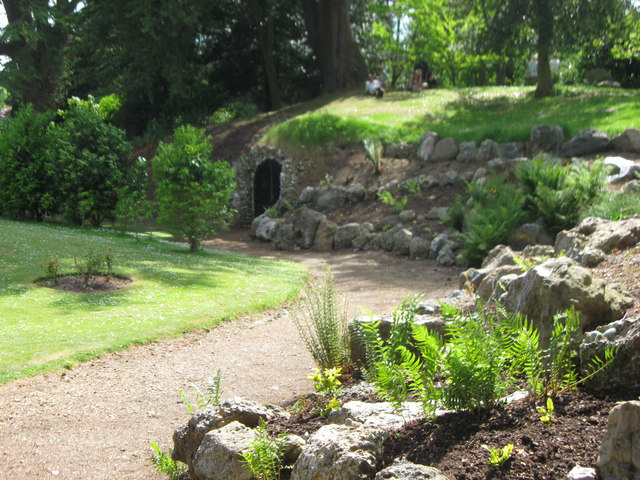
The path to the souterrain and grotto © Chris Reynolds and licensed for reuse under Creative Commons Licence.

The path to the souterrain and grotto © Chris Reynolds and licensed for reuse under Creative Commons Licence.

The grotto and tunnel with its crumbling iron structure are now sadly in poor repair and have been closed off.  The owners  the Ashridge [Bonar Law Memorial] Trust are hoping to raise the funds for  restoration, so if you have a spare £150,000 [or more!] let  them know!


0233


The other famous Repton feature is his Rosary, sometimes called the Rosarium. This was to have been a formal arcaded structure around a circular basin with its fountain supplied by the ‘Holie Well’.  The inner rose beds may well, like parts of the Monk’s Garden, be coffin shaped as part of Repton’s tribute to the site’s ecclesiastical history.

The Rose Garden taken by Geofrrey Bingley in 1891 Leeds University Digital Library

The Rose Garden taken by Geofrrey Bingley in 1891 Leeds University Digital Library

It appears to have been built to an amended design: Wyatville planted a yew hedge instead of trellis and the linking sections  are straight rather than arched. The eight radiating beds and  fountain were restored in 1998, and the roses were replanted in 2009.

Further restoration is planned by the Balfour Trust.  The Rose Garden can be seen here in  June 1891 in one of a fascinating series of photos of Ashridge taken by Godfrey Bingley, a Yorkshire industrialist and keen traveller and photographer whose vast collection of glass slides is in the process of being digitized by Leeds University Library.

For more information see:

http://library.leeds.ac.uk/features/349/article/77/godfrey_bingley

EPW021336


There were considerable  alterations and additions to the gardens at Ashridge during the 19thc but nothing which detracted from Repton’s overall vision for the site.  This aerial photograph taken in 1928 shows the house and immediate parkland in the year the estate was broken up and sold.  [Part of the circular rosary can be seen centre right] Despite that, Repton’s work at Ashridge  is still relatively intact and much of it has been restored over the past few years by the Ashridge Trust which runs the house and estate as a prestigious business school.    The addition of new buildings at Ashridge over recent years has also enabled them to develop more contemporary gardens  to continue Repton’s eclectic approach.  A copy of their restoration plans can be downloaded at:

Click to access ConservationPlan_v2_singlepages.pdf

There is more about Ashridge, Repton’s ‘Garden of Gardens’ on our database at:

http://www.parksandgardens.org/places-and-people/site/161/summary

Repton’s “Fragments ” can be read and downloaded at:

http://digicoll.library.wisc.edu/cgi-bin/DLDecArts/DLDecArts-idx?id=DLDecArts.ReptonFragments

← Back

Thank you for your response. ✨


Posted in Uncategorized | Tagged , , , , | Leave a comment

Humphry Repton


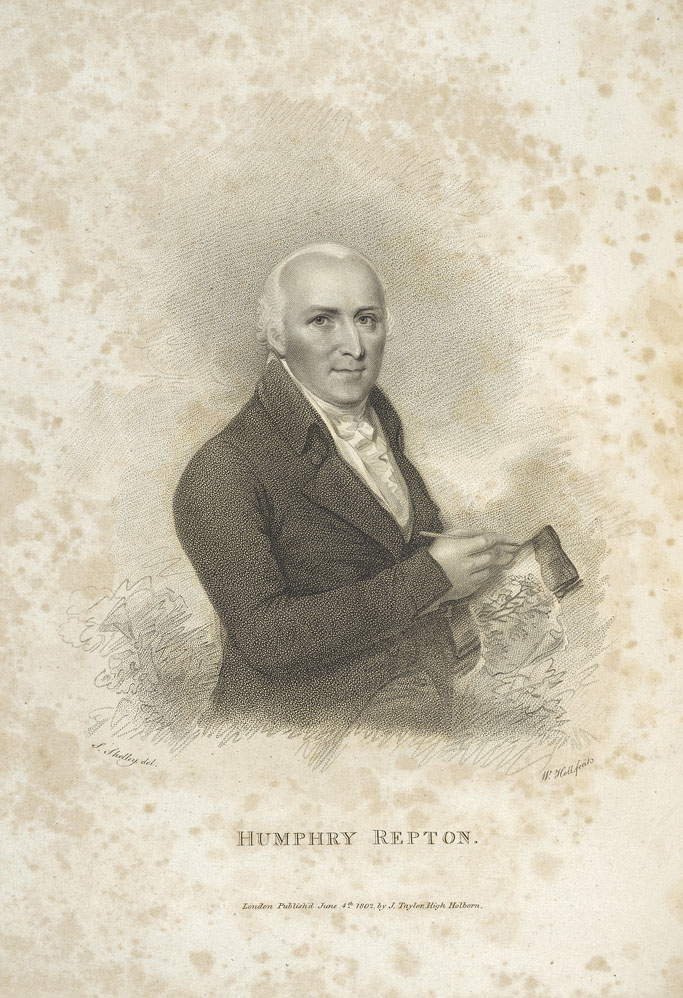
Humphry Repton from the frontispiece of his Observations on the theory and practice of landscape gardening, 1803

Humphry Repton from the frontispiece of his Observations on the theory and practice of landscape gardening, 1803

I’ve been teaching a course on 18thc garden history this term and finished with a class about Humphry Repton who was born in 1752 and died in 1818.  If I’m honest I’d never really given him a great deal of thought –  he’s not my period- as historians tend to say when stumped for something to say-  but there was roomful of people waiting to hear about him and so I looked him up on our database…

http://www.parksandgardens.org/places-and-people/person/1129

…and then sat down to read Stephen Daniel’s biography of him in preparation.  Within a short while I was hooked, partly because of Repton and partly because of the quality of Stephen Daniel’s writing and the book’s copious illustrations.  [Humphry Repton: Landscape Gardening and the Geography of Georgian England,  Yale UP, 1999].

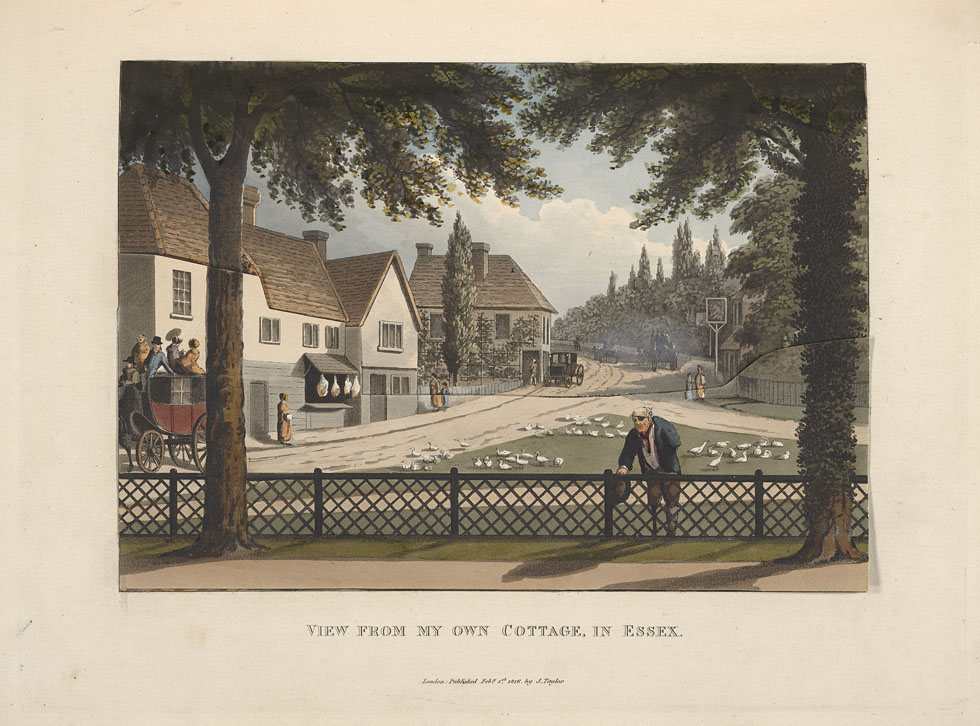
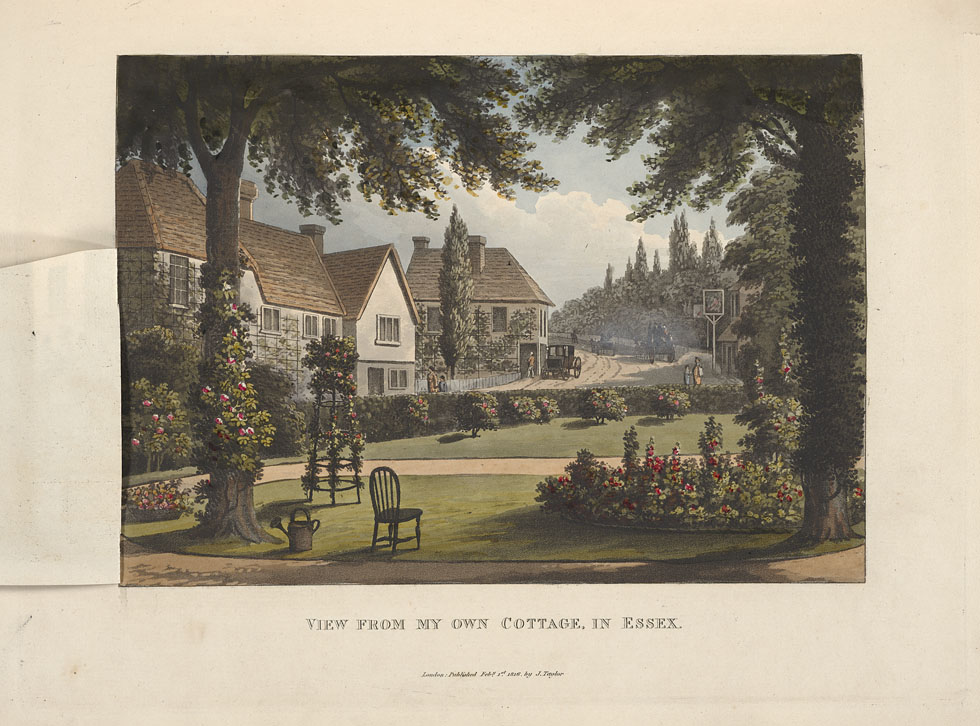
How could you not get intrigued by someone  who drew this  view from his own house which most of us would find fairly idyllic,  but then “improved” it by annexing the village green and planting roses!

The view from Repton's cottage at Hare Street from Fragments on the theory and practice of landscape gardening, 1816

The view from Repton’s cottage at Hare Street from Fragments on the theory and practice of landscape gardening, 1816

The improved view!

The improved view!

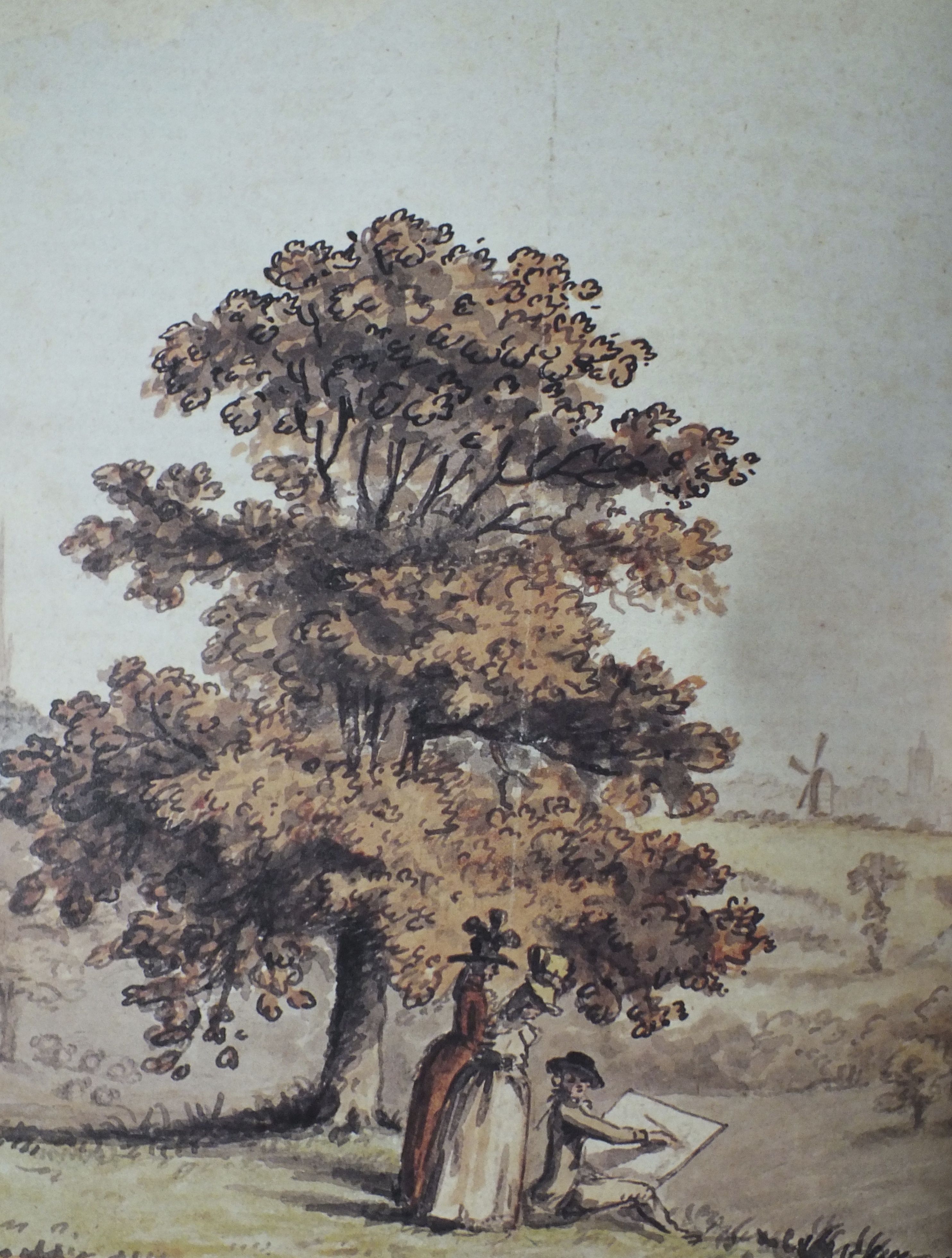
detail from Catton Park with Norwich in the Distance, 1788. Norfolk Museum Service

detail from Repton’s Catton Park with Norwich in the Distance, 1788. Norfolk Museum Service

Repton was clearly something of a character. He was a bit of a social climber – one commentator even called him ‘oleaginous’ – and he loved nothing more than mixing with his grander clients, and looking down on his inferiors.  In 1788, hard up and in “dread of poverty”  he turned one of his hobbies, sketching, into a new and profitable career as a landscape gardener to the wealthy.  He used that description on his business card, and indeed he was  the first person to call himself that, although the title must almost have been accidental since he was later to write “it ought rather to be called picture gardening”.  Charging 5 guineas a day for consultations, although it did not make him rich, soon put him “in a state of ease and comparative affluence”.

DSCF9752

Humphry Repton’s trade card

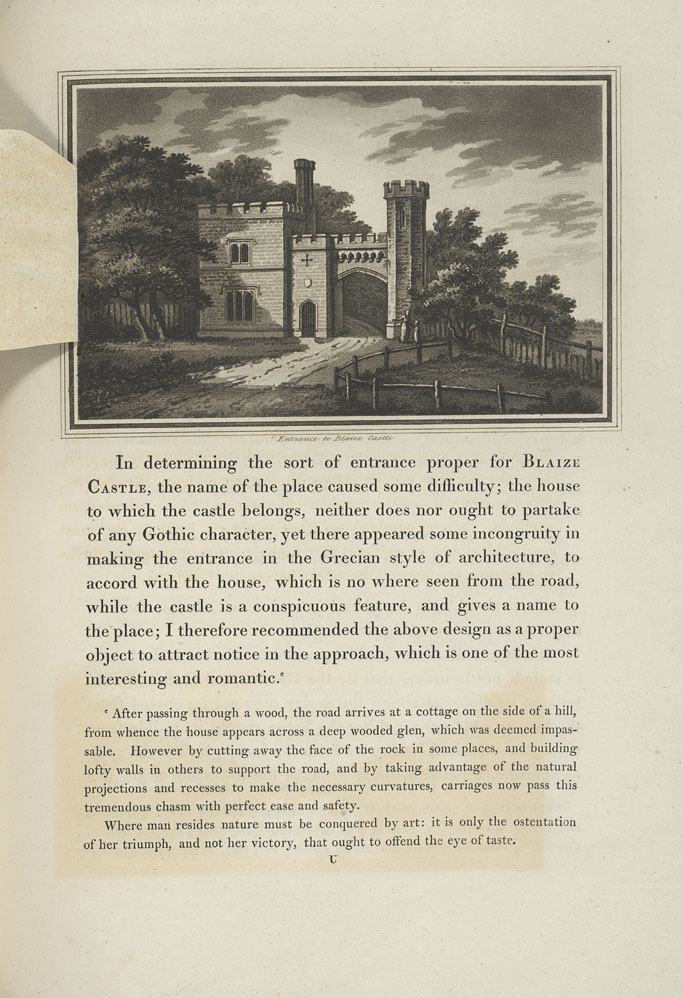
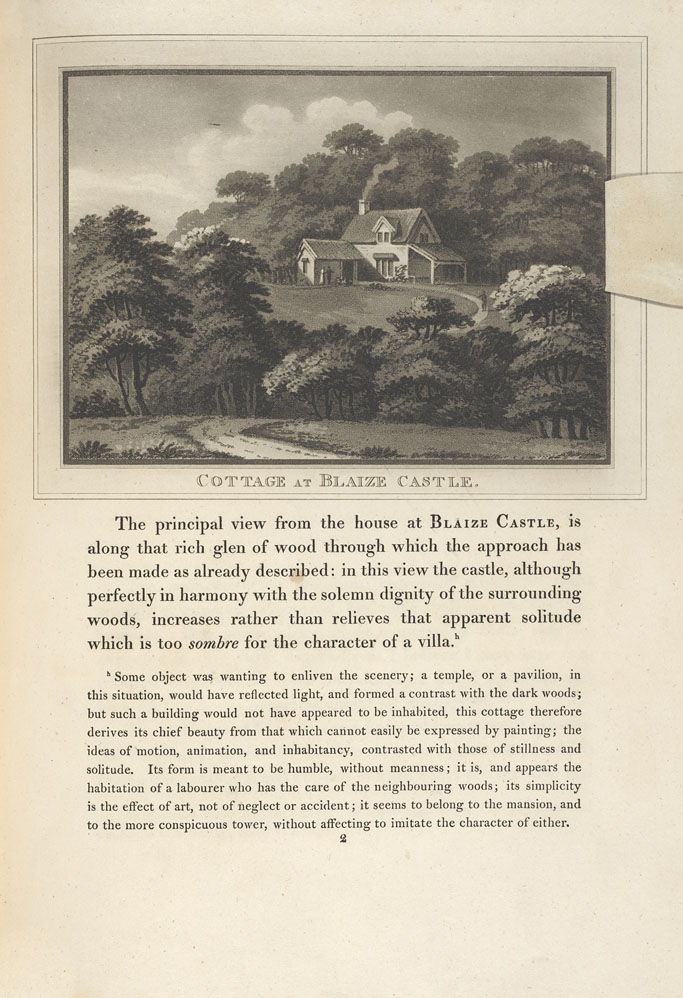
In his early career he followed very much in the footsteps of Capability Brown, whose drawings and other working documents he was given by Henry Holland, Brown’s son-in-law.  He designed Brown-like parks with clumps of trees, perimeter belts and serpentine drives and walks.

The Entrance Lodge at Blaise Castle, nr Bristol from Observations on the theory and practice of landscape gardening, 1803

The Entrance Lodge at Blaise Castle, nr Bristol from Observations on the theory and practice of landscape gardening, 1803

The Cottage at Blaise Castle from Observations on the theory and practice of landscape gardening, 1803

The Cottage at Blaise Castle from Observations on the theory and practice of landscape gardening, 1803

By mid-career he was moving  away from Brown’s expansive landscape to a much “wilder” picturesque style, and using gothic architecture for buildings rather than the classical orders.

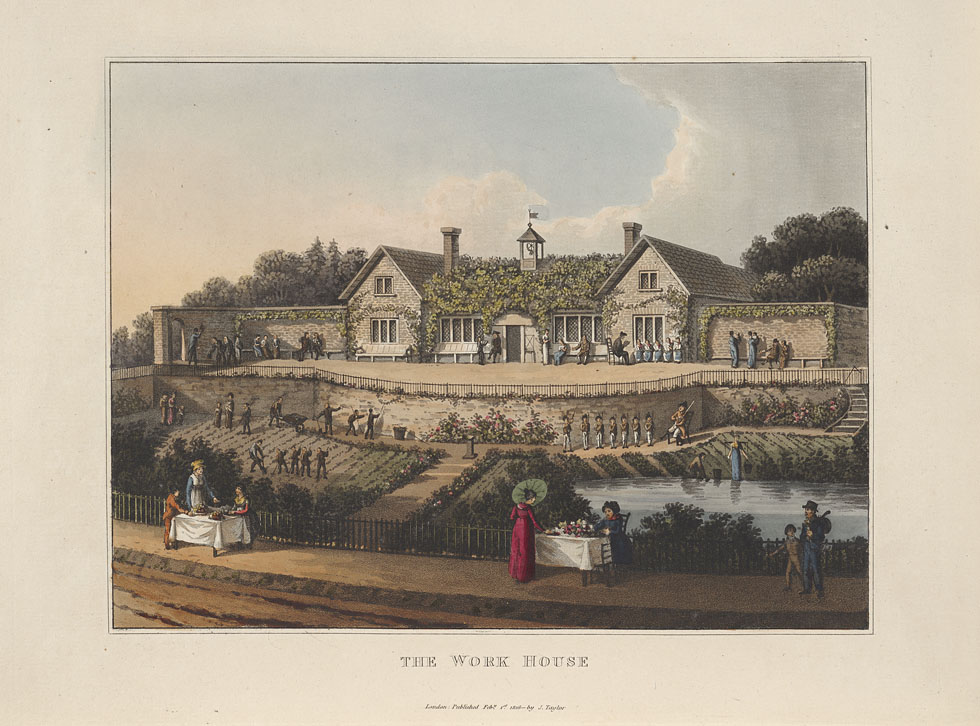
0348Finally,  towards the end of his career, although he continued to worked mainly in a folksy mock-mediaeval/Tudor way, [as in the workhouse he designed for the parish where his son was the rector] he surprised everyone, including I suspect himself, by branching out into the exotic. This was such an interesting and unexpected departure for the grand old man of his profession that I plan to talk about it in another post shortly.

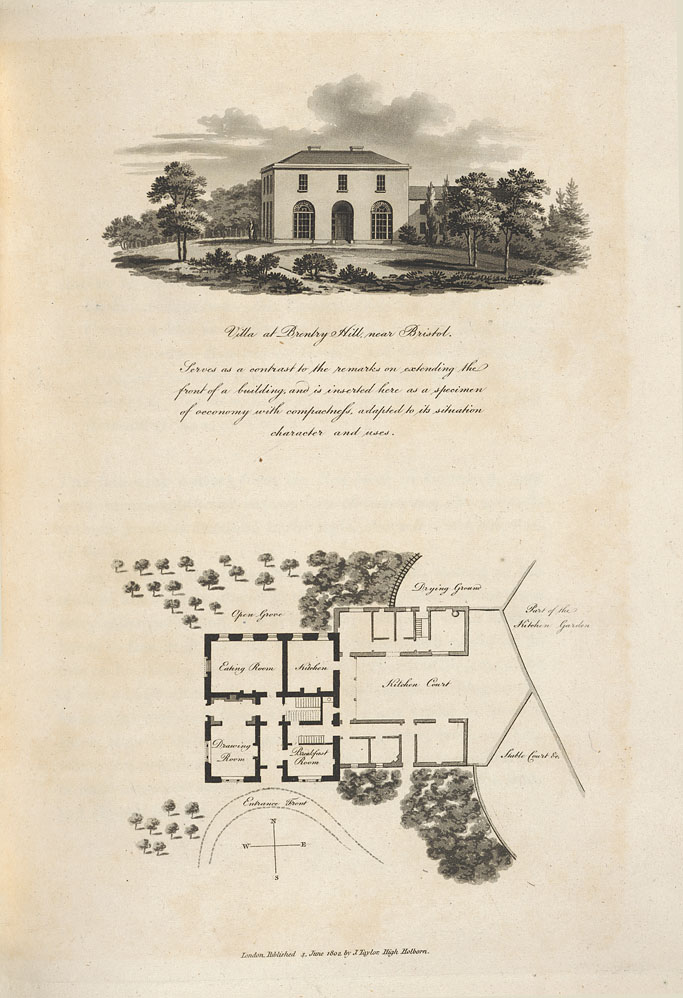
Design for a villa nera Bristol, Observations on the theory and practice of landscape gardening, 1803

Design for a villa near Bristol, Observations on the theory and practice of landscape gardening, 1803

Unlike earlier great designers Repton  often had to  work on a much smaller scale, creating “grand gardens” around the villas and smaller country houses of  the nouveaux riches of late Georgian/Regency England. As anyone who designs gardens will tell you, smaller is always harder.  He hated it – but not because it his attention to detail has to be much more assiduous. It was  because he despised “upstart wealth tramping over all I have been accustomed to look up to with respect.”

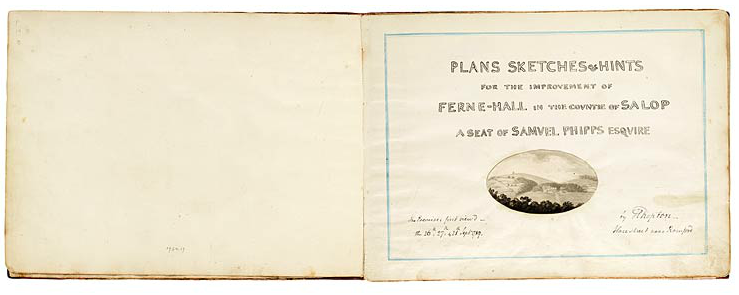
The changes in his approach can be most easily seen in his famous Red Books.  These were meticulously detailed, discussing his suggested ‘improvements’ for the garden, park and house.

The title page for Ferney Hall, Pierrepoint Morgan Library

The title page for Ferney Hall, Pierrepoint Morgan Library

The elegant copperplate text was accompanied a number of sketches, often by Repton himself, which will he said, “better serve to elucidate my opinion than mere words”.

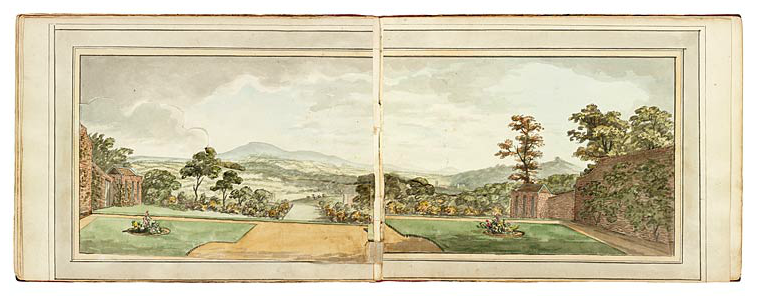
The view from the drawing room window before improvements

The view from the drawing room window before improvements, Pierrepoint Morgan Library

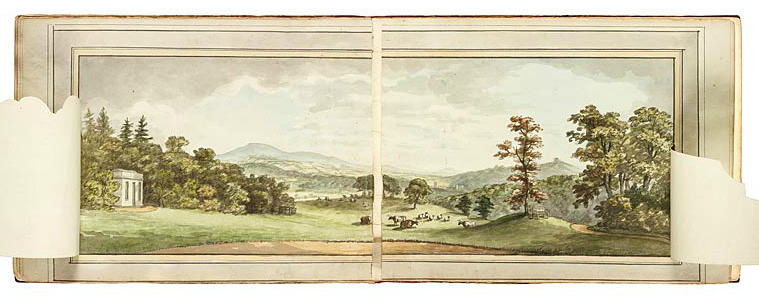
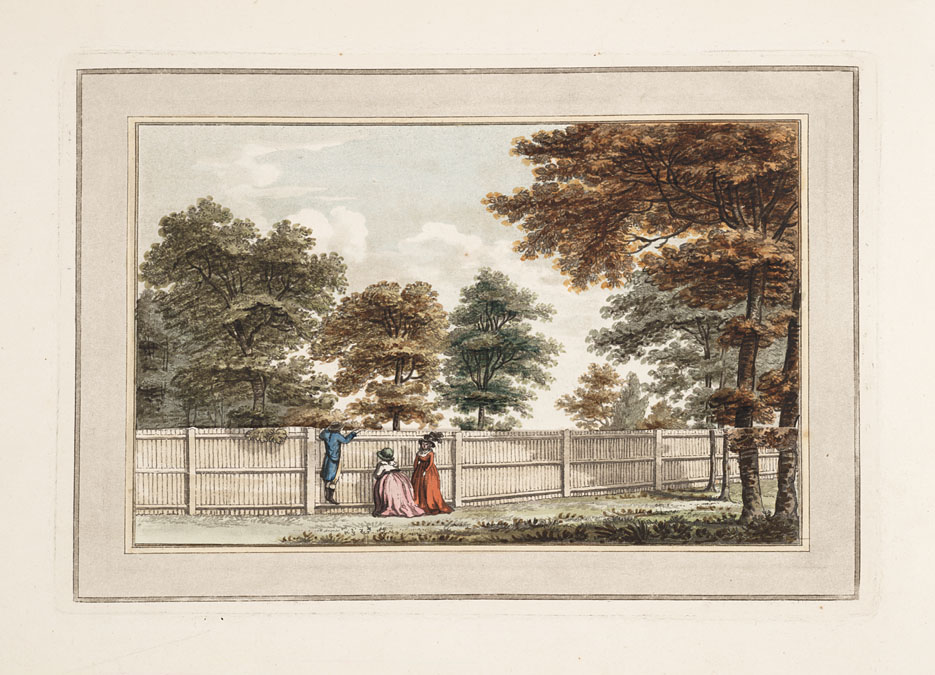
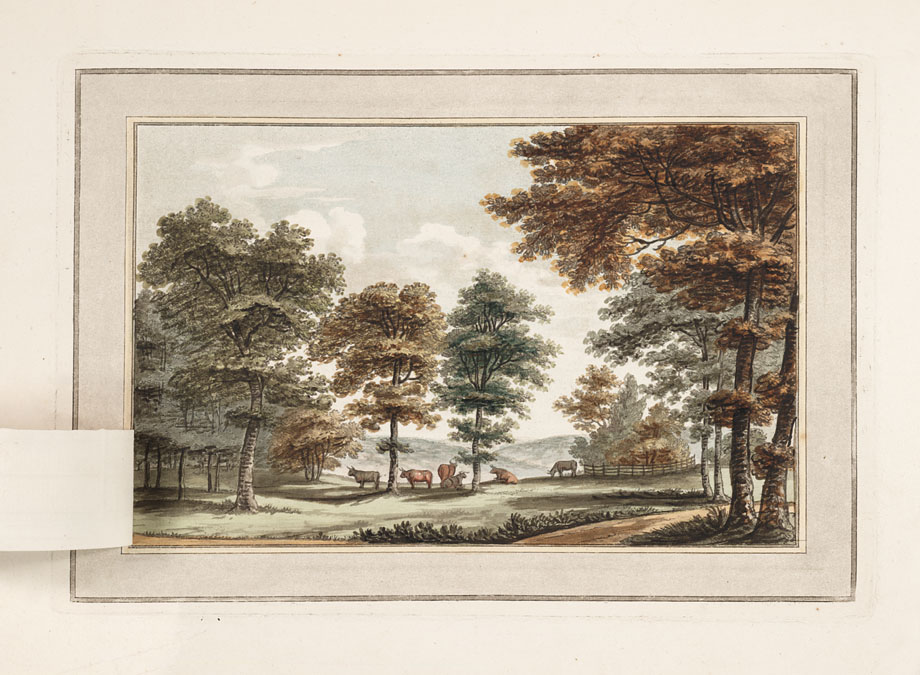
On first sight each sketch showed the site before Repton’s proposed improvements, but on closer inspection there was a flap or a slide of paper which when opened revealed how the site would look after the work was carried out.

The view from the darwing room window after Repton's improvements

The view from the darwing room window after Repton’s improvements

It was a simple theatrical technique but it was effective in conveying his ideas.  His changes may, in many cases, have been relatively simple – such as removing a fence, or thinning an overgrown shrubbery , but he had a good eye for creating or catching a view, introducing surprise, and providing variety in his gardens and landscapes.

Brandsbury before improvement, from Sketches and hints on landscape gardening, 1794

Brandsbury before improvement, from Sketches and hints on landscape gardening, 1794

Bransdbury after 'improvemnt' from Sketches and hints on landscape gardening, 1794

Bransdbury after ‘improvement’ from Sketches and hints on landscape gardening, 1794

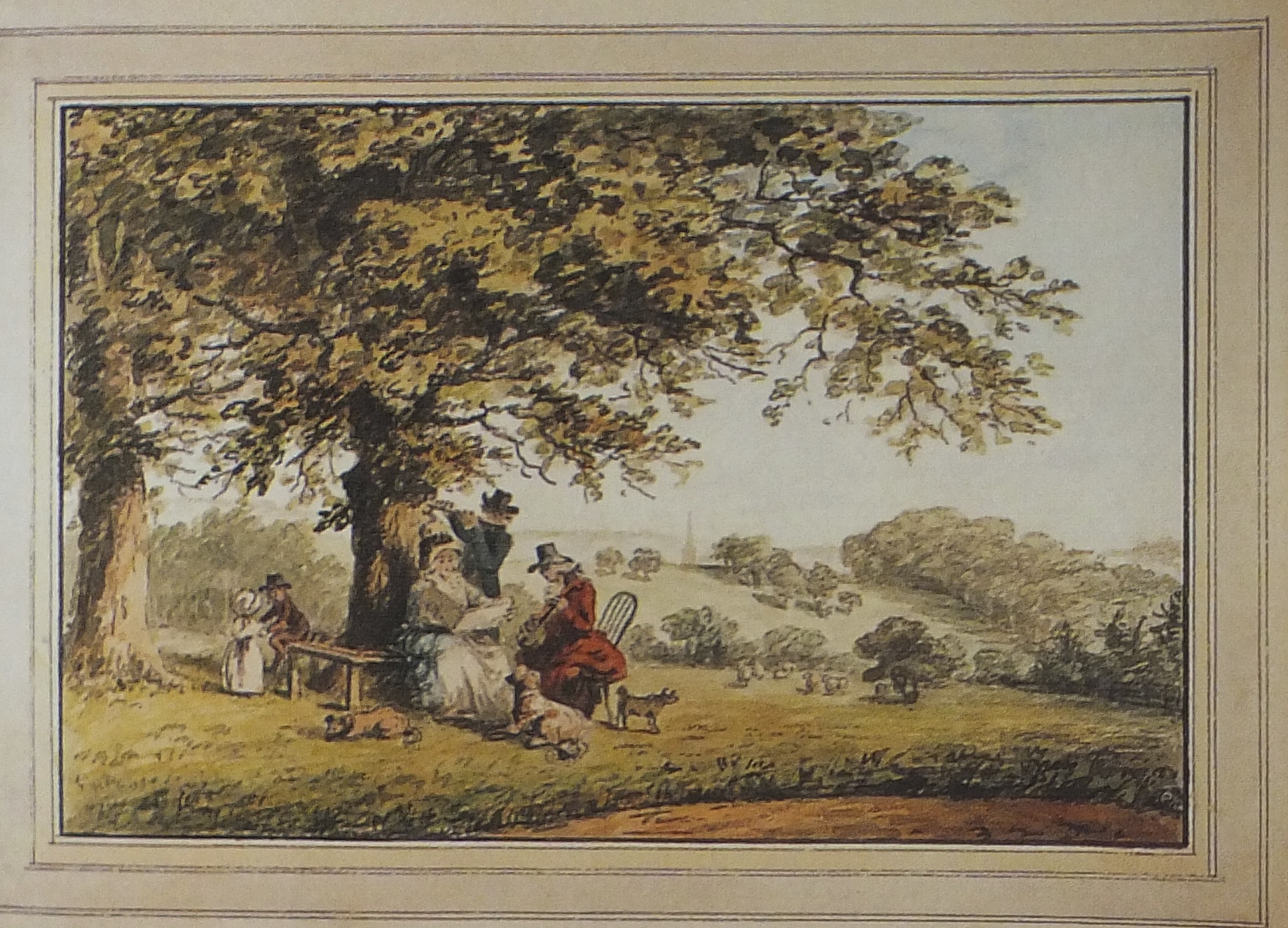
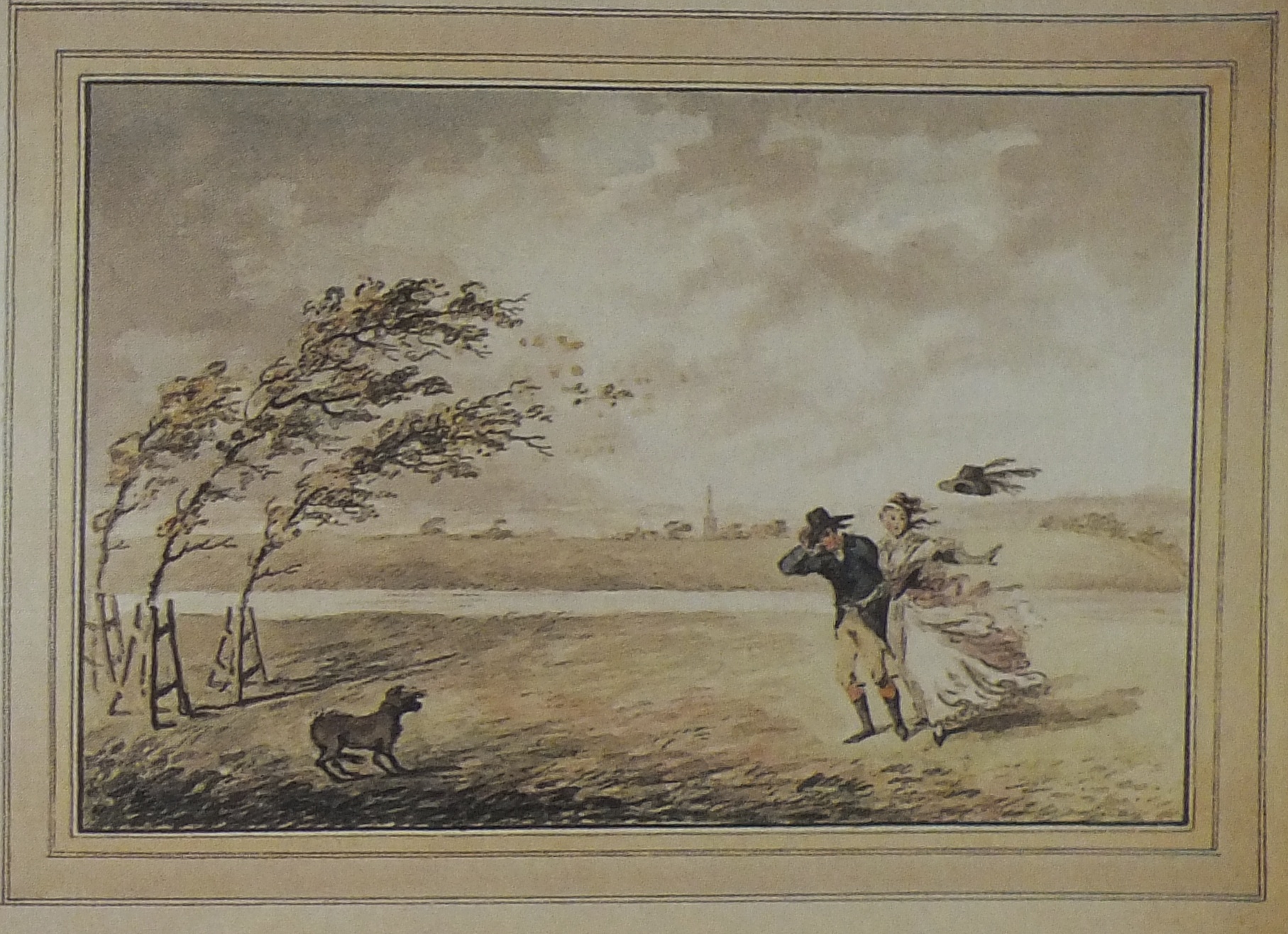
Given his sense of humour and his love of theatre I doubt he’d have been too upset by critics who called his worked not “rural improvement but rural pantomime”  which showed his “tinsel kind of talent”.  Indeed he used humour in at least one of his red books, as  to show what would happen to clients who were foolish enough to choose another designer over him.

View from the house in its present character. The Red Book for Babworth from Stephen Daniel's Humphry Repton, p.13

View from the house in its present character. The Red Book for Babworth, 1792,  from Stephen Daniel’s Humphry Repton, p.13


The same view "altered according to 'Despotic FASHION', The Red Book for Babworth, 1792, from Stephen Daniel's Humphry Repton, p.13

The same view “altered according to ‘Despotic FASHION’, The Red Book for Babworth, 1792, from Stephen Daniel’s Humphry Repton, p.13

He would probably have been much more concerned that, despite being a good advertisement for his ideas, the Red Books did not always translate into commissions and many of the more than 400 red books he produced were never carried out.

View from the house at Tatton, showing the manner of connecting the two waters; and also the effect of the net fence as a false scale which lessens the sense of the near water. from Sketches and hints on landscape gardening 1794

View from the house at Tatton, showing the manner of connecting the two waters; and also the effect of the net fence as a false scale which lessens the sense of the near water. from Sketches and hints on landscape gardening 1794

Of course gardens are ephemeral and we learn most about Repton not from his surviving landscapes and gardens but from his extensive writings, which are usually extremely well illustrated with engravings of his own sketches.  Two of his Red Books, for Hatchlands and Ferney Hall , are available online at the Pierrepoint Morgan Library, and three of his most important books can be had as free downloads courtesy of the University of Wisconsin Digital Library for the Decorative Arts and Material Culture [see links below] and are easy to read – or at least to glance through to discover hs views, and  the wide range and scope of his style.

and the same view after 'improvement', from Sketches and hints on landscape gardening , 1794

and the same view after ‘improvement’, from Sketches and hints on landscape gardening , 1794

The Red Books are at:

http://www.themorgan.org/collections/works/repton/redbook.asp?id=FerneyHall

http://www.themorgan.org/collections/works/repton/redbook.asp?id=Hatchlands

And Repton’s books are at:

Sketches and hints on landscape gardening, 1794 can be found at:

http://digicoll.library.wisc.edu/cgi-bin/DLDecArts/DLDecArts-idx?type=header&id=DLDecArts.ReptonSketches&isize=M

Observations on the theory and practice of landscape gardening, 1803 can be found at:

http://digicoll.library.wisc.edu/cgi-bin/DLDecArts/DLDecArts-idx?type=header&id=DLDecArts.ReptonObservations&isize=M

Fragments on the theory and practice of landscape gardening, 1816

http://digicoll.library.wisc.edu/cgi-bin/DLDecArts/DLDecArts-idx?type=header&id=DLDecArts.ReptonFragments&isize=

← Back

Thank you for your response. ✨

from Fragments on the theory and practice of landscape gardening, 1816

from Fragments on the theory and practice of landscape gardening, 1816

Posted in Uncategorized | Tagged , , , , , | Leave a comment

A Surprise at Southend 3….

Just to prove that garden history doesn’t always have to be about stately homes, statues of Queen Victoria or 18thc planting schemes,  the real surprise at Southend was nestling in the undergrowth at the foot of the cliffs.  Don’t read any further if you’re a purist or a snob!

Some of the remnants of Never Never Land https://twitter.com/YourSouthend/status/253867636545445889

Some of the remnants of Never Never Land
https://twitter.com/YourSouthend/status/253867636545445889

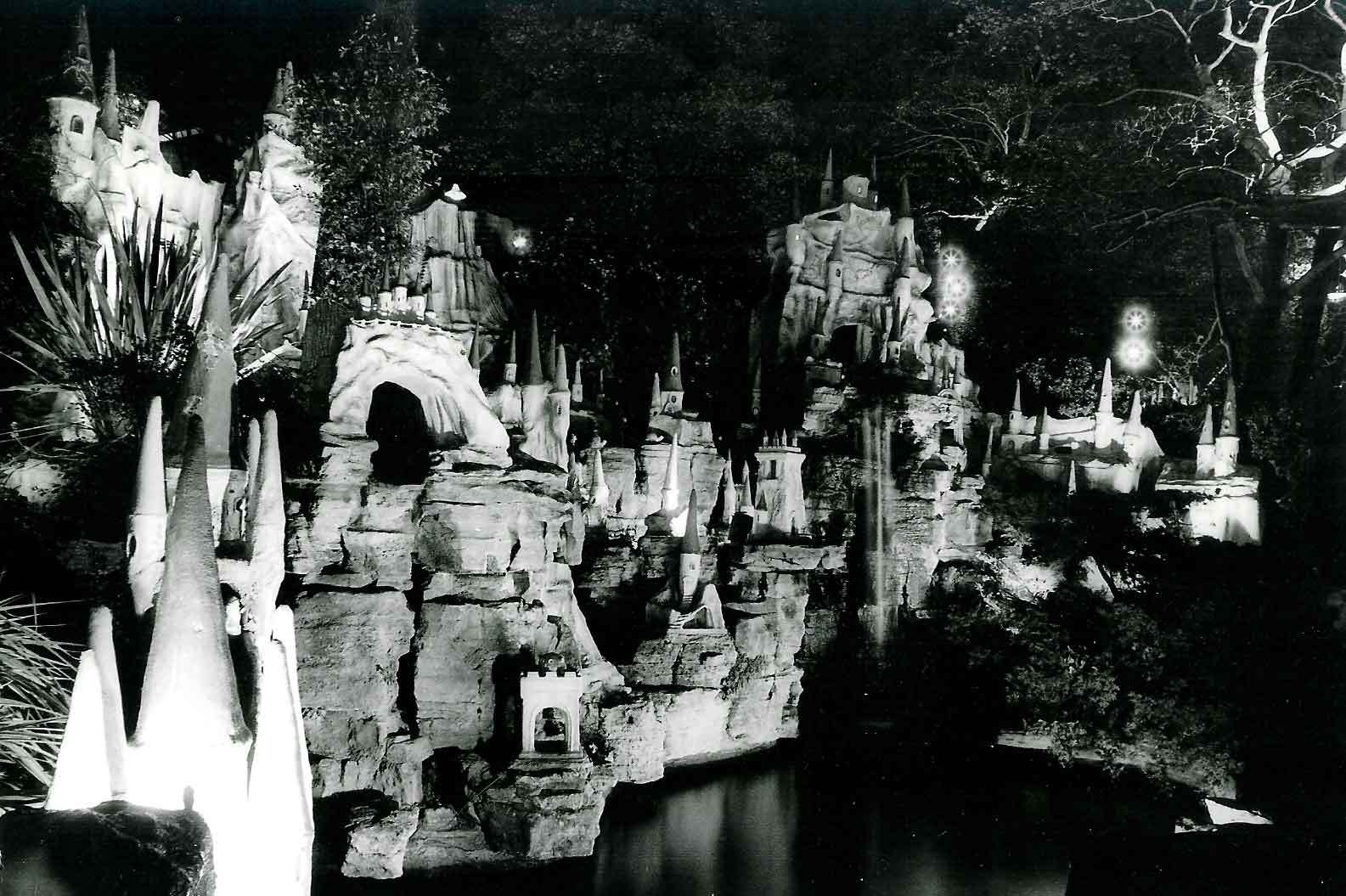
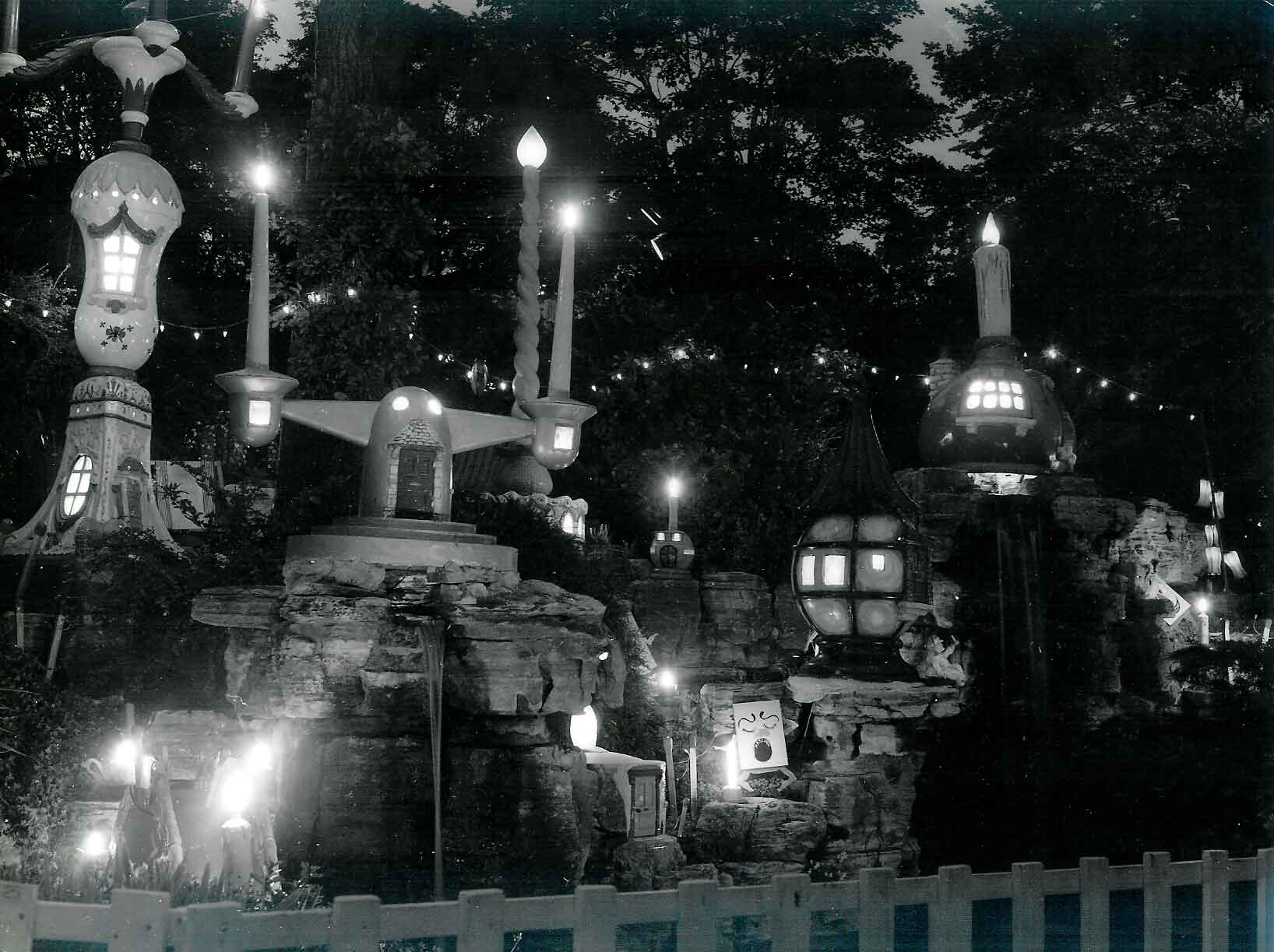
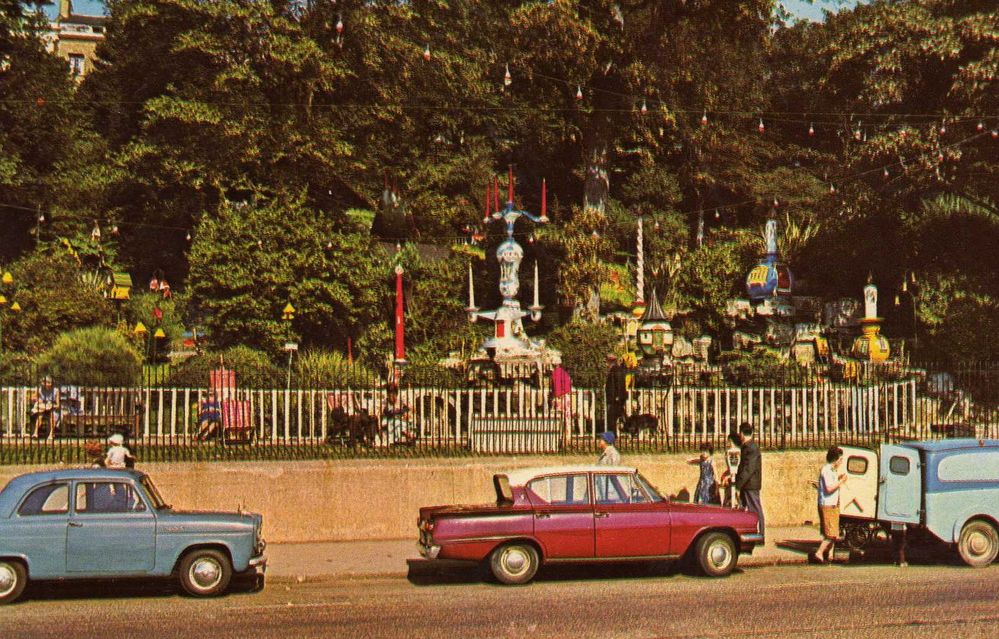
I spotted  the remains of what appeared to be a series of concrete castles and other bizarre structures that one might find on a mini-golf course.  perhaps that’s all it was, although it would be a strange golf course where you had to try to putt on a steep slope.   Then  I thought putting my garden history hat on, perhaps it was a  miniature village or ‘fairy’ garden.  I was getting closer because once I’d had the chance to do some research I discovered it was indeed something like that – a Never Never Land, once the pride and joy of Southend Council but now closed, abandoned and largely dismantled.

Reproduced by permission of English Heritage.NMR Reference Number: PC08947

Reproduced by permission of English Heritage.NMR
Reference Number: PC08947

What is it about Peter Pan, Tinkerbelle, Captain Hook and the rest of Barrie’s characters that attracted, and indeed still attracts us all?  Barrie’s imaginary world of  Never Never Land first appeared as a stage play in 1904, and he probably derived the name from a contemporary description of the wildest north Australian outback.  But he didn’t stick to it and when  the script became a book his fantasy world became simply Neverland.

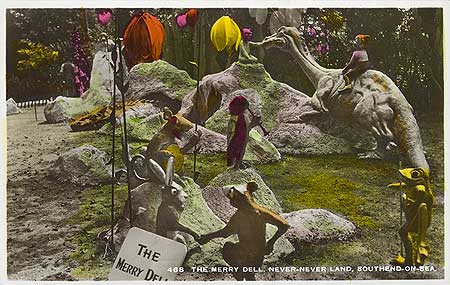
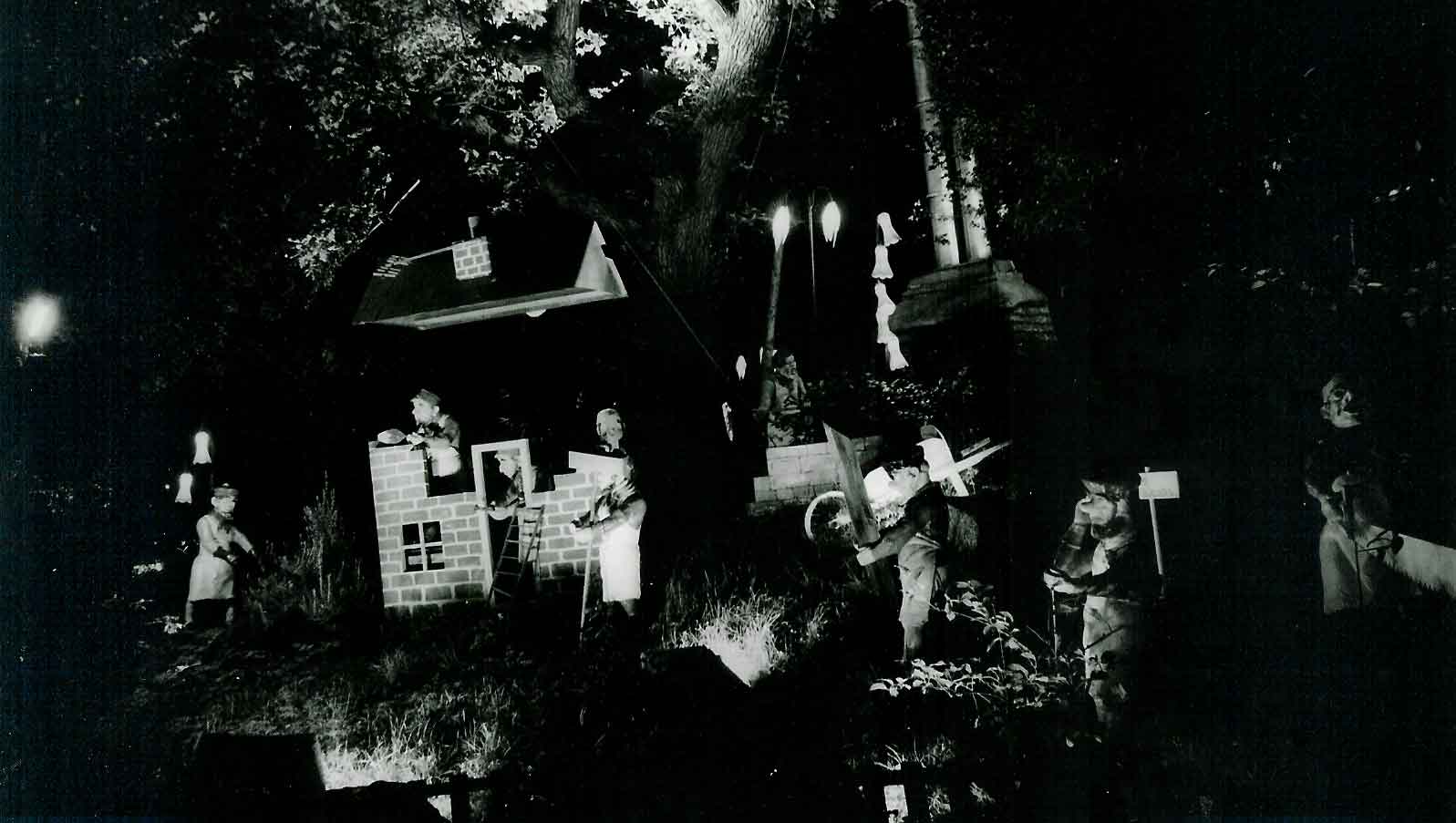
A view of figures in the Merry Dell Reproduced by permission of English Heritage.NMR Reference Number: PC08825

A view of figures in the Merry Dell
Reproduced by permission of English Heritage.NMR
Reference Number: PC08825

The most famous thing based on the Peter Pan legend is probably  the statue in Kensington Gardens which Barrie commissioned himself in 1902 following the success of the play, and which was erected in the park as early as 1912.

The creator of Peter Pan, J.M. Barrie, commissioned Sir George Frampton to build the statue in 1902. It was erected in Kensington Gardens in 1912 © Royal Parks

The creator of Peter Pan, J.M. Barrie, commissioned Sir George Frampton to build the statue in 1902. It was erected in Kensington Gardens in 1912 © Royal Parks

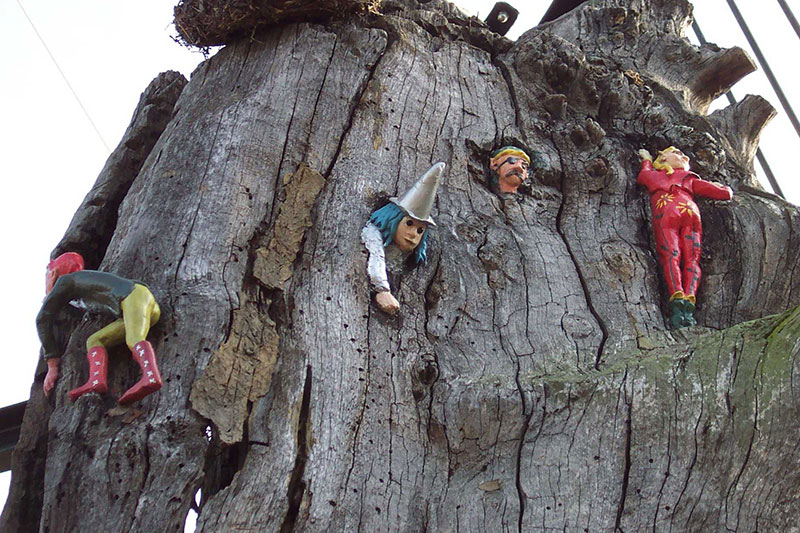
This led to a whole Peter Pan and other fairy-related  ‘industry’ there, including  the Elfin Oak designed by Ivor Innes in 1930 and which is now a Grade II listed structure.

The Elfin Oak is a sculpture made from the hollow trunk of an oak tree that is carved with figures of fairies, elves and animals. - © Royal Parks

The Elfin Oak is a sculpture made from the hollow trunk of an oak tree that is carved with figures of fairies, elves and animals. – © Royal Parks

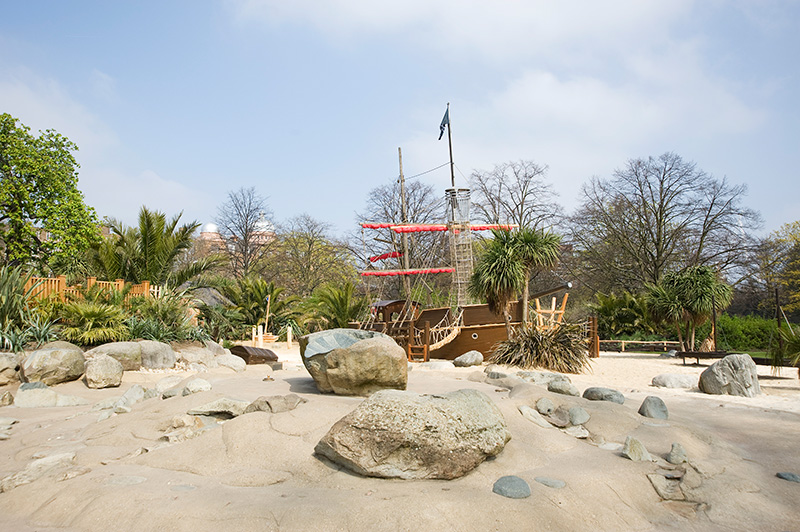
The Princess Diana Memorial Playground © Royal Parks

The Princess Diana Memorial Playground © Royal Parks

and the Princess Diana Memorial Playground which opened in June 2000 which features a large wooden  pirate ship, and a beach set against a lush backdrop of  trees and plants.

Now where do you go to research the origins and history of something unusual like Never-Never land? Luckily there’s a very good local history website – Southend Timeline – which has some basic information, and a websearch also revealed some memories of people visiting or working there. But nothing about who came up with the idea or any account of how it operated and how it developed.

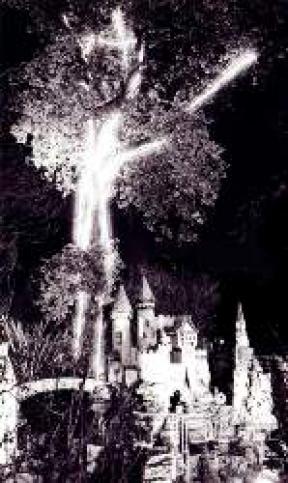
There is no doubt that Never Never Land caught the holiday making public’s imagination.  After it opened in 1935 it soon became popular, and by the 1950s people queued along the seafront for hours to get in.   Apart from the castles, waterfalls  mountains and caves and  it featured nighttime illuminations and a model railway as well as a host of imaginary creatures including fire-breathing dragons.

But, as tastes changed and more ‘exciting’ attractions became available so the crowds disappeared and in 1972 the gardens closed. Most of the exhibits were ripped out and the gardens returned to ordinary use with just a few almost indestructible miniature ruins  left in the bushes.1000x1000

A rival attraction picked up on the same theme.  Just down the road Peter Pan’s Playground opened in 1976 complete with a boating lake and fairground attractions.

Boating Lake at Peter Pan's Playground in 1960 from the collection of Antony Ewart Smith (1927-1994) http://www.oldukphotos.com/essex_southend_on_sea3.htm

Boating Lake at Peter Pan’s Playground in 1960
from the collection of Antony Ewart Smith (1927-1994)
http://www.oldukphotos.com/essex_southend_on_sea3.htm

This opened on the site of another highly unusual garden – a seaside sunken one – which might explain the photo below taken during the 1953 floods.

$_12

Photograph of Peter Pan’s Playground, in the 1953 floods (D/Z 35/15) (Photo: Southend Standard).

Photograph of Peter Pan’s Playground, in the 1953 floods . Essex Rcord Office (D/Z 35/15) (Photo: Southend Standard).

There was an attempt to revive Never-Never Land with more hi-tech attractions in the late 1980s but despite all  best efforts it closed in 2000.   The on-line archives of the local paper, the Southend Echo only go back as far as to the late 1990s but it’s possible to trace the story of its demise through its columns.

A couple of episodes are quite humorous. There were  problems caused by starling droppings which made the paths too slippery and even turned Snow White’s cottage into “a no-go area”  despite cutting down large numbers of trees to stop the birds roosting.

Vandalism was a constant problem and there even was  a fire in the fairy castle. Reporting it the Echo quotes fire officer Rudy Jackson: “We found a window had been smashed and a fire started in the first floor of the castle. We broke in through a trap door and put the blaze out. It was not a really big fire but the castle is built of fibre-glass so the smoke was quite acrid. Whoever started it broke an outside window and set light to the corner of the castle inside. There is quite a lot of internal damage but the castle is still standing.”

Despite investing in new models and systems   the  numbers of paying visitors continued to decline sharply and made the whole venture unviable. A sad end to a once thriving attraction particularly as no-one seems to know what to do with the remnants.  There was even  an attempt to organise a Facebook campaign to re-instate it.

Meanwhile the rival Peter Pan park morphed into Peter Pan’s Adventure Island, and then recognising  the diminishing allure of pirates and fairies to the current generation of young people, simply Adventure Island. Claiming to be the country’s No.1 free admission amusement park it is full of rollercoasters as well as more sedate rides and attractions – and tropical looking plants – it’s a far cry from Barrie but it has captured the market so that even on a blustery February afternoon there was a long long queue of people waiting to get inside.

Taken from an interview with Philip Miller, owner of Adventure Island in gforce, the newsletter of UK theme parks © http://www.gforcemag.com

Taken from an interview with Philip Miller, owner of Adventure Island in gforce, the newsletter of UK theme parks © http://www.gforcemag.com

I’d love to know more about any and all of this. So if you know the history of Never-Never Land or know someone who does then get in touch and I’ll be delighted to share it with other readers of the blog.

For further information about Southend in general and Never Never Land in particular see:                       http://www.southendtimeline.com  and   http://www.echo-news.co.uk
← Back
Thank you for your response. ✨

Posted in Uncategorized | Tagged , , , | 1 Comment

A Surprise at Southend 2…..

Having wandered up through the Cliff Gardens there were three more surprises in store for me.   I saw the first as I reached the top of the cliff path when I was greeted by sight of Prittlewell Square, a bijou Victorian public garden square which still retains much of its charm, and which is complemented by the surrounding period houses.

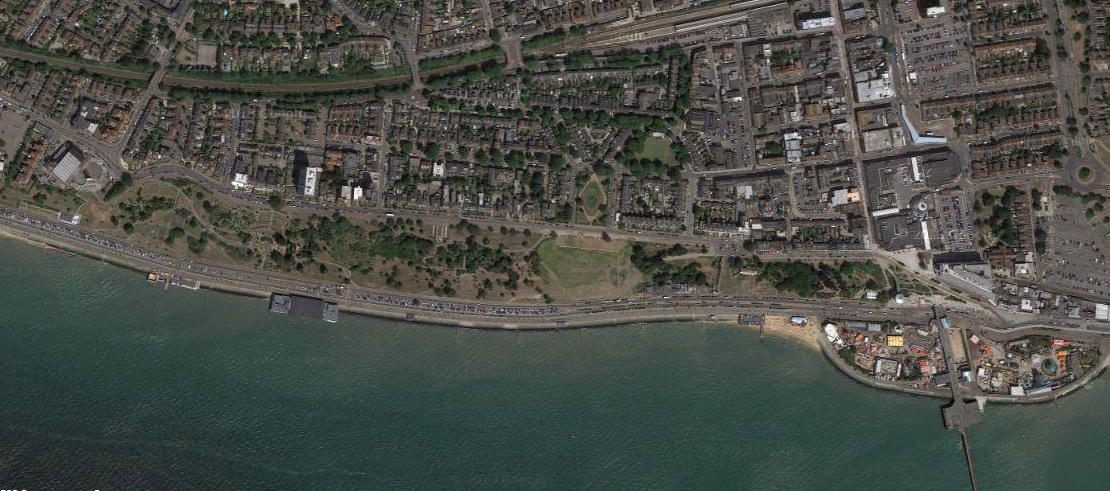
A satellite view of the Cliff Gardens at Southend. Prittlewell Square is the diamond shaped space in the centre.The area immediately between them and the sea is the site of the landslip. © Google

A satellite view of the Cliff Gardens at Southend. Prittlewell Square is the diamond shaped space in the centre.The area immediately between them and the sea is the site of the landslip. © Google

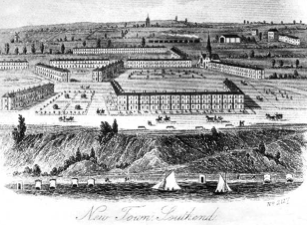
Etching showing the proposed development of Cliff Town in the 1850’s © Southend Borough Council

Etching showing the proposed development of Cliff Town in the 1850’s © Southend Borough Council

When the London-Southend Railway was finally completed in 1856 the town began to grow rapidly. The developer of the railway also leased forty acres of clifftop land for  Cliff Town, a  carefully planned Victorian suburb which included the  gardens  as an integral part of the layout. They formed a splendidly decorative centrepiece to the whole estate, a role they continue to play today.

PC09121

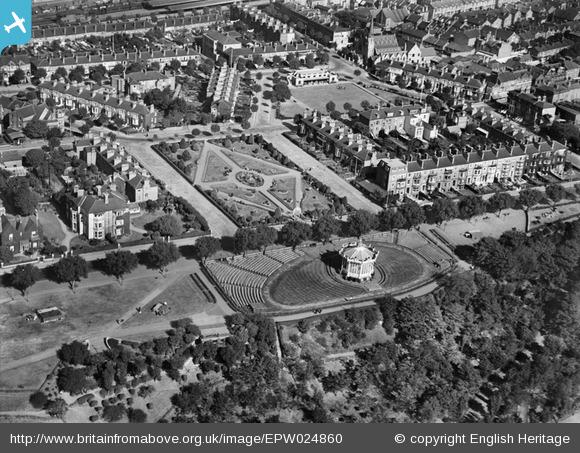
Clifftown was built in several ‘classes’ of property, depending on the extent of the sea view. The ‘First Class’ houses were those on the cliff top facing the sea whilst the ‘Second Class’ houses were those at an angle to the sea. Further back were the ‘Third and Fourth Class” houses who nevertheless still had glimpses. Apart from the gardens of the square there was also an area of market gardens which was later turned into the bowling green. An elegant bandstand was built in the clifftop gardens across the road.

EPW024860The gardens seems to have had an overhaul in the 1920s  and was being restored in 2002 by the Heritage Lottery Fund when the landslip occurred.

Shortly after the landslip in November 2002. Notice the bandstand just on the edge. © http://sucs.org/~dez/gallery/v/Walks/Landslip/?g2_page=2

Shortly after the landslip in November 2002. Notice the bandstand just on the edge. © http://sucs.org/~dez/gallery/v/Walks/Landslip/?g2_page=2

The bandstand which stood opposite the gardens had to be dismantled because it was in danger of toppling over the edge,  but was restored &  moved to another town park.

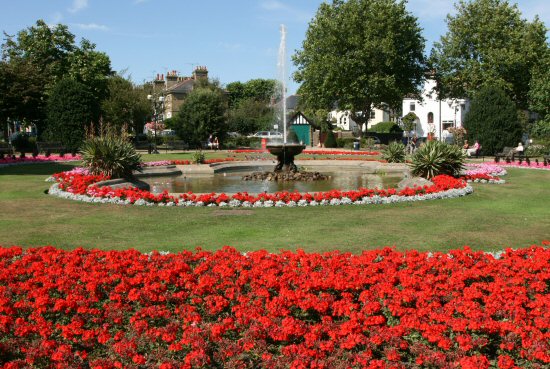
Bright summer bedding in Prittlewell Square © http://www.beautifulengland.net

Bright summer bedding in Prittlewell Square © http://www.beautifulengland.net

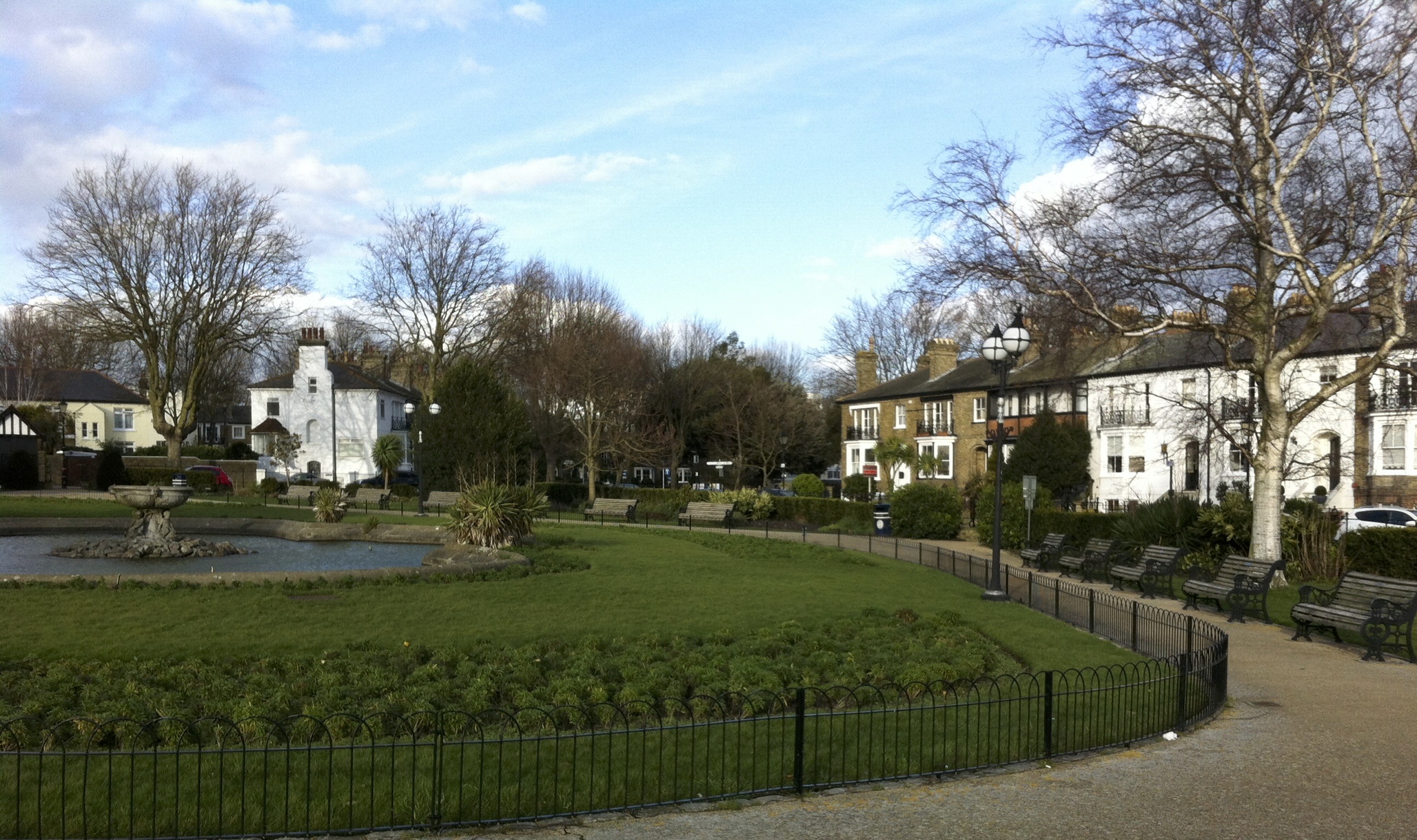
The gardens of Prittlewell Square © David Marsh 2014

The gardens of Prittlewell Square © David Marsh 2014

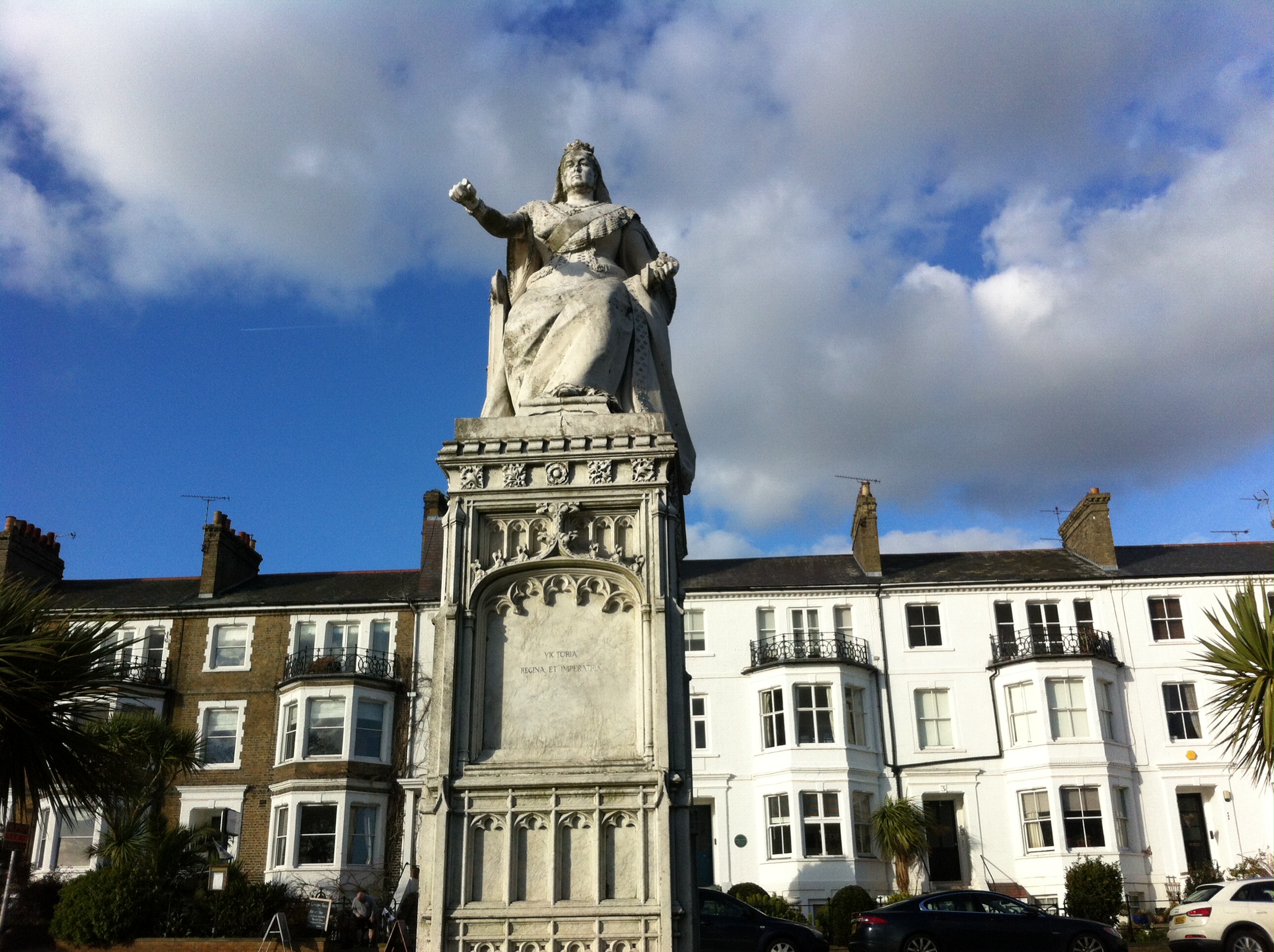
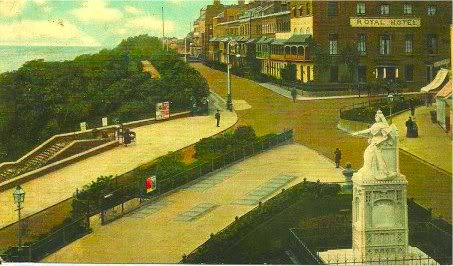
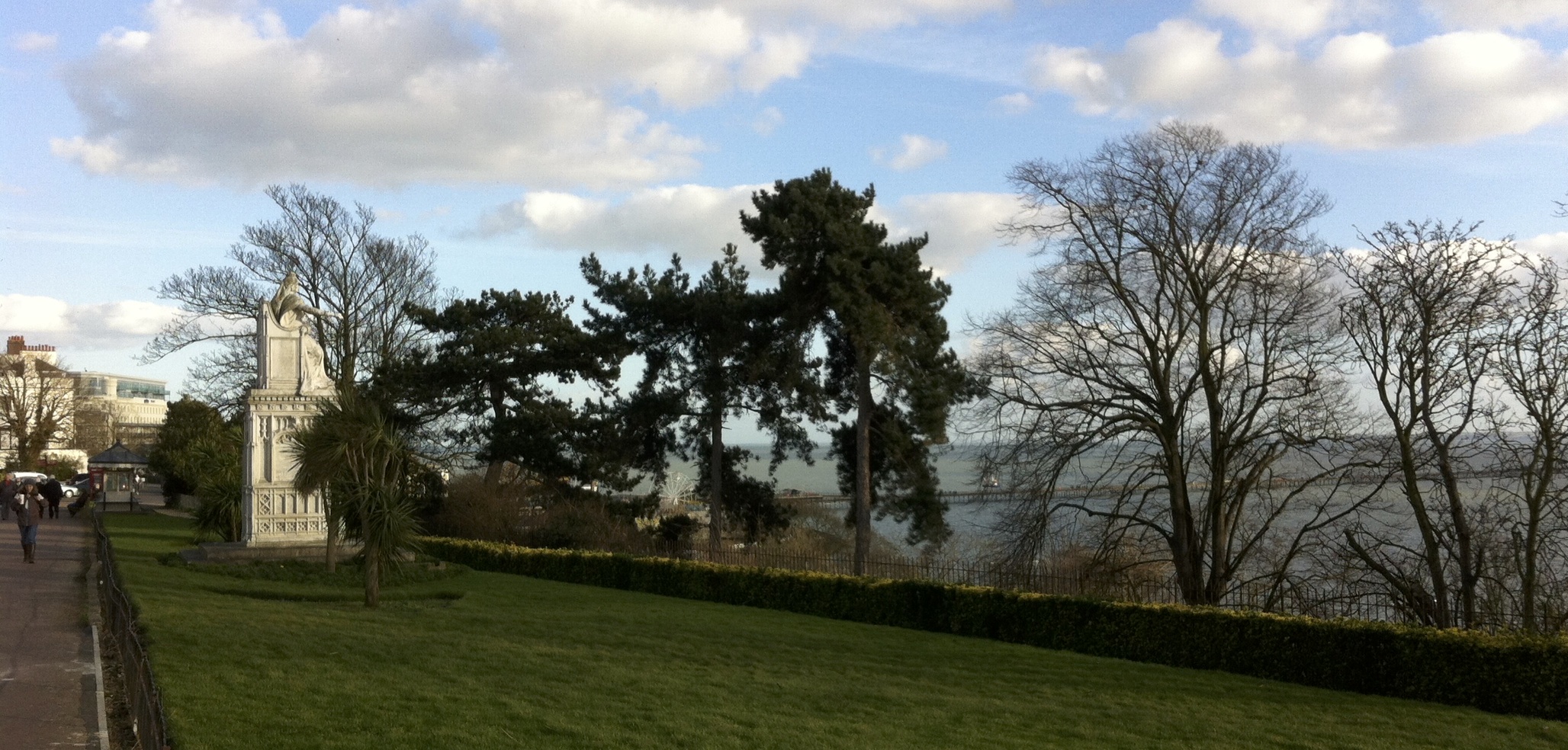
The second surprise was to see a large and imposing statute of Queen Victoria looking  her most imperial.  The statue  was presented to the town by the Mayor Bernard Wiltshire Tolhurst to mark the 1897 diamond jubilee.  It was originally situated at the top of Pier Hill, but  was moved to its present position in 1962 because residents joked that in her original position she appeared to be pointing to the gent’s toilets!

IN 1974 English Heritage placed the statue on the national listed buildings register (English Heritage Building ID: 122895) © David Marsh 2014

IN 1974 English Heritage placed the statue on the national listed buildings register (English Heritage Building ID: 122895) © David Marsh 2014

I suppose calling Prittlewell Square and a 3 ton statue of Queen Victoria surprises could be a bit of an exaggeration but my last discovery of the day  definitely was unexpected and rather strange but great fun More on that shortly!

PHi11

Queen Victoria statue in its old home on Pier Hill © http://www.southendtimeline.com

More information on Southend and its history can be found at :

http://rochfordessex.net/southend/A%20Brief%20History%20of%20Southend2.htm

And more information about the statue can be found at:

http://www.southendtimeline.com/pierhill.htm

http://www.echo news.co.uk/news/8902593.Southend_s_Queen_Victoria_statue_could_be_on_the_move/

← Back

Thank you for your response. ✨

photo 8

Queen Victoria’s statue in the Cliff Gardens © David Marsh 2014

Posted in Uncategorized | Tagged , , , , , | Leave a comment

A Surprise in Southend…

I had to go to Southend last week – a place I didn’t really know – and so I checked on the Parks and Gardens UK database to see if there were any interesting gardens to visit while I was there.  I was disappointed to find that we had nothing listed at all in the area. But it’s certainly not because there isn’t anything of  historical interest  but just because our volunteers haven’t had the time to do the research and add information.

 'A survey of the sea ground of the manors of Milton Hall & Prittlewell Priory ...', post 1822, Essex Record Office, D/DS 157/1

‘A survey of the sea ground of the manors of Milton Hall & Prittlewell Priory …’, post 1822, Essex Record Office, D/DS 157/1

Despite the fact it was a chilly & blustery day I went for  a walk along the seafront and was surprised to find, after the usual seaside paraphernalia of amusement arcades, fish and chip cafes and  donut emporia that there was a steep cliff garden with a row of rather elegant Georgian and Victorian houses at the top commanding great views across the estuary. They can be seen on the left in the estate map above, with Old Southend, just a tiny cluster of houses on the right.  A better sense of the topography is given by the print below. So I set off to explore.

Detail from an early 19thc print of the Royal Hotel And Terrace Essex Record Office, I/Mb 321/1/1

Detail from an early 19thc print of the Royal Hotel And Terrace
Essex Record Office, I/Mb 321/1/1

The oldest part of this development is Royal Terrace which was built in the 1790s as a rival to the delights of Margate, Weymouth and Brighton.   Although it attracted a season’s visit from Princess Caroline, the wife of the Prince Regent in 1804, poor transport links meant  the scheme for a new seaside resort was not a great success, and there was very little further building until the railway link to London was completed in the mid-century.

Royal Terrace, Southend On Sea, 1900 - 1920, Reproduced by permission of English Heritage.NMR Reference Number: PC11013

Royal Terrace, Southend On Sea, 1900 – 1920, Reproduced by permission of English Heritage.NMR
Reference Number: PC11013

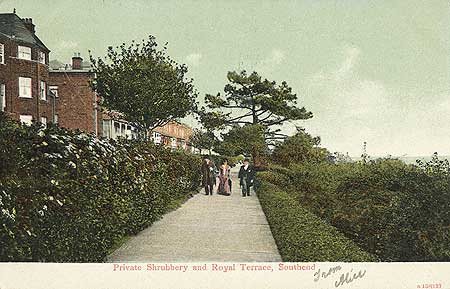
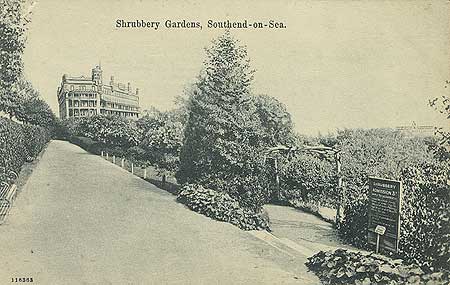
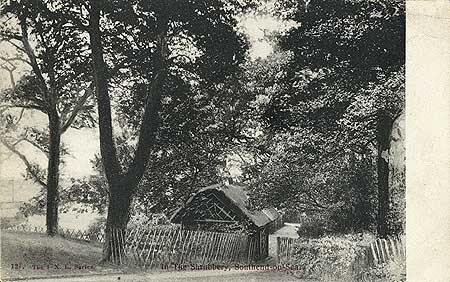
But it was the area between Royal Terrace and the sea and running down the cliffside that was most interesting.  This is “The Shrubbery” and I was surprised to discover, it was laid out at the same time as a private garden for the residents, since the rear of their properties was largely taken up by stables and mews. St2The gardens were later opened to the paying public for 3d.  They are now run by the local authority.  The Shrubbery was obviously popular and it features on many postcards. The ones below come from the  Nigel Temple collection which is now held by English Heritage and freely available on-line.

A view of the Shrubbery Gardens. The sign on the right shows an admission fee of 3d to enter. 1900 - 1930, Reproduced by permission of English Heritage.NMR Reference Number: PC08827

A view of the Shrubbery Gardens. The sign on the right shows an admission fee of 3d to enter. 1900 – 1930, Reproduced by permission of English Heritage.NMR
Reference Number: PC08827

The Shrubbery, Southend on Sea, 1900-1930Reproduced by permission of English Heritage.NMR Reference Number: PC08828

The Shrubbery, Southend on Sea, 1900-1930  Reproduced by permission of English Heritage.NMR
Reference Number: PC08828

A Thatched shelter in The Shrubbery, Southend on Sea, c.1900-1905 Reproduced by permission of English Heritage.NMR Reference Number: PC07136

A Thatched shelter in The Shrubbery, Southend on Sea, c.1900-1905 Reproduced by permission of English Heritage.NMR
Reference Number: PC07136

The Rose Bower in The Shrubbery, Southend on Sea, c.1900-1905, Reproduced by permission of English Heritage.NMR Reference Number: PC07139

The Rose Bower in The Shrubbery, Southend on Sea, c.1900-1905, Reproduced by permission of English Heritage.NMR
Reference Number: PC07139

A pleasant inland view from TQ8885 : Southend-on-Sea: pier viewing platform. © Copyright Chris Downer and licensed for reuse under this Creative Commons Licence

Royal Terrace and part of The Shrubbery today
© Copyright Chris Downer and licensed for reuse under this Creative Commons Licence

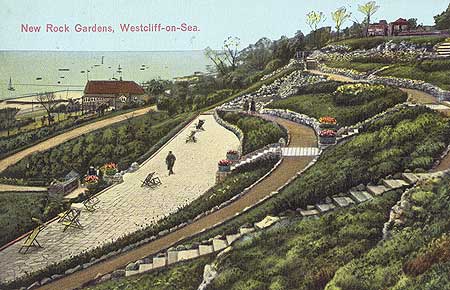
As Southend eventually  began to grow as a resort in the late 19th century, the rest of the cliffs began to be laid out as gardens with a wide sea-front promenade  that runs from Southend  to Westcliffe. Development lasted until the 1930s.

New Rock Gardens, Westcliff On Sea, Southend On Sea, 1927 - 1932, Reproduced by permission of English Heritage.NMR Reference Number: PC08952

New Rock Gardens, Westcliff On Sea, Southend On Sea, 1927 – 1932, Reproduced by permission of English Heritage.NMR
Reference Number: PC08952

Like The Shrubbery these other gardens have suffered from the vagaries of public spending cuts but are still relatively well maintained and brightly planted up in a traditional seaside bedding style every summer. Whatever one thinks of carpet bedding generally it just feels right in Victorian seaside settings, and Southend still seems to do it very well.westcliff shelter & cliff gdns excel c242-1

But while planting may have been maintained buildings and infrastructure  suffered and once again it was the Heritage Lottery Fund which came to the rescue in 1999.  The Cliff Gardens have several typical timber seaside shelters, and further along there is the splendid horseshoe-shaped sun shelter at Westcliffe.  According to the local paper, the Southend Echo, plans are now afoot to convert this into a cafe because it is “underused” and tenders are being invited for the lease.   There is also a cliff lift, now 102 years old which was also recently restored with a grant from the Heritage Lottery Fund .

The Cliff Lift on Southend sea front is 40m long and rises 17m between levels. Originally built as an escalator in 1901 it was converted into a funicular car lift in 1912. © Len Williams & licensed for reuse under Creative Commons Licence

The Cliff Lift on Southend sea front is 40m long and rises 17m between levels. Originally built as an escalator in 1901 it was converted into a funicular car lift in 1912.
© Len Williams & licensed for reuse under Creative Commons Licence

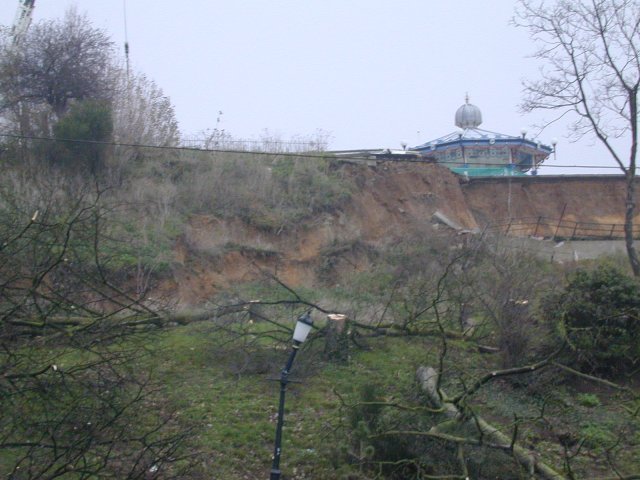
A part of the cliff park suffered a large landslip in November 2002 which was not fully stabilized until April 2013.  The area affected is now being turfed and planted with wild flowers but is due to become the home for a new Museum.

All this would have been interesting enough but there were several more surprises to come… of which more anon

Southend_on_Sea-1

Cliff Gardens from the collection of Beecroft Gallery
http://www.southendmuseums.co.uk/page/Visit-Beecroft

Further information can be found at:….

Archival records for The Shrubbery

http://seax.essexcc.gov.uk/Result_Details.aspx?DocID=270659

News stories from the local paper:

http://www.echonews.co.uk/news/10547859.Westcliff_seafront_shelter_to_be_turned_into_eatery/

http://www.echo-news.co.uk/news/8177832.Southend_s_Cliff_Lift_to_re_open_today/

← Back

Thank you for your response. ✨

Posted in Uncategorized | Tagged , , , , | Leave a comment