BEAUTIFUL BRITAIN: Romance and Reason 3…

I suppose the question I have been trying to pose over the last couple of posts has been : are we in danger of losing our sense of the ‘romantic’ in the pursuit of the rationally ‘perfect’?

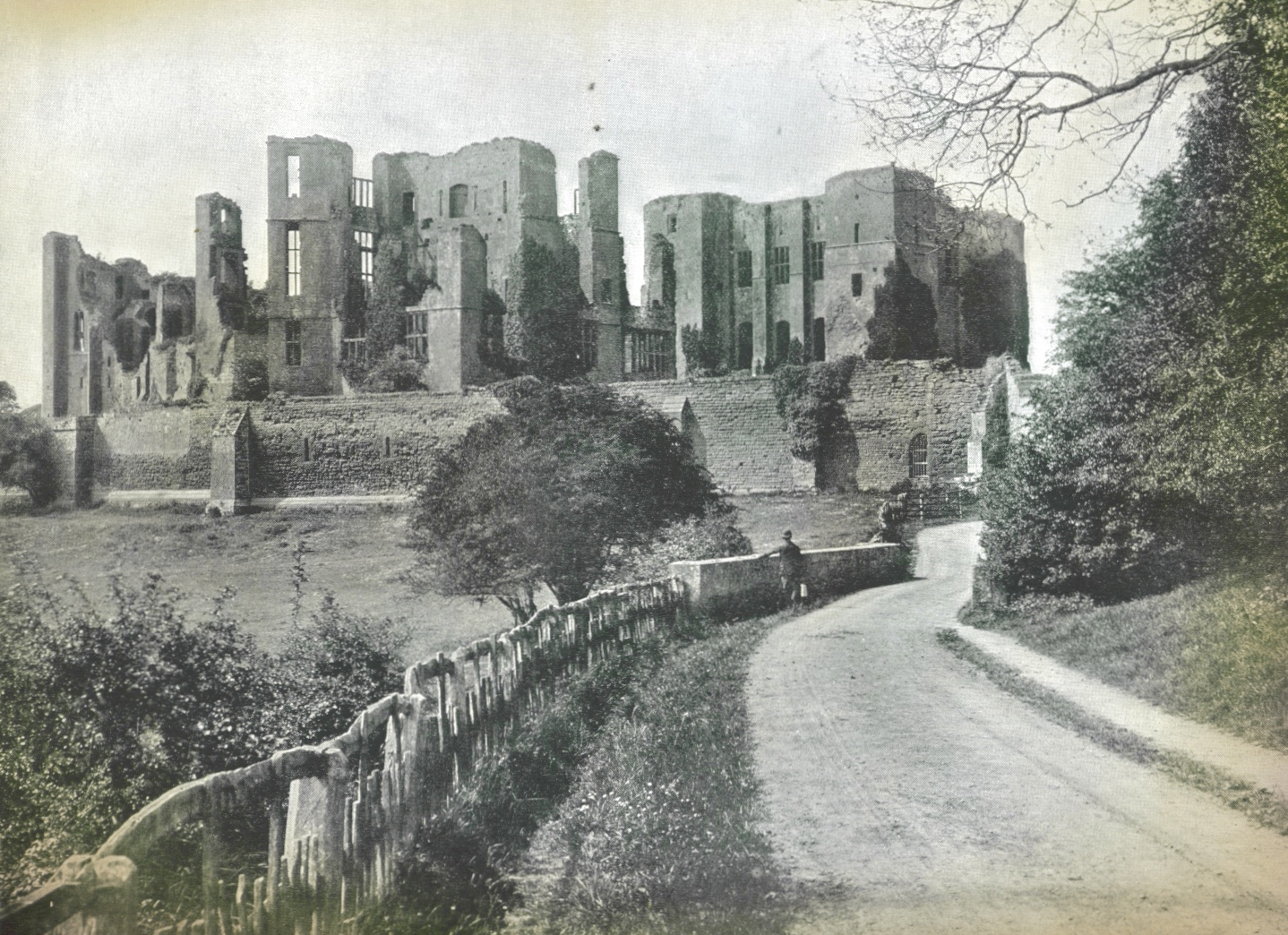
Raglan Castle, from Beautiful Britain, 1894

Raglan Castle, from Beautiful Britain, 1894

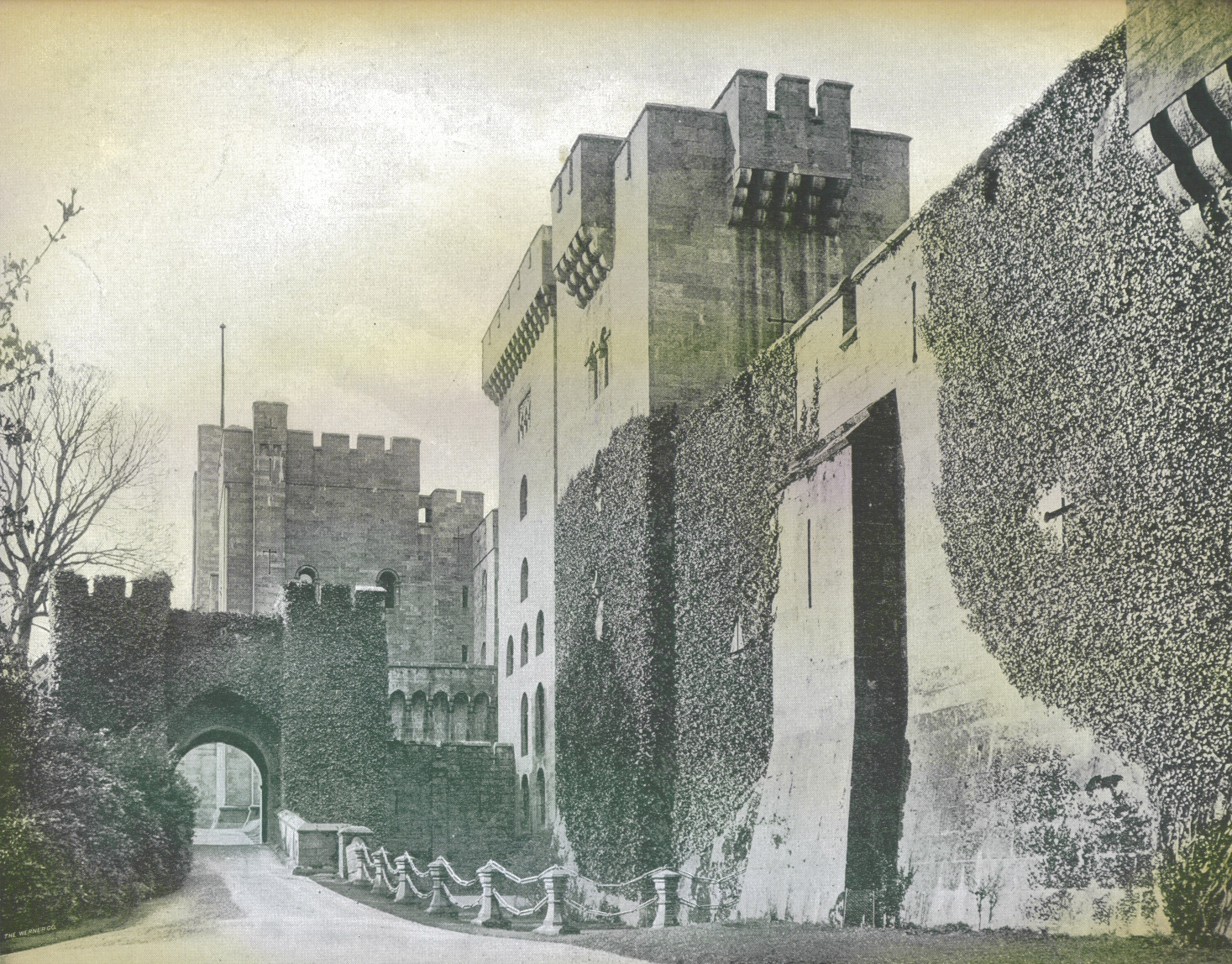
The late Victorians clearly thought that ivy was part of the romantic attraction of a house. Almost every site photographed for  Beautiful Britain has it clambering over the house and garden walls. And in some cases clambering is an understatement!

Scan 5

Hawarden Castle, from Beautiful Britain, 1894

Ruskin argued that  ‘It is impossible, as impossible as to raise the dead, to restore anything that has ever been great or beautiful in architecture’.  He and later William Morris campaigned vehemently against the cult of heavy-handed restoration. Instead they favoured steady maintenance and judicious repair which would enable the best of both worlds.

Unfortunately  The Office of Works had to employ drastic treatment if it was to prevent the virtual loss of most of the sites they took into their care. Settings and atmosphere definitely took second place. It took a long time for that attitude to alter but alter it has, for conservation reasons as much as romantic notions of what sites should look like.

In 2009 English Heritage published results of experiments on soft capping of walls entitled A better way of conserving ruins. These  ‘indicated that soft wall capping does play a useful role in the conservation of ruined monuments” but the report was  largely confined to the technical and practical implications and  “to better understand what effect it will have on the natural decay of monuments before philosophical and aesthetic judgements are made to determine whether or not it will be appropriate.”  The conclusions of the report suggest that at least a slight element of the  ‘romance’ of seeing ancient walls covered with vegetation might once again be allowed to creep in.

Given some of the historic mistakes that have been made in declaring a one-size fits all policy  this is probably both understandable and sensible. In a covering background essay  The Presentation of Ruins: A historical overview Jeremy Ashbee outlines much more lucidly than I have been able to do in these recent posts, the long debate about our many and varied attitudes to ruins.

Hailes Abbey, showing soft capping of some walls© Philip Halling & licensed for reuse under this Creative Commons Licence

Hailes Abbey, showing soft capping of some walls© Philip Halling & licensed for reuse under this Creative Commons Licence

In particular he cites the example of Hailes Abbey where ‘restoration’ work provoked much controversy and led James Lees-Milne of the National Trust  to comment “a wall of little architectural distinction has been completely rebuilt so that no vegetation will ever grow upon it again and it will henceforward always look artificial and self-conscious. It is the worst example I have yet seen of wanton sacrifice of aesthetic considerations to mere archaeological pedantry….‟

In 2010 English Heritage publihsed the results of  a research symposium Ivy on Walls which again detailed the results of case study experiments they had carried out.  Again there was a background essay by Jeremy Ashbee  – Ivy and the Presentation of Ancient Monuments -which sums up the generally unremitting hostility towards ivy in written commentaries but the rather more positive visual message it gives.

However using Netley Abbey as an example he shows how romantic writers like William Gilpin were alerting travellers to the picturesque quality of ruins and evoking the spirit of ‘melancholy contemplation.

After outlining how professional conservationists attitudes have changed are still changing he stresses it is ‘the ongoing survival of the monument’ that is critical and that might mean removing ivy if it ‘accelerate the process of deterioration’ – but before you think that means reason is still winning hands down he adds….but ‘whether we keep it off is another question’


← Back

Thank you for your response. ✨

Posted in Uncategorized | Tagged , , , , , , , , | Leave a comment

BEAUTIFUL BRITAIN: Romance and Reason 2…..

In my last post I was waxing lyrical about the way that history and ruins in particular were romanticized  in the 19thc, and how gradually Ruskin’s idea of trusteeship of  the ‘national heritage’ were adapted and adopted.  This came at a price.

The garden on top of the keep, Farnham Castle, Surrey in c.1890

The garden on top of the keep, Farnham Castle, Surrey from Beautiful Britain, 1894

I started with a photo of a late Victorian garden on the keep of Farnham Castle. It looks moodily if somewhat fussily romantic, almost sentimental and chocolate-boxy.  The foreground shows a formal plan around a font and a lot of lush planting while the background appears wilder, the tumbledown buildings and walls serving as a framework for trees and overgrown creepers especially ivy.

1904

The same garden on a postcard printed in 1904.

The garden was popular enough to be made into a postcard ten years later in 1904, and was presumably the pride of  at least one bishop’s wife because the castle, set in its 320 acre deer park,  was the country seat of the Bishops of Winchester. By 1930 the castle was  surplus to requirements and  the park was sold to the town council to save it from building development and shortly afterwards the ruined keep was transferred to the Office of Works and Public Buildings.

Thurley

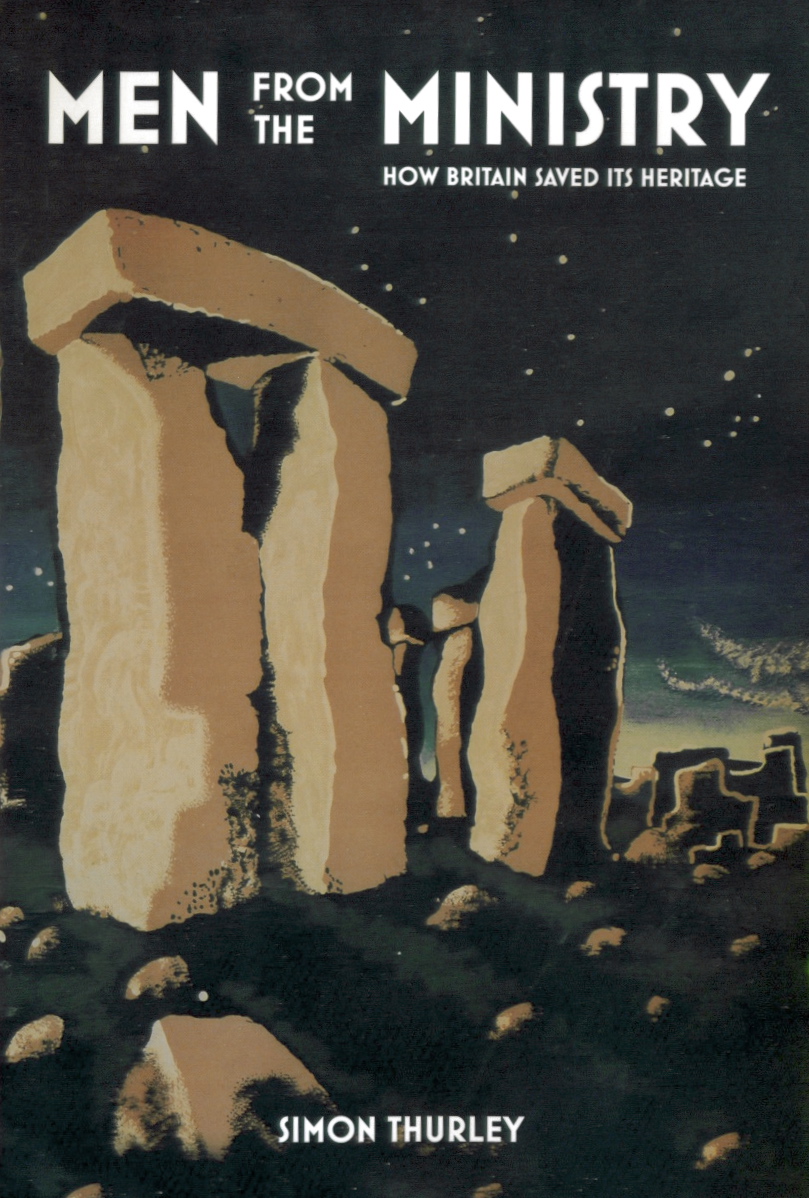
Men from the Ministry, by Simon Thurley, [Yale University Press, 2013]

As Simon Thurley points out in Men from the Ministry it became one of the 273 in their care compared with just 44 twenty years earlier.  The garden was probably grubbed up at that point as, like most of the other monuments,  the castle quickly became subject to that well-intentioned but rather ruthless simple landscaping that used to typify almost all ancient monuments.

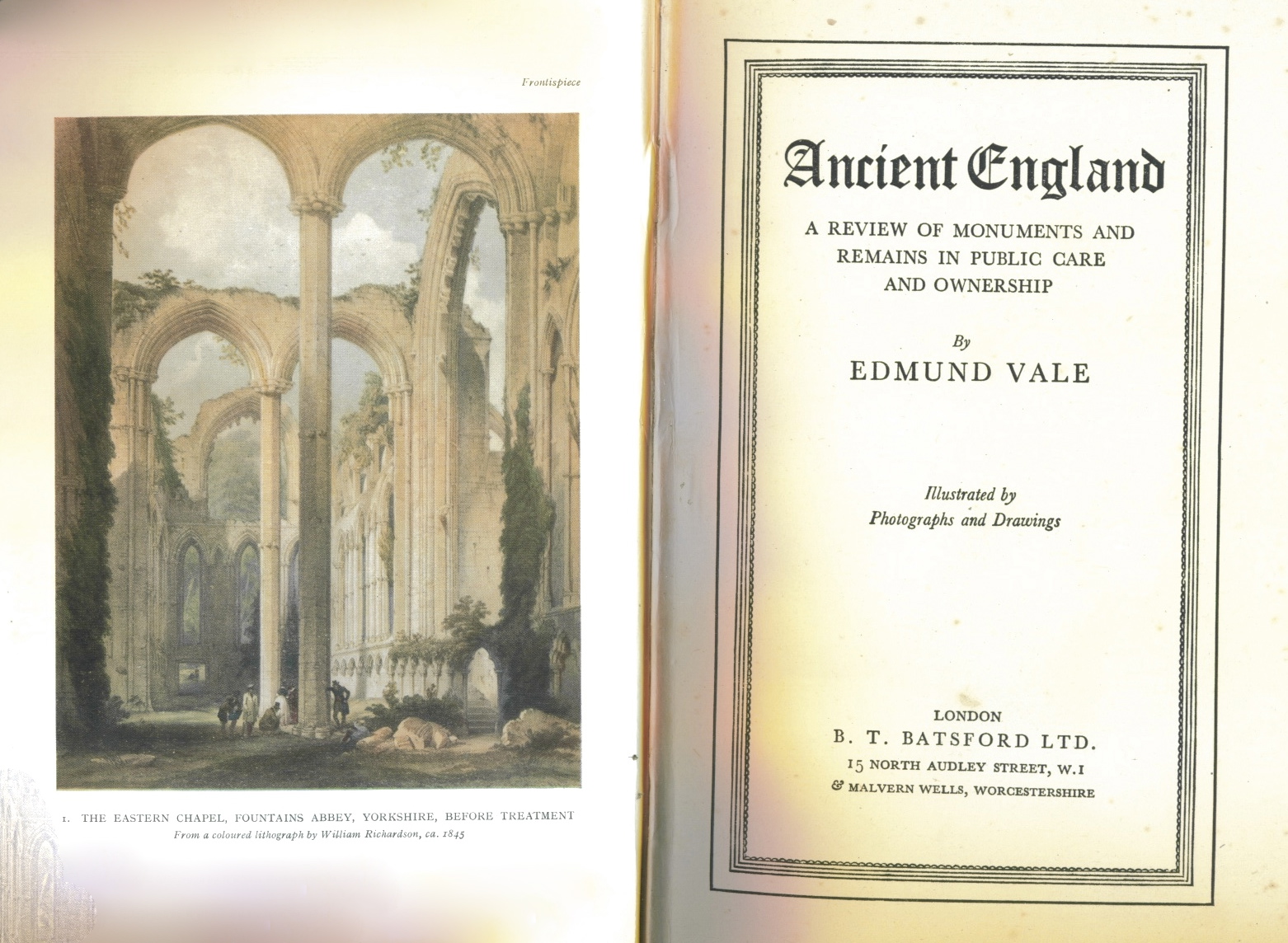
Edmund Vale, a contemporary author and commentator, wrote in Ancient England in 1941 that there were two kinds of ruins: ‘the Victorians preferred one kind and ourselves the other’. Theirs ‘moves slowly but surely from somethingness to nothingness, and may therefore be called a progressive ruin’.

Title Page of Ancient England, by Edmund Vale, 1941

Title Page of Ancient England, by Edmund Vale, 1941

For them the ‘good of a ruin’ was one that rouses the imagination of the beholder, either constructively or creatively. And a roused imagination is a fine thing …   They did not expect to get ‘exact knowledge but atmosphere and improvement…and to be put in touch with the romance of the situation. ‘   But he added ‘the progressive ruin is rapidly becoming a thing of the past.’ [pp.1-2].

Although the blame for this – if blame it is – is normally put on the historians and archaeologists who worked at the Office[later Ministry] of Works there were other earlier examples of  ‘tidying up’ and very simple landscaping. At Newark Castle, for example, the grounds were laid out in the 1880s to designs by H E Milner, as free public pleasure grounds as a memorial of Queen Victoria’s  Jubilee.

Newark Castle Gardens, from Beautiful Britain, 1894

Newark Castle Gardens, from Beautiful Britain, 1894

But after the Ancient Monuments Act of 1913  there is no doubt that a rigid housestyle was adopted. Since the Office of Works was only responsible for ancient monuments and not country houses, gardens or landscapes, they approached preservation, protection and presentation of a historic site in an entirely different way.   Removing the ivy and other vegetation, clearing the fallen stones,  and uncovering the structure and layout made the site easier to understand, and Thurley [p.135] suggests they felt ‘the loss to the imagination would be repaid by the gain to the intellect’. Edmund Vale was less optimistic: ‘It is too soon to say what we ourselves believe in when we visit our preserved ruins. The cult is a new one and its priesthood is puritanically inclined, so far as mysteries are concerned’ [p.2].

Penrhyn

Penrhyn Castle, from Beautiful Britain, 1894

Vale was not the only one concerned. The ministry’s approach also  horrified James Lees-Milne of the National Trust who talked of ‘the wanton sacrifice of aesthetic considerations to mere archaeological pedantry.’ Lees-Milne and the Trust set themselves up as champions of the more popular  romantic approach, in opposition to what they saw as the over-academic purists.

1459984_91c4243c

Penrhyn Castle © Robin Drayton & licensed for reuse under Creative Commons Licence

A good example of this can be seen in their approach to Penrhyn Castle near Bangor, pictured here in the 1890s and today.

Nonetheless the new aesthetic dominated state run properties until at least the 1980s.  You could tell the difference almost immediately between a National Trust property and one in the care of the ministry.

farnham_castle_key

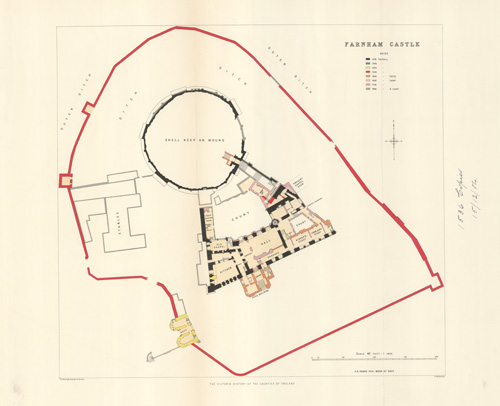
Key to the phases of building plan published by Bartholomews in 1904 © Bartholmew Archive, National Library of Scotland.

farnham_castle

Phases of building plan for Farnham Castle, published by Bartholomews in 1904 © Bartholmew Archive, National Library of Scotland.

In fact, as Simon Thurley points out [p.140] it wasn’t merely archaeological tidying that was taking place. ‘The work may have been methodical but it was not archaeological… it was thoroughgoing  clearance.’ It led to the introduction of phased plans, outlining the development of the site but in the process led to destruction of most post-mediaeval additions and alterations,which were not considered particularly important.

2027481_ec9a272b

The protection for the mediaeval well at Farnham Castle © Richard Croft & licensed for reuse under Creative Commons Licence

At Farnham this meant that to preserve the castle’s structure and reveal its layout accurately, the garden had to go. In its place the preserved and somewhat sterile fabric were surrounded by the well-known manicured lawns and gravel paths.

This robbed the place of most of its aesthetic appeal and what little atmosphere was left after the initial clearance and consolidation work was further depleted by a shed put up over the excavated mediaeval well. Hardly a visually appealing swap for a ‘gothic’ ornament set in formal flower beds.

Yet as Rosemary Hill pointed out in her review of Thurley’s book in the Daily Telegraph: ‘It is the paradox of conservation that to preserve a structure the last thing you can do is leave it alone.’ There has to be a compromise between romance and reason. Had nothing been done Vale comments sadly, “only this and perhaps the next generation could have gone on enjoying these fruits of decay. The third generation would have had no ruined mediaeval buildings to look at, with or without ivy.’

to be continued….

For more information see:

http://www.parksandgardens.org/places-and-people/site/4292      Farnham Park

http://www.parksandgardens.org/places-and-people/site/2393       Newark Castle

http://www.parksandgardens.org/places-and-people/site/2603       Penrhyn Castle

← Back

Thank you for your response. ✨

Posted in Uncategorized | Tagged , , , , , , , , , , , , , , | 1 Comment

BEAUTIFUL BRITAIN: Romance and Reason

I’m a hoarder and always have been. I’ve also been interested in history all my life and even as a child I collected anything and everything in the hope that one day it would come in ‘useful’.  Having written last month  that I loved decay in buildings and gardens, I remembered that when I was about 10 or 11 I’d gone to a jumble sale and  bought a collection of Victorian illustrations from a subscription series called  “Beautiful Britain” because it contained a photograph of the garden in the ruins of the mediaeval Farnham Castle, which was a few hundred yards from where I grew up.  Scan 4 (1) And for the last 50 years or so its been waiting for its time to be useful.  I finally remembered it as  I was writing  and eventually I tracked the folder down to a dusty cardboard box in my in-laws attic and glanced through the contents for the first time in at least a decade.  And I was quite surprised.

The garden on top of the keep, Farnham Castle, Surrey in c.1890

The garden on top of the keep, Farnham Castle, Surrey from ‘Beautiful Britain’, 1894

The photo of the garden was there, looking even more extraordinary than I remembered it.   That’s probably because I’d never looked at it, or any of the other pictures in the collection, with the eyes of a garden historian before.  A couple of things struck me immediately as I looked through the rest of the folder. Firstly our ancestors were clearly sometimes happy to allow historic buildings  and gardens  to decay but  still thought them beautiful because they were ‘romantic’. And secondly ivy was ubiquitous and allowed to grow almost anywhere it chose.   Neither of these would really be acceptable today.  Indeed one only has to look at  recent photos of the same place to see how things have changed.  We have become a national of obsessive heritage preservers and  tidiers.

2027483_8d89f63b

The same space on top of the keep at Farnham Castle © Richard Croft &  licensed for reuse under Creative Commons Licence. http://www.geograph.org.uk/photo/2027483

Is that a bad thing? Of course not…well not entirely.  Our built heritage is precious and deserves our respect, care and attention. So too does our more  ephemeral garden heritage.  But this attitude is comparatively recent, indeed in the case of gardens very recent.

DSCF8404

The old palace of Woodstock.
Reproduced by permission of English Heritage
NMR Reference Number: CC50/00455

Although antiquarians like John Leland, William Camden and William Dugdale had begun to investigate and write about antiquities in the 16th and 17th centuries, there was no sense in the ‘old’ was really considered of particular value. Buildings were demolished  and gardens uprooted at will.

It was Sir John Vanbrugh who made the first serious attempt to preserve an old building for its own sake, not for living in but for its landscape value.  As the architect of the new Blenheim Palace, the gift of a grateful nation to the Duke of Marlborough for his victories over Louis XIV,  Vanbrugh wrote to the Duchess  suggesting that the former royal palace of Woodstock, which stood in the park should be preserved rather than demolished.  ‘It wou’d make One of the Most Agreable Objects that the best of Landskip Painters can invent. And if on the Contrary this Building is taken away; there then remains nothing but an Irregular, Ragged Ungovernable Hill, the deformitys of which are not be cured but by a Vast Expence.’    Unfortunately Vanbrugh lost the argument and the Duchess swept the ruins away.

Old Wardour Castle by Nathaniel Buck

Old Wardour Castle by Samuel & Nathaniel Buck, 1732

However, during the 18thc things began to change. Antiquarianism became an accepted pursuit for a gentleman, and coupled with a growing taste for topographical and landscape painting and prints, it encouraged the study of ancient monuments and mediaeval buildings and their settings.  It is difficult to judge the extent of appreciation for their historical value but they were certainly valued for their visual attraction. Ruins, classical and gothic, both old and contrived, appeared in the gardens of the elite.   At Wardour, for example, the ruins of the old castle were left as a picturesque eye-catcher in the distant landscape for the new house built a mile away.

1445171_f604ac9b

Rievaulx Abbey seen from Rievaulx Terrace © Steve Fareham & licensed for reuse under Creative Commons Licence. http://www.geograph.org.uk/reuse.php?id=1445171

Similarly at Rievaulx a new terrace high above the river valley spectacularly incorporates the old abbey ruins into the wider landscape of Duncombe Park.

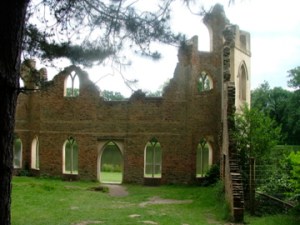
And where they didn’t exist they could, as at Painshill, easily be created.  The love of the old was however largely something indulged in only by the elite.

DSCF7360

The Abbey, a sham ruin at Painshill © David Marsh 2008

Several things change in the early 19thc, partly inspired  by Walter Scott’s series of Waverley novels which began in 1814. Scott  began a new category of writing – historical fiction – and his stories together with those of slightly later writers like Harrison Ainsworth and Bulwer Lytton took hold of the public imagination and spread a love of history and the past amongst their readers.  They encouraged the romantic notion of “Old England” which altered attitudes and perceptions to our ‘national story’ and what we would now call our ‘national heritage’.

Kenilworth Castle from 'Beautiful Britain', 1894

Kenilworth Castle from ‘Beautiful Britain’, 1894

Simon Thurley points out in his recent book Men from the Ministry that Scott’s novels made the past tangible and realistic in a way previously unknown to a much wider audience. The sites he described like the castle at Ashby de la Zouche, the scene of the tournament in Ivanhoe [1819]  became places of pilgrimage.  Kenilworth Castle, the scene of the passionate but secret romance between Robert Dudley and Amy Robsart, was soon overrun with visitors,  but this led to much better care of its fabric and to proper antiquarian study.

As travel became easier with the advent of the railways, travel books and tourist guides began to appear, and even for those who couldn’t travel to see the sights themselves  there were not just books describing them but cheap magazines with illustrations. These were detailed, informative and peopled with evocative costumed figures. Although they mainly covered interiors they also included exteriors of famous places and even a few gardens. This opened up new romantic worlds to readers. But it also opened up the idea of a national history which was the birthright of all.  Romantic history became patriotic.

Levens

The gardens of Levens Hall from Joseph Nash, The Mansions of England in the Olden Times, 1849

From there it was short step to Ruskin’s idea of  important historical monuments and buildings being held not just by their owners but by the whole nation in a kind of trusteeship.  In The Seven Lamps of Wisdom [1849] he argued that the buildings of the past did not belong to the current generation. ‘We have no right whatever to touch them. They are not ours. They belong partly to those who built them and partly to all generations of mankind who are to follow us.’

So what does that mean to us. We have accepted more than the idea of trusteeship. As a nation we ‘own’ a large number of historic houses and gardens, whether through English Heritage, or at slightly arms-length through the Royal Parks and Royal Palaces or the National Trust, and any number of smaller organisations, charitable trusts and volunteer groups. As a country we have also imposed restrictions on what the owners of such properties in private hands can do with them.  But perhaps at a cost.

To be continued in the next post…..

farnham-castle-aerial-3.jpg.852x286_10_118_8272

Farnham Castle © http://www.Hoteldevie.com


For more information see

Farnham Castle & Park:

http://www.parksandgardens.org/places-and-people/site/4292/history Farnham Park

http://www.english-heritage.org.uk/daysout/properties/farnham-castle-keep/

Simon Thurley, Men from the Ministry [London: Yale University Press, 2013]

← Back

Thank you for your response. ✨

e8823

“Farnham Castle, Surry” from Francis Grose’s Antiquities of England and Wales, 1786

Posted in Uncategorized | Tagged , , , , , , , , , , , , , , , , , , , , , , , , , , , | 1 Comment

Snowdrop Days

I saw my first snowdrops of the season last week, pushing their way through the semi-liquid mud in a friend’s garden. It almost looked as if it needed swimming lessons. But it set me thinking how archetypally English we take them to be. Except of course they’re not: like so much else in our garden they’re a foreign invader.

fetchimage - Version 2

from John Gerard’s The Herball or Generall Historie of Plantes, 1597
Image courtesy of Early English Books Online

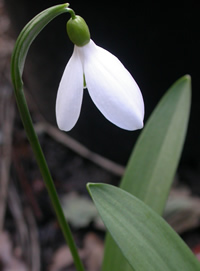
Native to shady woodland across Europe from the Pyrenees to Turkey and Ukraine, no-one knows how or when they arrived in Britain but it must have been well before the end of the 17thc because they appear in John Gerard’s Herbal of 1597. They are included along with leucojums under the heading of “Bulbed Stock Gilloflowers”, and illustrated as the “Timely flowring Bulbus violet”.   While Gerard’s name and classification, which is based on the ancient Greek writer, Theophrastus might strike us as a bit odd,  his written description is accurate.

“The first of these Bulbus violets riseth foorth of the ground with two small leaves, flat and crested, of an overworne greene colour: among which riseth up a smal and tender stalke, of two hands high; at the top whereof commeth forth of a skinnie hood, a small white flower of the bignesse of a violet, compact of six leaves, three bigger and three lesser, tipped at the points with a light greene: the smaller leaves are not so white as the outermost great leaves, but tipped with greee as the others be. The whole flower hangeth downe his heda by reason of the weake foote stalke whereon it groweth. The roote is small, white and bulbose.”

Gerard also tells us that “our London gardens have taken possession of them all these many years”, and that “they are maintained and cherished in gardens for the beautie and rarenesse of the flowers, and the sweetenes of their smell.”   That cherishing continues. Although many plants have their fan clubs, indeed many have specialist groups dedicated to their cultivation, research and promotion, snowdrops [Galanthus nivalis]seem to have attracted a more enthusiastic bunch of admirers than most: Galanthophiles.

Magnet_3

Galanthus nivalis Magnet © Galanthus.co.uk

The term was used [if not coined] by E.A.Bowles the garden writer and plantsman, although snowdrop hybridizing and collecting was well under way in the mid-19thc. The most famous snowdrop breeder – nicknamed the snowdrop king -with over 100 varieties to his name [including Magnet], was James Allen of Shepton Mallet where the local horticultural society is keen to rekindle his enthusiasm and passion for the flower in their town.

For further information see:

http://www.sheptonhortsoc.org.uk/snowdrop-project

DSCF5177

Bennington Lordship © David Marsh

Galanthophile efforts  to convert the rest of us have had a lot of success.  I can remember [at least I think I can] when a snowdrop day was quite an unusual occasion, taking place in just a few gardens: Bennington Lordship, Hodsock Priory, Colesbourne Park spring to mind and all of which continue to have wonderful displays.

But nowadays everyone is at it.

Fountains Abbey

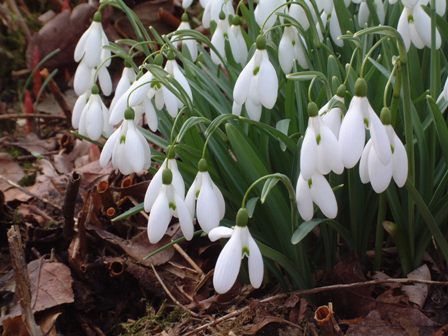
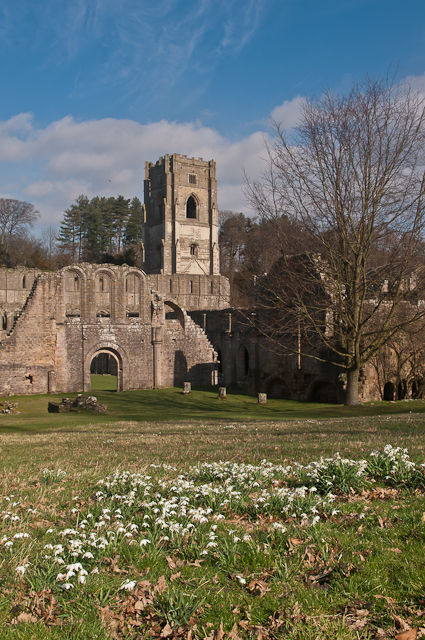
Snowdrops at Fountains Abbey © Ian Capper & licensed for reuse under Creative Commons Licence

There are dozens, if not hundreds, of gardens and snowpdrop-related events to choose from. The National Gardens Scheme alone lists 71 gardens open in February, many of which specifically mention snowdrops as one of their attractions and are opening specially. They include many historic parks and gardens that are not normally open to the public including East Lambrook Manor nr Taunton, [the garden created by Marjorie Fish], Bramdean House, nr Winchester and Welford Park, nr Newbury.

And then of course there are the gardens that do open on a regular basis many of which have been widening their seasons of interest by mass plantings of snowdrops , often in dozens of varieties.

geograph-2822851-by-Len-Williams-1

Snowdrops at Welford Park, nr Newbury © Len Williams & licensed for reuse under Creative Commons Licence geograph-2822851

So now the choice of places to see “The Snow-drop, who, in habit white and plain, Comes on the Herald of fair Flora’s train”  [Charles Churchill, Gotham 1764] is almost endless.  From Colebsourne Park in Gloucestershire to Cambo in Fife ,  from Easton Walled Garden to Austwick Park, nr Settle, and from Fountains  to Plas yn Rhiw or  wherever else you are in the country there will be somewhere nearby to go and indulge – or maybe acquire – the passion to become a galanthophile too!

galanthus-allenii-200-94295-1

Snowdrop Galanthus x allenii is possibly a wild hybrid from the Caucasus. It was found in Shepton Mallet, the Somerset garden of James Allen (hence the name), in Victorian times and has been cultivated ever since
© Natural History Museum

Further information about some of the many gardens with good snowdrop displays can be can be found at the National Gardens Scheme and the Royal Horticultural Society:

Home

http://www.rhs.org.uk/Gardens/RHS-Partner-Gardens/Features/Days-out-for-snowdrop-lovers

You might also be interested in reading about snowdrops on the blog of the Galloping Gardener:

http://thegallopinggardener.blogspot.co.uk/2013/02/in-search-of-snowdrops-where-to-find.html

← Back

Thank you for your response. ✨

OLYMPUS DIGITAL CAMERA

Snowdrops at Easton Walled Garden, Lincolnshire © Copyright Brian Green & licensed for reuse under Creative Commons Licence

Posted in Uncategorized | Tagged , , , , , , , , , , , , | Leave a comment

Copped Hall revisited

The weather yesterday was wonderful so I decided to take my own advice [for a change] and went for a winter walk.  And having written recently about Copped Hall discovered that it had one its monthly open days I set off to the edge of Epping Forest to see how things had changed over the past nearly ten years.  I am so glad that I did.

DSCF8362

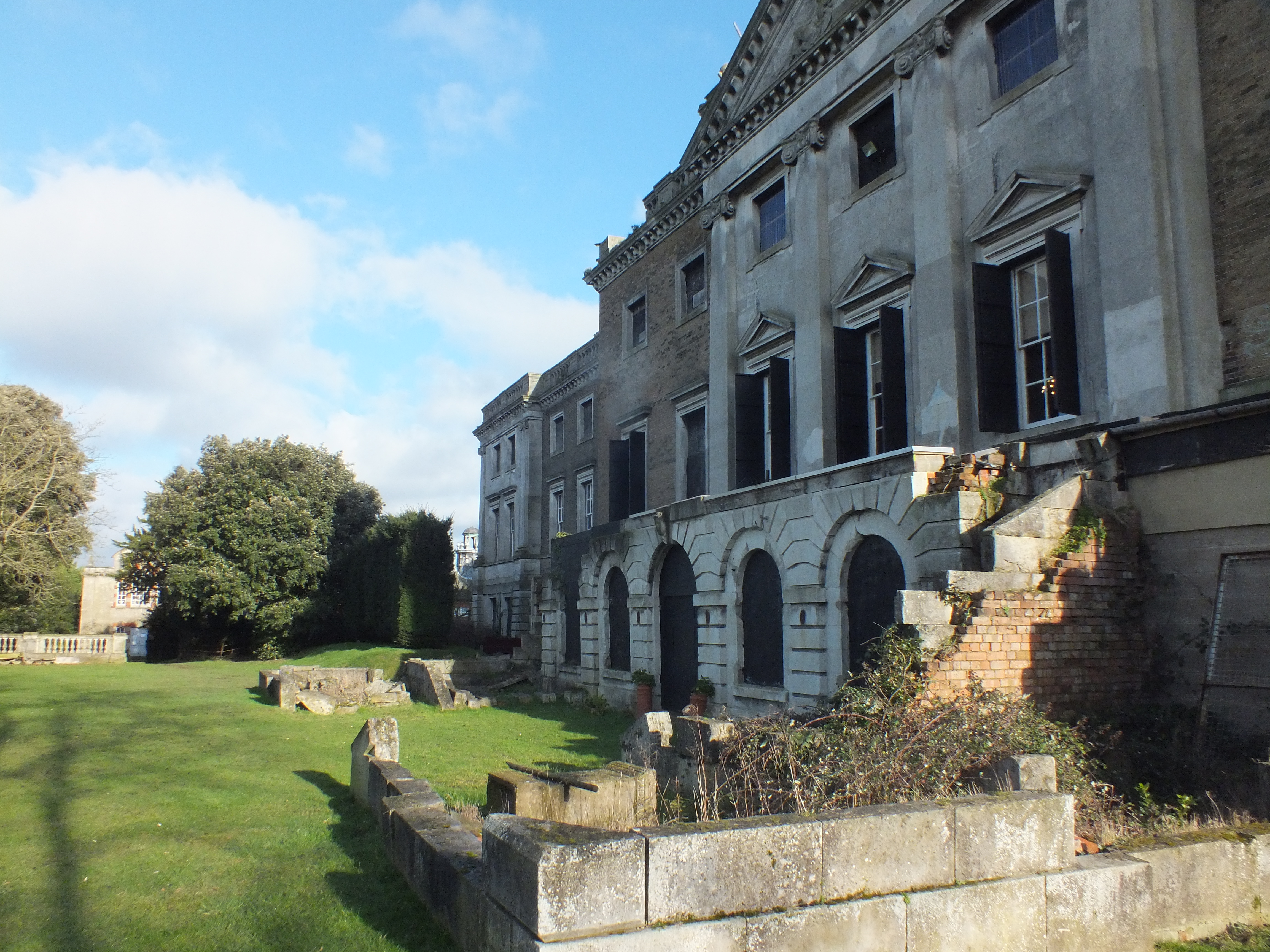
The rear elevation showing the remains of the double staircase to the first floor terrace © David marsh

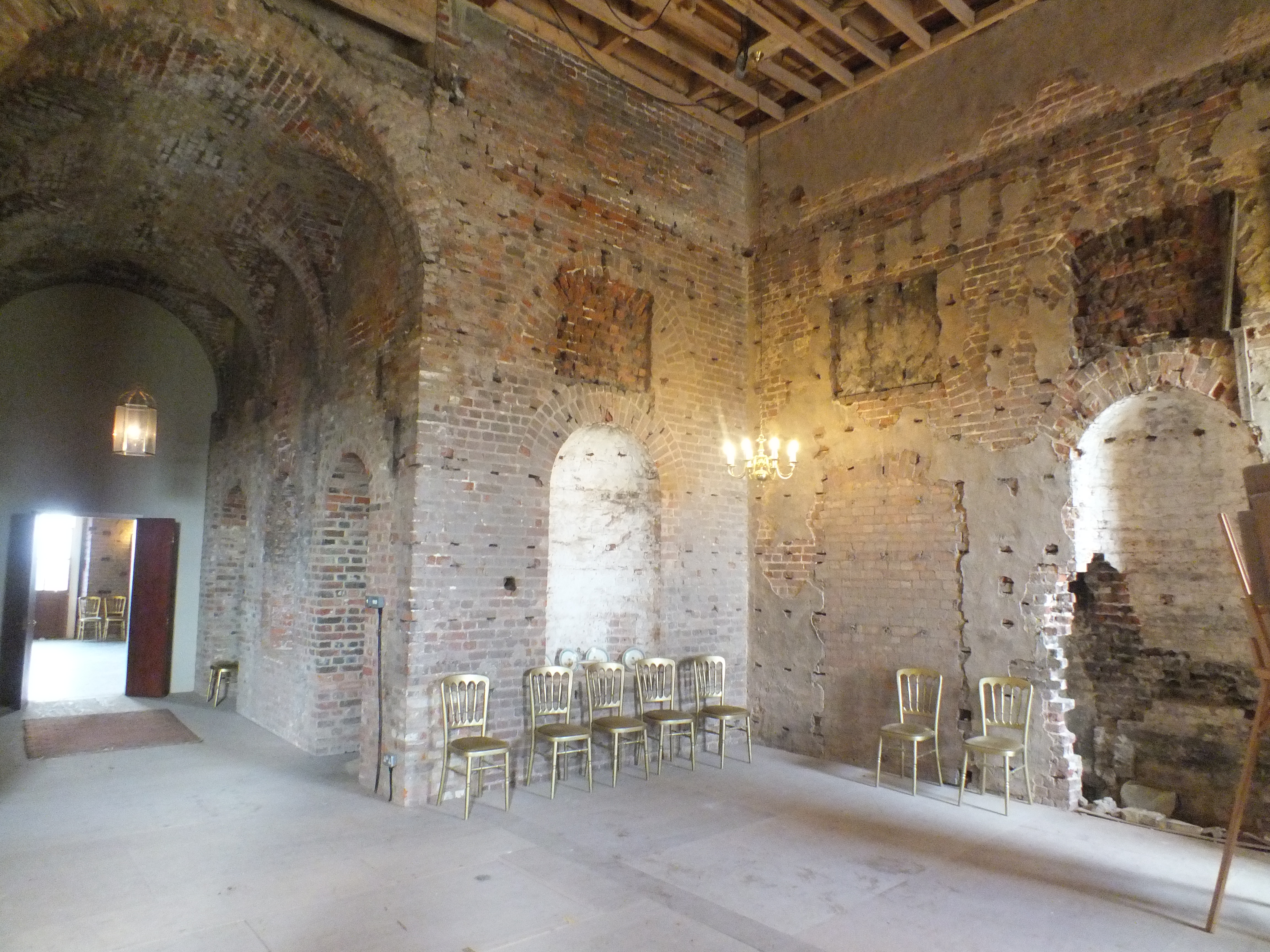
The exterior looks very much as it did, – extremely shabby chic might be a fair description – but inside a transformation has taken place.  The main part of the mansion has been re-roofed, [even if only temporarily in part] the walls are drying out, floors and staircases have been installed and there is even an impressive single flight of marble steps starting to climb up from the hall to replace those smashed up in the 1950s.

DSCF8317

Stripped Georgian brickwork in the first floor saloon © David Marsh

The entire first floor is now open, stripped back to bare brickwork revealing the elegant design. There are bits and pieces of furniture, photographs, wall sconces and chandeliers and faux door frames to complete the picture.  Even the vaulted cellars are worth visiting – and at one point you can see the Georgian damp proofing system – a sunken wall which runs parallel to the foundations but about half a metre away with a void between it and the house.

DSCF8325

A faux Georgian doorway adds a touch of scale in the largest first floor room © David Marsh

Obviously January is not the best time to see the garden, and looking out of the windows on to the ruins of the Italianate garden it looked as if little had happened anyway. How wrong can you be – because away from the house there was plenty going on.

DSCF8366

The topiary nursery in the kitchen garden © David Marsh

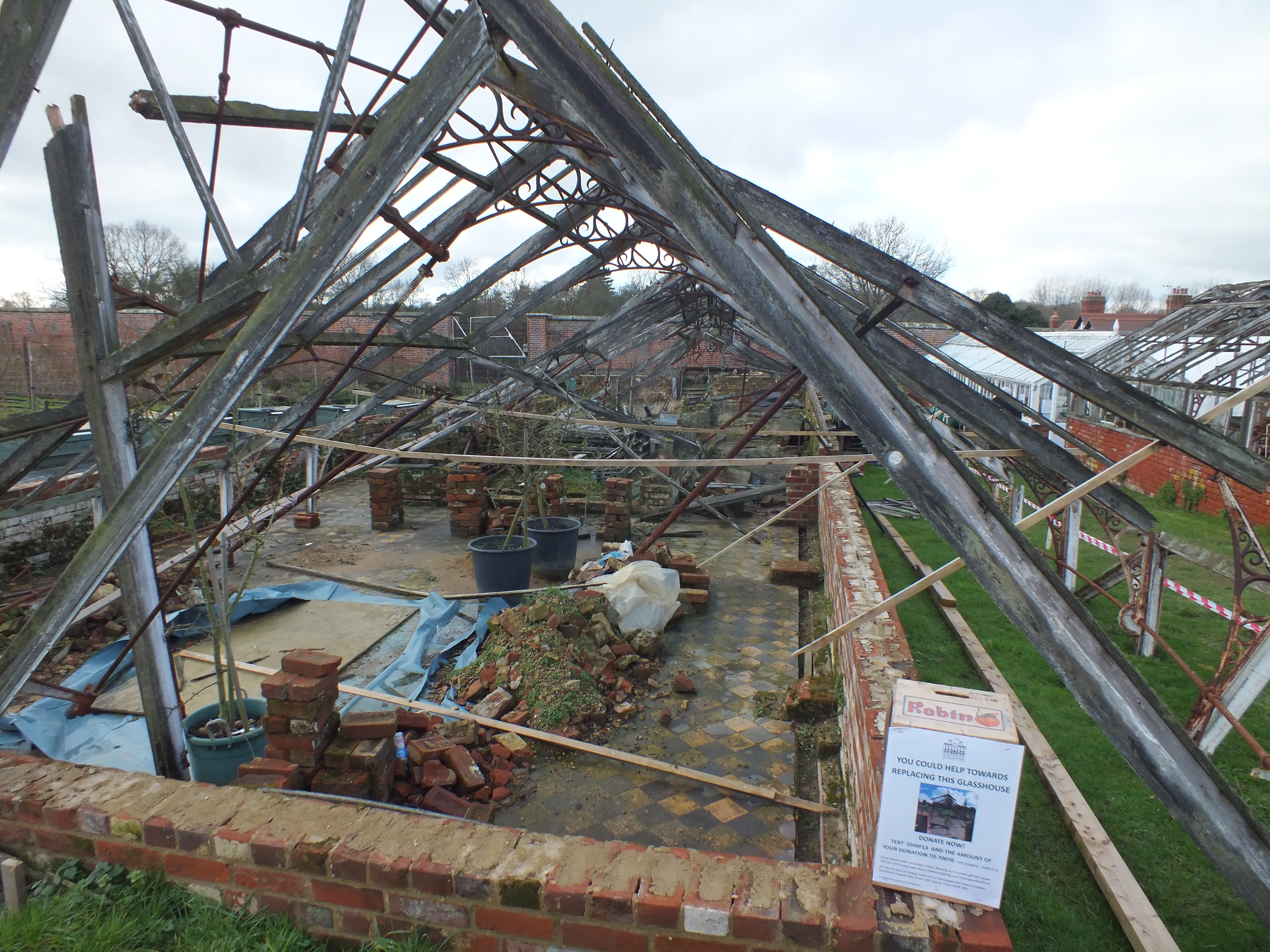
The massive walled garden was alive with people and plants, and although at first glance, the complex of glasshouses looked much as it did 10 years ago, that was deceptive and considerable renovation has taken place.

DSCF8370

The Orchard House waiting for a bit more sponsorship © David Marsh

The walls were covered with trained fruit trees, there was an impressive soft fruit patch and lots of veg being grown in rectangular beds cut into the grass. There was also an impressive array of box and yew in the early stages of topiarization.  There were roofless glasshouses full of trays and trays of plants being propagated. Another glasshouse – the Orchard House – was being disassembled for work to start as soon as sufficient money has been raised. And there were volunteers laying paths, potting up plants, clearing, tidying and planning their next moves.  The way down to the kitchen garden has also been planted up with a large number of shrubs,particularly camellias.

DSCF8363

The kitchen garden gates and  a small part of the long herbaceous border © David Marsh

One of the outer walls of the kitchen garden now boasts a magnificent herbaceous border. Although our guide kept apologizing for the lack of flowers and colour, it was still looking pretty good despite everything the weather could throw at it. And all apparently the work of one volunteer.

The Victorian wing of the house and the outbuildings survived the fire better than the main mansion.  The racquets court has been converted into a very spacious and airy refreshment room offering soup & excellent home-made cakes, and other ancillary buildings have been converted to make six houses and flats set round a pretty courtyard.

DSCF8383

The last standing relic of the Tudor mansion © David marsh

Elsewhere in the grounds the last remnants of the massive 103 roomed Tudor mansion stood rather forlornly amid the mud.

DSCF8387

The sunken garden © David Marsh

When it was demolished in the 18thc the bricks were used to build the new Hall and the cellars  were later filled with massive blocks of stone and turned into a sunken rock garden.The flooded garden might have been a better title – but there was still a volunteer bravely battling away and weeding.

Nearby excavations are taking place hoping to provide clear evidence of the layout of the 17th century formal gardens for this earlier house.

DSCF8398

The reamins of the Victorian conservatory © David Marsh

The tour of the house and grounds took well over two hours and could easily have taken longer. The whole site was buzzing with volunteers – guides, builders, caterers and gardeners and it was very clear that something special going on here.Work is extremely costly [take a look at this month’s wish list on their website] and will probably be continuous for the next 50 years but perhaps, in many ways, the end – a fully restored Georgian house and gardens that reflect the site’s historic framework – is less important than the means. Copped Hall has found a new purpose and is once again a house at the centre of a community.

DSCF8379

The view over the kitchen garden © David Marsh

Posted in Uncategorized | Tagged , , , , , , , , | Leave a comment