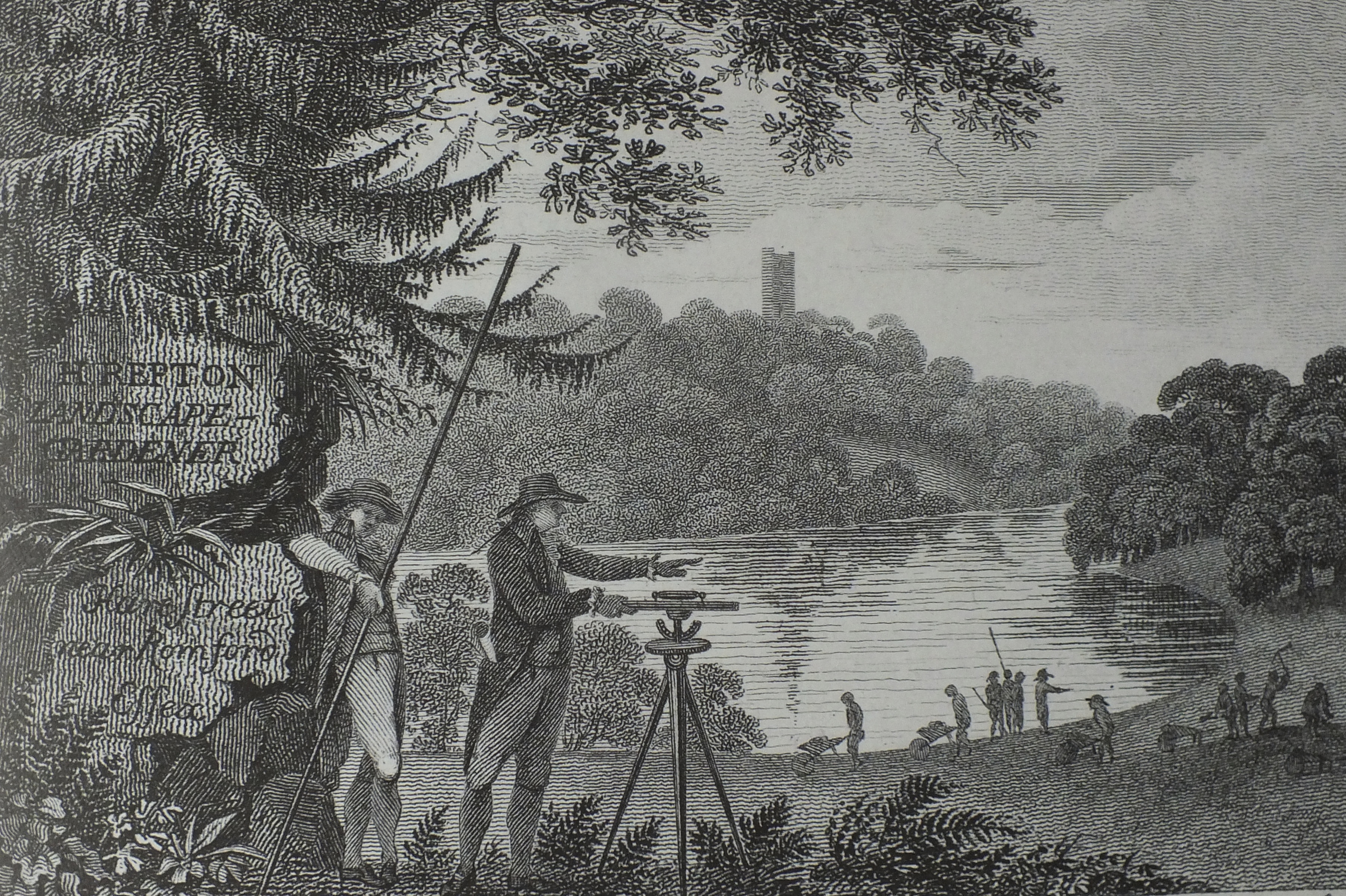
John Claudius Loudon…and cemeteries

From John Claudius Loudon, On the Laying Out, Planting and Managing of Cemeteries, 1843

From John Claudius Loudon, On the Laying Out, Planting and Managing of Cemeteries, 1843

Maybe it’s not the cheeriest of subjects but  as another birthday approached my thoughts turned to immortality – or rather the lack of it – and so I planned to write about some of the history of cemeteries and burial grounds, and more importantly how their use and value has changed so that, apart from their obvious use,  they have also become some of our most important historic parks and landscapes.

A measure of their significance, especially to the urban landscape, is that when I checked our database it gave me over 400 ‘hits’ ranging from Abbey Cemetery in Bath to the York Cemetery Trust.
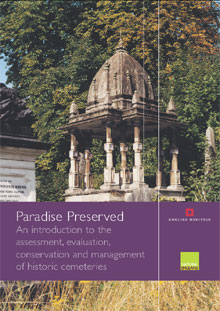
Paradise Preserved English Heritage, 2002

Paradise Preserved
English Heritage, 2002

Of course, I should have known that somebody would already have done a simple and  succinct history of burial grounds and their changing role better:  in this case it was English Heritage in a well illustrated report called Paradise Preserved that was published in 2002.

It’s available as a free download at:

Click to access paradise_preserved_20081010174134.pdf


John Claudius Loudon, unknown artist, National Portrait Gallery

John Claudius Loudon, unknown artist, National Portrait Gallery

John Claudius Loudon, the great Victorian garden writer, designer and theorist, merits a lengthy mention in it because he was the first to write at length about cemetery design. That might sound a bit strange:  after all a cemetery is surely simply a place to bury our dead and shouldn’t require much designing.  In fact the layout and planting of cemeteries has been a matter of considerable debate since the 17th century.

John Evelyn, by Robert Walker, 1648, National Portrait Gallery

John Evelyn, by Robert Walker, 1648, National Portrait Gallery

John Evelyn, for example, argued “that there none so fitt places to bury in, than our Groves and Gardens, where our Graves may bedecked with…fragrant flowers… verdures, & perenniall plants, the most naturall Hieroglyphicks of our future Resurrection and Immortalitie; besides what they will conduce to meditation…and we might worthily declaime against our Custome of interring our dead in the body of our churches, as both undecent [&] unhealthy.” [Elysium Britannicum, p.157].

Sir Christopher WRen by Edward Pierce, Ashmolean Museum

Sir Christopher Wren
by Edward Pierce, Ashmolean Museum

Meanwhile his friend Christopher Wren suggested something much more formal. Burials should be “in Cemeteries seated in the Out-skirts of the Town… This being inclosed with a strong Brick Wall, and having a Walk round, and two cross Walks, decently planted with Yew-trees, the four Quarters may serve four Parishes, where the Dead need not be disturbed at the Pleasure of the Sexton, or piled four or five upon one another, or Bones thrown out to gain Room.” [Letter of advice to the Commissioners for Building Fifty New City Churches,  1711]


The Poor Man's Burial by Marcellus Laroon, 1687

The Poor Man’s Burial by Marcellus Laroon, 1687
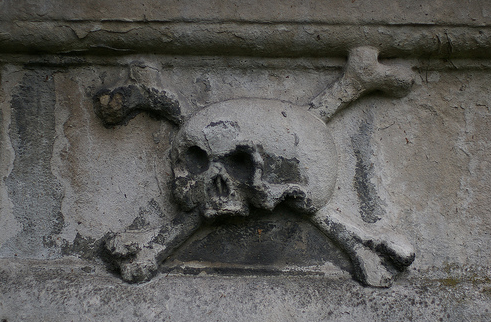
Skull and crossbones from a tombstone in the Huguenot Burial Ground, Wandsworth http://londoncemeteries.co.uk

Skull and crossbones from a tombstone in the Huguenot Burial Ground, Wandsworth
http://londoncemeteries.co.uk

By the early 19th century most urban churchyards were a scandal.  Graves were constantly re-used, bodies not properly buried, bones often lying scattered around, and to make matters worse body-snatching was rife.   As the Penny Magazine of August 2nd 1832 noted: “There are many church-yards in which the soil has been raised by several feet above the level of the adjoining street by the continual accumulation of mortal matter; and there are others in which the ground is actually probed with a borer before a grave is opened! Many tons of human bones are sent each year from London to the north, where they are crushed in mills contrived for the purpose, and used as manure.”  See more on this at:

http://londoncemeteries.co.uk/2011/07/24/the-very-evil-custom-of-interring-the-dead-in-towns/#more-1663

For those of you interested in such things – which I suspect is most of us secretly – there is an excellent -and witty -analysis of 18th/19th century pauper burials in London by Jeremy Boulton.  Called “How to be duckfood” its available as a downloadable powerpoint presentation:      Howtobeduckfood
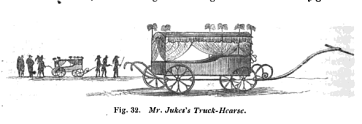
from Loudon’s On the Laying Out, Planting and Managing of Cemeteries, 1843

Parliament was driven to act. It legislated to  allow the construction of new burial grounds by both private companies and local authorities,  outside the built-up areas, and eventually closed many churchyards for further burials. And all the time the debate on the design of the new burial spaces was still raging.

But what had this got to do with Loudon?

In 1813 Loudon had undertaken an extraordinary journey.  In the midst of the Napoleonic wars, and in the immediate aftermath of the disastrous French retreat from Moscow he had set out to cross the continent and visited Poland, before going along the Baltic coast to  St Petersburg and then moving on to Moscow.  Apart from the obvious horrors of seeing countless unburied soldiers rotting in roadside ditches,  he explains in the Preface to On the Laying Out, Planting and Managing of Cemeteries and on the Improvement of Churchyards which was eventually published in 1843, that…

Loudon.cemeteries.preface

As a result he  set down his own ideas in print, firstly in his own journal, The Gardener’s Magazine, and then in his book which is available to read or download at:

https://archive.org/stream/onlayingoutplan00loudgoog#page/n10/mode/1up

loudon.cem2

from Loudon’s On the Laying Out, Planting and Managing of Cemeteries, 1843

Loudon was a practical man with a great concern for efficiency, morality and ‘taste’.   His ideas for improving cemetery design were usually extremely down to earth [if that isn’t too awful a pun].

They included ‘burial boards’ [streamlined ways of getting coffins into the ground – &  if that intrigues you then see pp. 31-36 for more details], better drainage and ventilation systems [think about it],  the outsourcing of monument making from expensive city masons to those in rural and stone quarrying areas, and even more mundane things such as better ways of keeping records of burials in ledgers.

But for Loudon the practical went hand in hand with the aesthetic and he also suggested a range of ‘geometric’ layouts for burials,  as can be seen in this illustration from the book.  Planting was critical too: note his mention on the page shown above  of Abney Park in Hackney. This was  the first arboretum cemetery, laid out in the former 18thc landscape gardens of  two suburban villas, but when the cemetery was opened it  was according to Loudon, “highly ornamented” since it was planted out with virtually the entire content of Loddiges’ nursery catalogue. [Actually that’s hardly surprising since George Loddiges was a shareholder in the company and organised the planting].
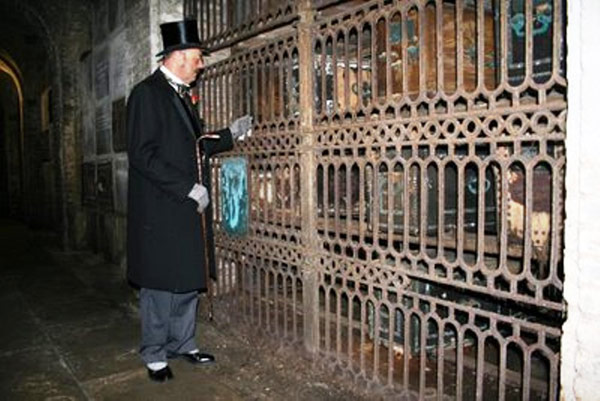
The catacombs at Kensal Green © rayfrenshamworld.blogspot

The catacombs at Kensal Green © rayfrenshamworld.blogspot

pic_4

Warstone Lane Cemetery, Birmingham (Photo: Jonathan Lovie) from http://www.buildingconservation.com/articles/designed-landscapes/designed-landscapes.htm

But Loudon wasn’t content with making positive suggestions. He liked to ladle out the criticisms too and in his usual trenchant style.  For example he condemns the  “practice of exposing the coffins to view in catacombs” as “disgusting … and dangerous to the living” because of the “suffocating effects of the effluvia of decomposition”.  Amongst other unpleasant side effects – such as exploding bodies [see page 4 of the book for the macabre details] he thinks this is why grave diggers always have “pale and ghastly countenances.”   Burial in this manner – “the disgusting boxing up of dead bodies, in defiance of the laws of nature” is not “in good taste”, should be heavily taxed and not allowed under any place of public assembly.

Catacombs had become newly fashionable.  Our database lists 23 cemetery sites that had them, including Birmingham’s Warstone Lane, Anfield in Liverpool, Church Cemetery Nottingham and the General Cemeteries in Manchester, and Sheffield as well as most of the major London ones – Highgate, Abney Park, Brompton, Nunhead, Norwood and Kensal Green. Some were commercially successful while others like those in St Bartholomew’s Churchyard in Exeter were a financial disaster: there, only 11 burials took place in the grand Egyptian style vaults built into the hillside, out of the more than 17500 interments there during the century the burial ground was open.  It was as Loudon sharply notes”a serious drawback to the profits of the shareholders.”
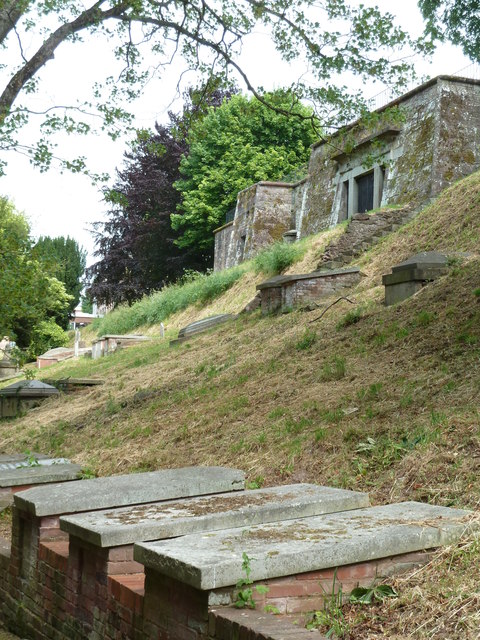
The Catacombs, St Bartholomews Churchyard, Exeter © Copyright Chris Allen & licensed for reuse under Creative Commons Licence.

The Catacombs, St Bartholomews Churchyard, Exeter © Copyright Chris Allen & licensed for reuse under Creative Commons Licence. For more information see: http://www.exeter.gov.uk/index.aspx?articleid=1964

But it was not just catacombs that Loudon objected to. At Norwood, one of the earliest private cemeteries, designed by William Tite for the South Metropolitan Cemetery Company and opened in 1837, there were indeed spectacular catacombs set under the Anglican chapel.  They came complete with a silent hydraulic catafalque to lower the coffins through the chapel floor.  For images and more details including how to visit them see:

http://www.westnorwoodcemetery.com/under_cemetery/

If this wasn’t crime enough in Loudon’s eyes,  the 40 acres of grounds were laid out in a naturalistic style, with glades and groves of deciduous trees.

Loudon.cem4

from Loudon’s On the Laying Out, Planting and Managing of Cemeteries, 1843

“It is too much in the style of a common pleasure-ground, both in regard to the disposition of trees and shrubs and the kinds planted.”  Loudon argued that the planting tree s in belts and clumps like this was wholly inappropriate because cemeteries do no\t “require shelter and shade; because nothing is more desirable as to have a free current of air and admit the drying influence of the sun; and because it is impracticable to form graves in clumps and belts.” Instead trees should be “scattered” singly to make the most efficient use of the land, and used to line the roadways so that shade was cast for mourners walking along them, or to form a “foreground to the scenery beyond”  He even objected to the deciduous trees used “since th.ey formed light-foliaged bulky heads” preferring instead “fastigiate conical dark needle-leaved evergreens [which] shade much less ground, produce much less litter when the leaves drop, and by associations, both ancient and modern are peculiarly adapted for cemeteries.”
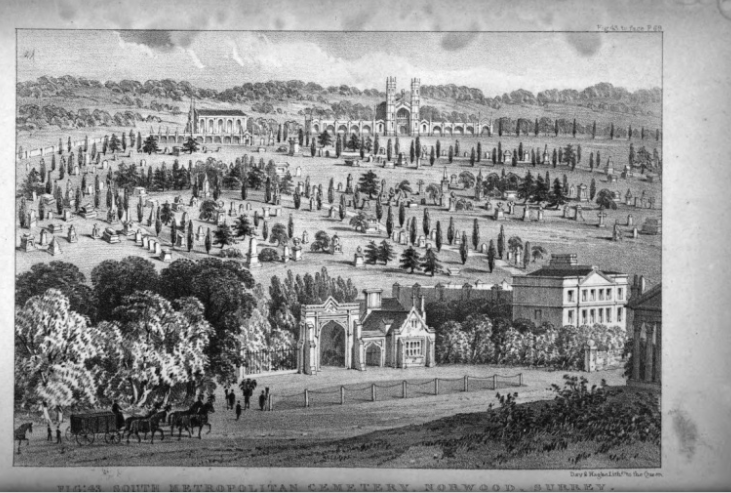
Loudon.cem5

Loudon’s “Improvements” to Norwood Cemetery, from  On the Laying Out, Planting and Managing of Cemeteries, 1843

To make sure everyone understood he then published his own version of the cemetery company’s image. Leaving the foreground and distance untouched h.e confined his alterations to the main cemetery planting, changing deciduous trees for his preferred “dark-foliaged fastigiate and conical trees”.

Which do you prefer?  Are you a person of taste and judgement? And watch out what you think or you too will be subject to Loudon’s censure since… “We do not say that everyone who compares the two pictures will prefer ours to the others, because we do not allow everyone to be a judge in this matter, but we do expect that all will ackno|wldge there is a distinctive character in our view.”  He claims his approach is not only in keeping with contemporary continental design but also with the historical tradition of ‘the ancients’ who used trees like cypresses extensively in burial sites, and also of oriental cemeteries.  To reinforce the point he adds images of a Chinese cemetery, although strangely one named the Vale of Tempe which is a classical site in Thessaly!

Loudon.cem.china

from Loudon’s On the Laying Out, Planting and Managing of Cemeteries, 1843

Instead he wanted cemeteries to be considered as gardens with walks laid out round them. They should either be planned like this in the first place, or existing churchyards and other burial places could be converted later.  His book gives examples of where this has been done, including rather exotic ones from Turkey and Persia,
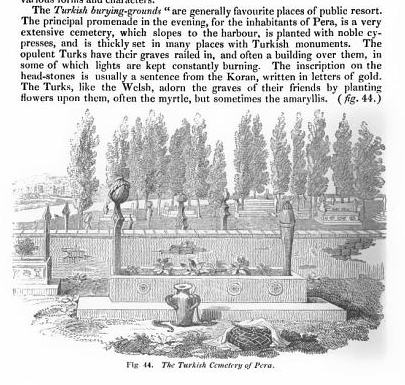
The cemetery at Pera in Istanbul, from on the laying out of cemeteries, 1843

The cemetery at Pera in Istanbul, from Loudon’s On the Laying Out, Planting and Managing of Cemeteries, 1843


The

TheCemetery at Hafiz in Persia , from Loudon’s On the Laying Out, Planting and Managing of Cemeteries, 1843

but Loudon then suggests how it was possible to create walks even in a churchyard which had not originally been laid out in a planned way.


Loudon.cem.walks

from Loudon’s On the Laying Out, Planting and Managing of Cemeteries, 1843

And of course Loudon tried to put his ideas into practice….but since I have already written 2000 words the pleasure of hearing about that will have to wait until next time.

← Back

Thank you for your response. ✨

gas

Improved ventilation from Loudon’s On the Laying Out, Planting and Managing of Cemeteries, 1843


Posted in Uncategorized | Tagged , , , , , , , | Leave a comment

SURPRISES IN SOUTHEND…a follow up

A few months ago I shared some photos and comments about the cliffside gardens at Southend, and asked if anyone knew any more about them.  Earlier this week I was sent a links to some old movie footage [thanks Donna] which should bring back memories of seaside holidays for many of us. Having watched it I just had to search for some more.

The first is a 1953 promotional film “The Best Place Under The Sun” which includes some shots of the gardens…

the second is  a potted history of Southend pier  but it also includes some images of the gardens in Victorian prints.

and next there are a few scenes from the 1970s, including some shots of Peter Pan’s Playground

and finally enjoy  the 1938 London pensioners outing to Southend…and the dancing in the seafront gardens!   Just the sort of thing I can see my grandparents and great aunts and uncles having done – although I can’t quite picture my gran in one of those wonderful hats – or showing her knees!  What a pity there was no sound recording.

More comments and links on Southend or any other posts would be very welcome.

← Back

Thank you for your response. ✨

Posted in Uncategorized | Tagged , | Leave a comment

John Claudius Loudon…. and Greenhouse Technology

Its been a while since I wrote my last piece on Humphry Repton and I was thinking about a follow-up on the Picturesque when into my inbox  came a new post from Matthew Beckett’s excellent blog The Country Seat covering just that.   I’m not sure its  the done thing to recommend  a’rival’ blog but I’m going to anyway!  Take a look at: http://thecountryseat.org.uk/2014/05/26/purchasing-the-picturesque-hampton-court-and-lasborough-park-for-sale/

John Claudius Loudon, unknown artist, National Portrait Gallery

John Claudius Loudon, unknown artist, National Portrait Gallery

So instead I’m going to follow up Repton in a different way over the next couple of posts, by looking at some aspects of the man who assumed his mantle as the leading garden designer and theorist of the early 19thc: John Claudius Loudon.

Whilst  Repton had been the most prolific garden writer of the 18thc with a whole string of books on the theory and practice of landscape gardening, he was a mere childish scribbler when compared to Loudon who wrote encyclopedic tomes containing millions of words and thousands of illustrations.

Born in Scotland in 1783  you get some idea of what sort of man he was from a journal entry quoted by his wife later in his biography:  “I am now twenty years of age, and perhaps a third part of my life has passed away, and yet what have I done to benefit my fellow-men?”  Incidentally, we have a brief biography of Loudon on our database:

http://www.parksandgardens.org/places-and-people/person/847

He started writing young. His first works Observations on the Formation and Management of Useful and Ornamental Plantations    and Hints respecting the manner of laying out the grounds of the public squares in London’  were published in 1804 soon after he arrived in London where he was to live for the rest of his life.   On the title page of Observations was a quote from Francis Bacon which sums up Loudon’s approach to life and his work:  ‘Knowledge is Power’.

Loudon aimed to spread knowledge as widely as possible and he wrote seemingly ceaselessly all his life.  Of course this would all have been done in long hand…. the sheer physicality of the task [especially when you see the size of even one of his myriad publications] is mind-boggling.  In itself this would have been remarkable but it was all the more so since his right arm had to be amputated in 1825 following a botched operation.

Not only did he write but he also edited a whole range of periodicals, ranging from The Gardener’s Magazine and later The Gardener’s Gazette, to  The Magazine of Natural History and The Architectural Magazine.   Even the task of reading his work is daunting simply because of the size and scale of the undertaking.  Most of his books can be read on-line or are available as free downloads, and a good place to start is: http://onlinebooks.library.upenn.edu/webbin/book/lookupname?key=Loudon%2C%20J.%20C.%20(John%20Claudius)%2C%201783-1843

And if this was not enough he was an artist, exhibiting at the Royal Academy in 1804 and being elected to the Royal Society of Arts, the following year at the age of just 22.

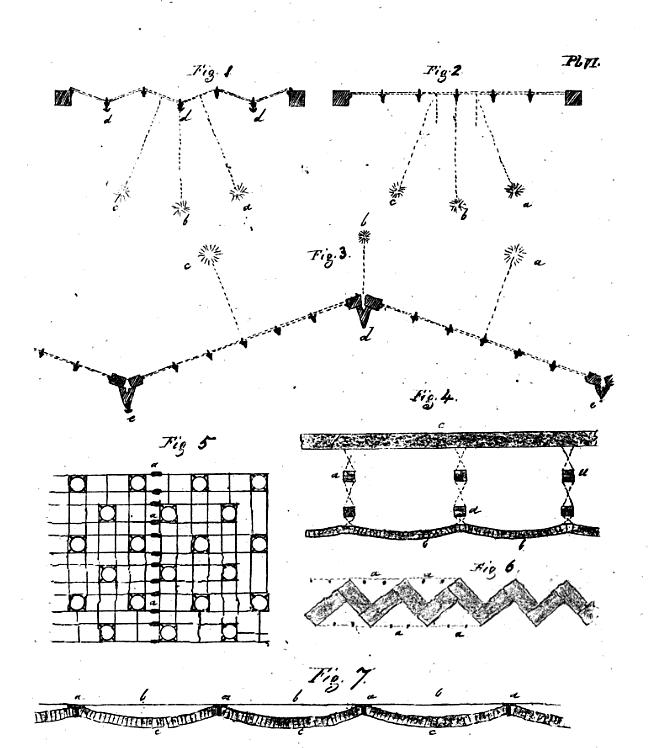
from A Short Treatise on Several Improvements, Recently Made in Hot-houses

from A Short Treatise on Several Improvements, Recently Made in Hot-houses

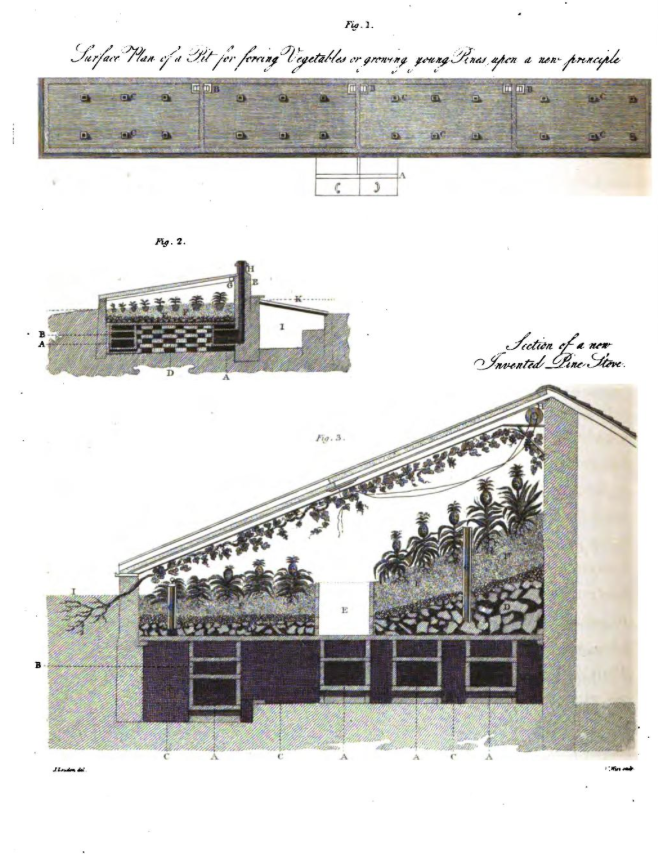
More importantly he was also a  designer and inventor. Fascinated by greenhouse technology he experimented with the layout and design of glass roofs and walls to maximise potential light. In 1805, at the age of just 22,  he published the 2 volumes of  A Short Treatise on Several Improvements Recently Made in Hot-Houses which includes an account of a new patented ‘Loudon’s hothouse furnace’.

This new invention was easily obtainable ‘for just £2.10s’ at ‘the Edinburgh Foundry or Mr Dalziel’s (cabinet makers), Chapel Street, London, on enquiring for Loudon’s Improved Hothouse Furnace, which words are printed upon the door of the furnace. The improved ash-pit door, made according to the figure given in plate I. and the grate, are had along the above furnace, and are included in with the price’.   John Claudius sounded as if he was a typical Victorian entrepreneur but sadly he was anything but that.

The following year saw  a two-volume 600 page Treatise on Forming, Improving, and Managing Country Residences  which included a section on the design of pineapple houses.

loudon.treatise.pinehouse

He enlarged on this in 1823 in  The Different Modes of Cultivating the Pine-Apple.

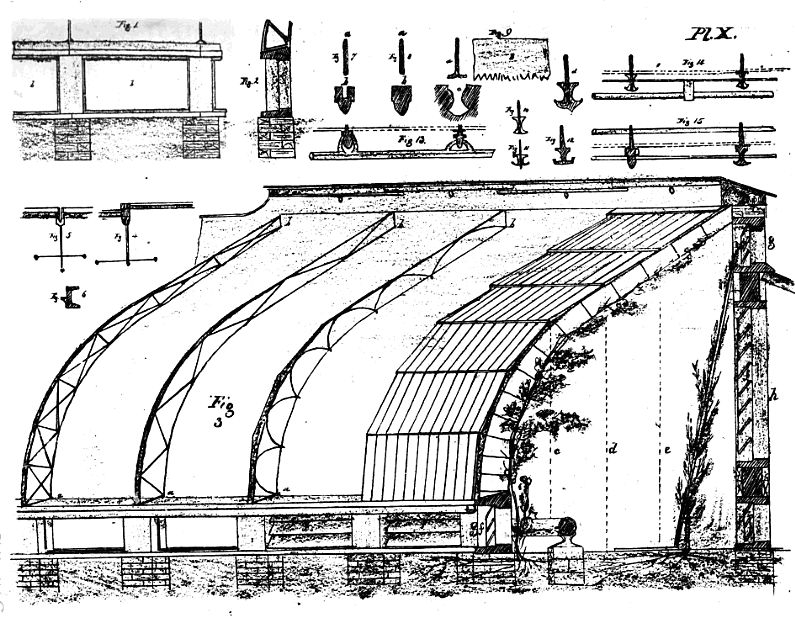
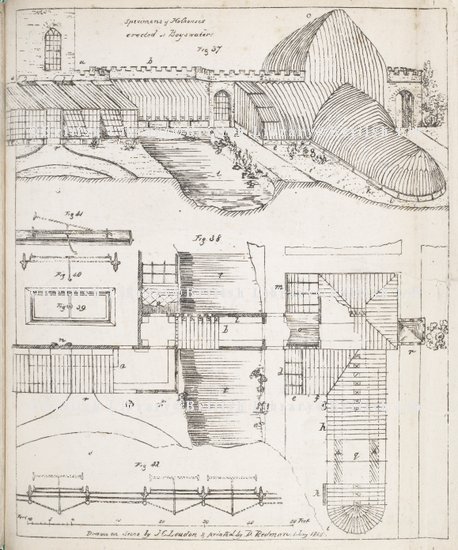
Loudon’s most significant invention was a method of making glazing bars in wrought iron that could be made in curvilinear sections. The big breakthrough was to make them flexible enough to be bent in any direction without reducing their strength.  Suddenly curvilinear or even conical glazing was possible and the great age of glasshouses and conservatories was born.

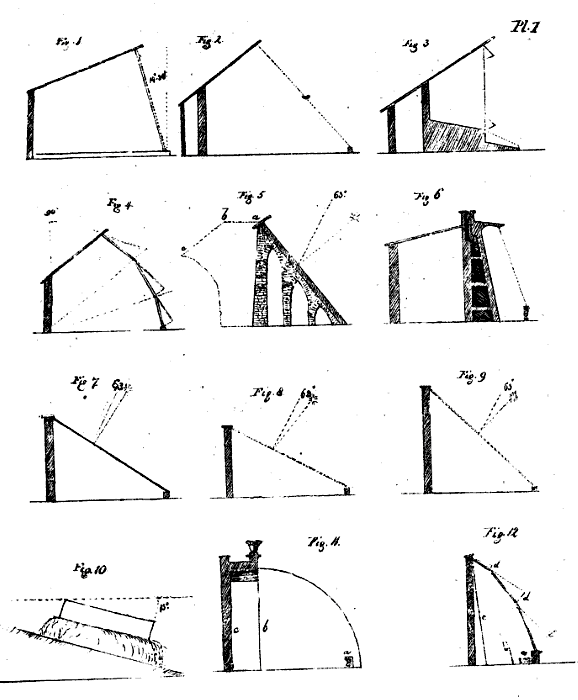
from Loudon's Remarks on the Construction of Hothouses, published in London in 1817.

from Loudon’s Remarks on the Construction of Hothouses, 1817.


from Loudon's Remarks on the Construction of Hothouses, published in London in 1817.

from Loudon’s Remarks on the Construction of Hothouses, 1817.

from Loudon's Remarks on the Construction of Hothouses, published in London in 1817.

from Loudon’s Remarks on the Construction of Hothouses,  1817.


from Loudon's Remarks on the Construction of Hothouses, published in London in 1817.

from Loudon’s Remarks on the Construction of Hothouses, 1817.

This led to the publication of  Remarks on the Construction of Hot-Houses in 1817 and in 1818 A Comparative View of the Common and Curvilinear Mode of Roofing Hot-Houses and Sketches of Curvilinear Hot-Houses.


from Loudon's Remarks on the Construction of Hothouses, published in London in 1817.

from Loudon’s Remarks on the Construction of Hothouses, 1817.


Unfortunately he sold the idea for the glazing bar  to  Messrs W. and D. Bailey of Holborn at an early stage.  They patented it in 1818 and so Loudon did not reap any financial reward from his invention, which is a pity since he was, despite all his publication, on the edge of bankruptcy much of his life.

from Loudon's Remarks on the Construction of Hothouses, published in London in 1817.

from Loudon’s Remarks on the Construction of Hothouses,  1817.

Loudon collaborated with Baileys on a number of glasshouses in the following years. including Felton Park in Northumberland.  Unfortunately we don’t have an entry on our database for Felton so if anyone knows anything about it please get in touch.  A recent report by English Heritage suggests that the greenhouse there, to a design by Loudon,  was supplied in kit form, then erected on site by Baileys but glazed by one of the many local glass manufacturers. A copy of the report can be downloaded at :

Click to access 005_2013WEB.pdf

Unoccupied greenhouse of circa 1830 that incorporates an C18 garden wall. In very bad condition. English Heritage offered a grant in August 2011 to allow a repair scheme to be drawn up. Funding to allow repairs to be undertaken is being explored. http://risk.english-heritage.org.uk/register.aspx?id=46382&rt=1&pn=2&st=a&ua=Northumberland+(UA)&ctype=all&crit=

Greenhouse at Felton Park, Northumberland which incorporates an C18 garden wall. 
http://risk.english-heritage.org.uk/register.aspx?id=46382&rt=1&pn=2&st=a&ua=Northumberland+(UA)&ctype=all&crit=

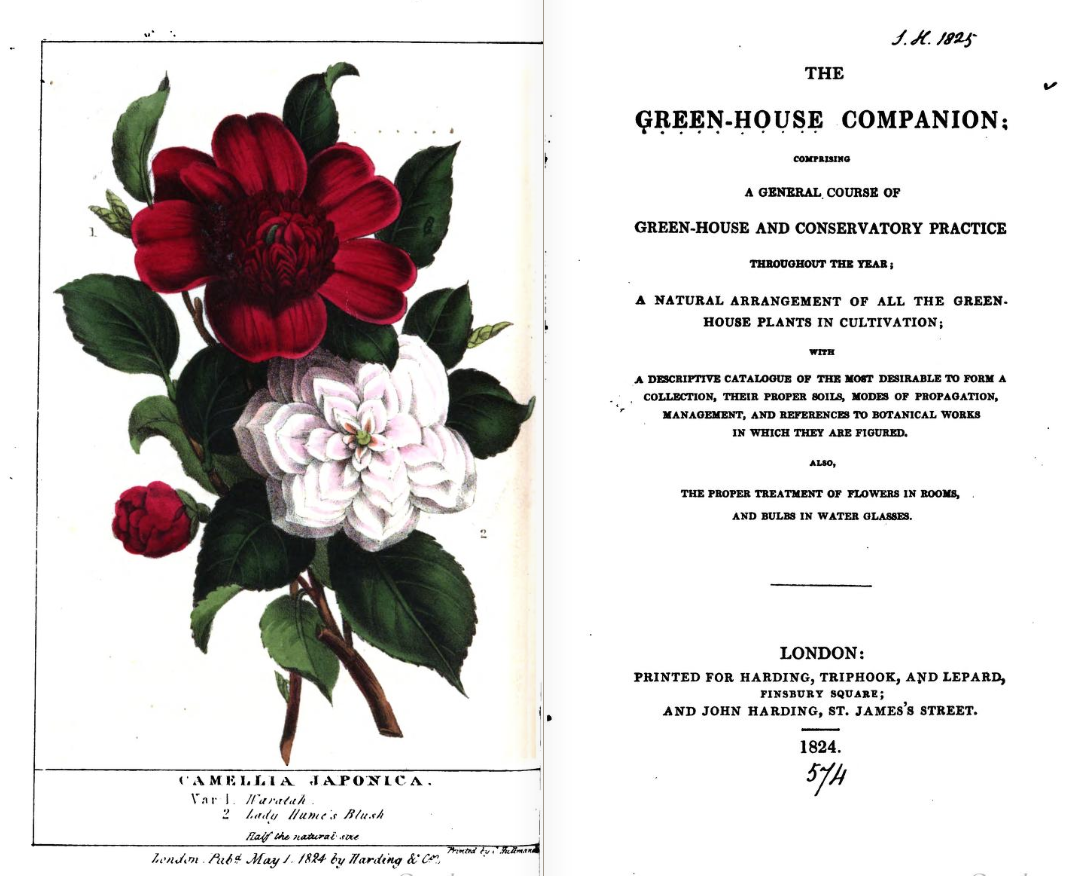
Later in 1824 Loudon published  The Green-House Companion advising readers on what plants to grow in their new structures, because of course, ‘the management of plants in a free-house requires a higher degree of knowledge than is called for in the management of the open garden…and the object of the Green-House Companion is to supply what is wanting in that respect.’  Loudon also published a large number of detailed plant reference books often using information supplied by John Lindley, secretary of the Horticultural Society of London, and the first professor of botany at London University. Loudon.GreenComp1


In it, Loudon points out that ‘a greenhouse which fifty years ago was a luxury not often to be met with, is now become an appendage to every villa, and to many town residences…and which mankind recognises as a mark of elegant and refined enjoyment.’

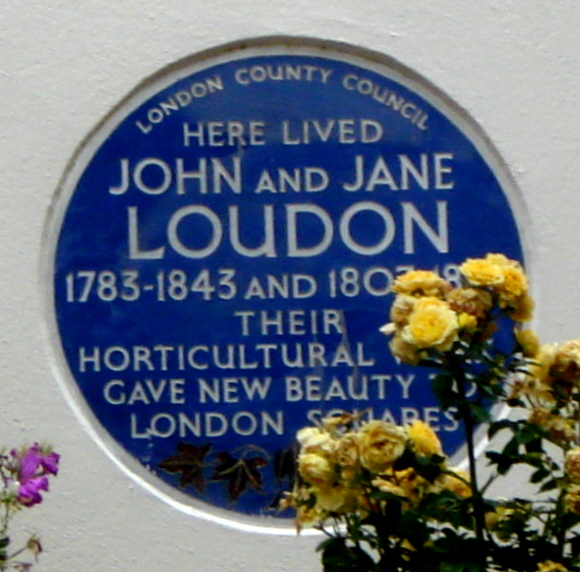
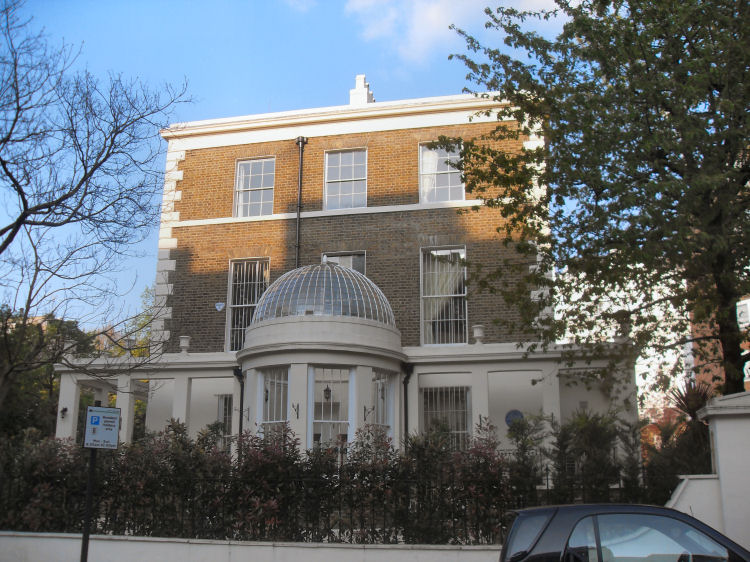
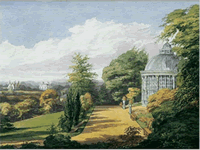
He lived up to his claims when designing a new house for himself, and his  villa at 3 Porchester Terrace, Bayswater, [which now has a blue plaque] has an impressive glass domed entrance /conservatory which can still be seen.

Loudon's villa at 3 Porchester Terrace, Bayswater. http://www.knowledgeoflondon.com/loudon.html

Loudon’s villa at 3 Porchester Terrace, Bayswater.
http://www.knowledgeoflondon.com/loudon.html


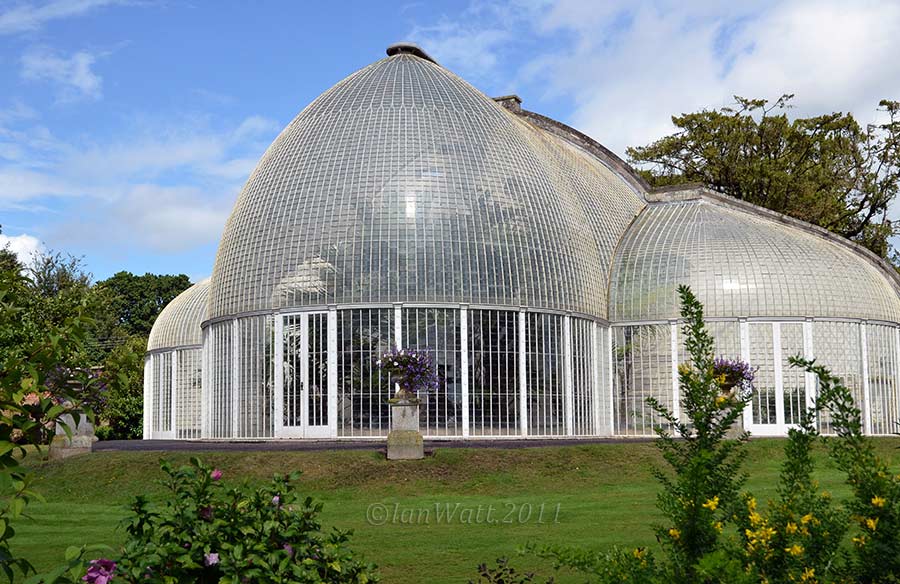
Other glasshouses with Loudon connections include Bicton Park near Exmouth in Devon, which looks remarkably like the designs in Remarks on the Construction of Hothouses shown above. Probably built in the early 1820s the enormous dome is unsupported and the structure is held together by simple pressure and Loudon’s glazing bar. There is an interesting commentary on Bicton  by Candida Lycett Green at:

http://www.candidalycettgreen.co.uk/live/journalism/unwrecked-england-the-palm-house-bicton-devon/

and we have a database entry on Bicton and its history at:

http://www.parksandgardens.org/places-and-people/site/403/summary

Another of Loudon’s major projects was  his design for the layout of Birmingham Botanical Gardens which opened in 1832. He included plans for a massive three-storey circular glasshouse within a wrought-iron framework. Sadly this was rejected by the committee in favour of a simpler arrangement that was replaced later in the century.

gardens-1855_sm

The simpler design chosen instead of Loudon’s grand glasshouse, in a painting of 1855 http://www.birminghambotanicalgardens.org.uk/gardens/history/gardens-and-buildings

Loudon was dismissive of this:  ‘ This range, taking it altogether, is one of the worst in point of taste that we know of. The centre is semicircular in the front part of the plan, with a lofty dome, sur mounted by a second small dome, cupola, or glass turret, not unlike in form to those sometimes put up on the roofs of offices for pigeons, and totally unfit for plants ; unless we suppose that the spiry top of an Araucaria imbricata could be induced to rise into it; while the two sides or wings, joined to this curvilinear centre are common shed-roofed structures, not half the height of the dome. The want of harmony between the centre and the wings is most conspicuous, from whatever direction the whole may be viewed, and in our eyes it is most offensive….. we dislike exceedingly the idea of having our name associated in any degree, however slight, with a garden which, though it might have been one of the most perfect in its kind existing any where, and altogether unique in some of its arrangements, is now bungled, and never likely to reflect credit on any one connected with it.’  (Gardeners Magazine (August 1839, p.456).For more information on Loudon’s original design see Georg Kohlmaier, Houses of Glass: A Nineteenth Century Building Type (MIT Press, 1986).

And with that typically direct put-down I’ll leave Loudon for today, but will return soon with some of his ideas for another great Victorian institution – the cemetery.

from Loudon's Sketches for Curvilinear Hothouses, 1818 British Library

from Loudon’s Sketches for Curvilinear Hothouses, 1818
British Library

← Back

Thank you for your response. ✨

Posted in Uncategorized | Tagged , , , , , , , | 2 Comments

Humphry Repton at Ashridge

Portrait Humphry Repton c1790 Miniature on Ivory by John Downman (1750-1824) Bridgeman Library

Portrait Humphry Repton c1790 Miniature on Ivory by John Downman (1750-1824) Bridgeman Library

A few weeks after Repton’s death  in 1818 an obituary appeared in the New Monthly Magazine which I thought, when I first read it, summed him up rather neatly: “Mr. Repton was an artist of elegant attainments and good taste, more calculated to follow than to lead, and more attached to the beautiful and pretty than to the grand style of art.”    It was probably written by his successor as the “great man” of English gardening, John Claudius Loudon, but on reflection I think it is a little dismissive of Repton’s achievements.

Repton was the first garden designer [as far as I am aware] to deliberately create new gardens in what he called the ‘ancient style’.   He combined these with more contemporary gardens in a new ‘Mixed Style’.    In many accounts of garden history  this approach  is attributed to John Claudius Loudon but as Tom Turner points out, Repton actually got there first.

For a more detailed discussion of the origins of the ‘Mixed Style’ see:   http://www.gardenvisit.com/history_theory/library_online_ebooks/tom_turner_english_garden_design/mixed_style_of_garden_design 

In his last book, published in 1816, and which rejoices in the lengthy title of Fragments on the theory and practice of landscape gardening: including some remarks on Grecian and Gothic architecture, collected from various manuscripts, in the possession of the different noblemen and gentlemen, for whose use they were originally written; the whole tending to establish fixed principles in the respective arts, Repton writes about his designs for  Ashridge in Hertfordshire.

The opening page of Fragment XXVII

Page 137, the opening page of Fragment XXVII in Fragments on the theory and practice of landscape gardening, 1816

Repton clearly regarded Ashridge as one of his greatest projects, although, to be honest, he wrote flatteringly in almost every Red Book of his appreciation for the property he was designing.

0228

Page 138 of Fragment XXVII, in Fragments on the theory and practice of landscape gardening, 1816

You can however see his disappointment with the banality of the setting of the grand new mansion, and that much had already been decided about the landscape before he was asked to be involved.  He could not even perform his usual trick of removing the park fence to improve the view since it had only just been put up at the express wish of the owner.

0228 - Version 2

Page 138 of Fragment XXVII, in Fragments on the theory and practice of landscape gardening, 1816

Instead he turned the restrictions into an advantage and arguing that

0229 2

Page 139 of Fragment XXVII, in Fragments on the theory and practice of landscape gardening, 1816

he suggested no less than 15 gardens of differing types. Five of them ‘belong to the modern type of pleasure-ground, but all the others are different: some sounding distinctly ‘historic’ in title at least.  ‘ As can be seen from his plan there were to be a sheltered arboretum of exotic trees, an American garden, a ‘cabinet de verdure’, an embroidered parterre, a mount garden and a garden for rock plants.

0235

Repton’s proposals for Ashridge from Fragments on the theory and practice of landscape gardening, 1816

Repton was criticized for this “novelty” but argued “there is no more  absurdity in collecting gardens of different styles, dates, characters, and dimensions, in the same enclosure, and placing the works of Raphael and Teniers in the same cabinet, or books sacred and profane in the same library.”   He was extremely proud of what he done calling it the  ‘child of my age and declining powers’, although sadly he died before all his designs were implemented. Many of his remaining ideas were adapted and completed later by Jeffrey Wyatville.

ashridge_fountain_photo_original

The Monks Barn, 1891 by Godfrey Bingley Leeds University Digital Library

Repton was clearly inspired by the monastic origins of Ashridge.  James Wyatt’s new house for the 7th Earl of Bridgewater was built over the monastic cellars whilst the late 14thc Monk’s Barn was remodelled and  converted into  a cloister.

Ashridge fountain [with the Rosary in the background] from Fragments on the theory and practice of landscape gardening, 1816

Design for a Conduit proposed at Ashridge, with distant view ofthe Roasry and Monks Garden,  from Fragments on the theory and practice of landscape gardening, 1816

Facing this  across a ‘winterwalk’ and ‘pomarium’ Repton suggested a Monks’ Garden with its clipped box hedges, ‘decorated with flowers in vases’ which  “ventured boldly to go back to those ancient trim gardens, which formerly delighted if the venerable inhabitants of this curious spot”.

Nearby he proposed a canopied ‘Holie Well’  enclosed in ‘rich masonry’  outside  the new conservatory. These plans were amalgamated and amended after Repton’s death but still bear the hallmarks of his ideas.

He added a few lines of poetry by the Honorable Mrs Erskine…

“The Close clipt box, th’ embroider’d bed

In rows and formal order laid,

And shap’d like graves (for mindful still

Of their last end, the church  doth will

E’en in their joys her sons should be

Pensive in very gaiety.”

The Armorial Garden and Monks Barn, Ashridge House. © Chris Reynolds & licensed for reuse under Creative Commons Licence

The Armorial Garden and Monks Barn, Ashridge House. © Chris Reynolds & licensed for reuse under Creative Commons Licence

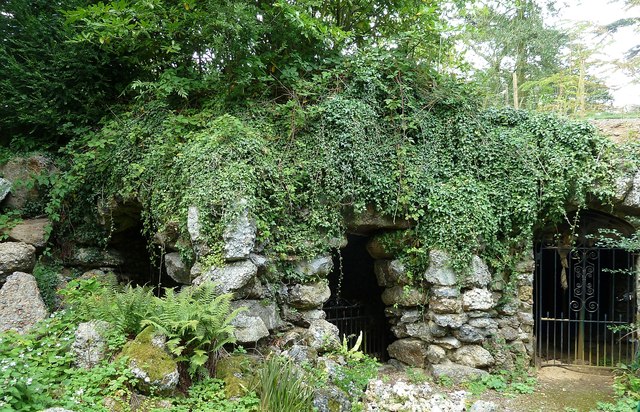
The Grotto © Rob Farrow and licensed for reuse under Creative Commons Licence.

The Grotto
© Rob Farrow and licensed for reuse under Creative Commons Licence.

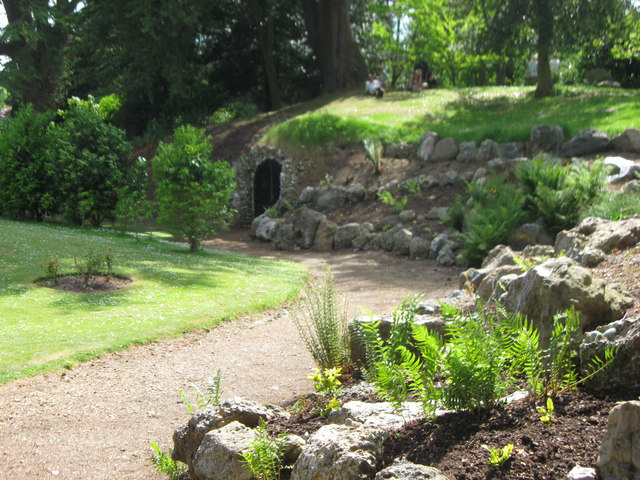
Another ‘retrospective’ feature was a new grotto.  Built of local Hertfordshire puddingstone, it stood on the site  of an old pool, and Repton designed a souterrain or  subterranean  approach tunnel constructed on an iron framework and with walls lined with flint.

The path to the souterrain and grotto © Chris Reynolds and licensed for reuse under Creative Commons Licence.

The path to the souterrain and grotto © Chris Reynolds and licensed for reuse under Creative Commons Licence.

The grotto and tunnel with its crumbling iron structure are now sadly in poor repair and have been closed off.  The owners  the Ashridge [Bonar Law Memorial] Trust are hoping to raise the funds for  restoration, so if you have a spare £150,000 [or more!] let  them know!


0233


The other famous Repton feature is his Rosary, sometimes called the Rosarium. This was to have been a formal arcaded structure around a circular basin with its fountain supplied by the ‘Holie Well’.  The inner rose beds may well, like parts of the Monk’s Garden, be coffin shaped as part of Repton’s tribute to the site’s ecclesiastical history.

The Rose Garden taken by Geofrrey Bingley in 1891 Leeds University Digital Library

The Rose Garden taken by Geofrrey Bingley in 1891 Leeds University Digital Library

It appears to have been built to an amended design: Wyatville planted a yew hedge instead of trellis and the linking sections  are straight rather than arched. The eight radiating beds and  fountain were restored in 1998, and the roses were replanted in 2009.

Further restoration is planned by the Balfour Trust.  The Rose Garden can be seen here in  June 1891 in one of a fascinating series of photos of Ashridge taken by Godfrey Bingley, a Yorkshire industrialist and keen traveller and photographer whose vast collection of glass slides is in the process of being digitized by Leeds University Library.

For more information see:

http://library.leeds.ac.uk/features/349/article/77/godfrey_bingley

EPW021336


There were considerable  alterations and additions to the gardens at Ashridge during the 19thc but nothing which detracted from Repton’s overall vision for the site.  This aerial photograph taken in 1928 shows the house and immediate parkland in the year the estate was broken up and sold.  [Part of the circular rosary can be seen centre right] Despite that, Repton’s work at Ashridge  is still relatively intact and much of it has been restored over the past few years by the Ashridge Trust which runs the house and estate as a prestigious business school.    The addition of new buildings at Ashridge over recent years has also enabled them to develop more contemporary gardens  to continue Repton’s eclectic approach.  A copy of their restoration plans can be downloaded at:

Click to access ConservationPlan_v2_singlepages.pdf

There is more about Ashridge, Repton’s ‘Garden of Gardens’ on our database at:

http://www.parksandgardens.org/places-and-people/site/161/summary

Repton’s “Fragments ” can be read and downloaded at:

http://digicoll.library.wisc.edu/cgi-bin/DLDecArts/DLDecArts-idx?id=DLDecArts.ReptonFragments

← Back

Thank you for your response. ✨


Posted in Uncategorized | Tagged , , , , | Leave a comment

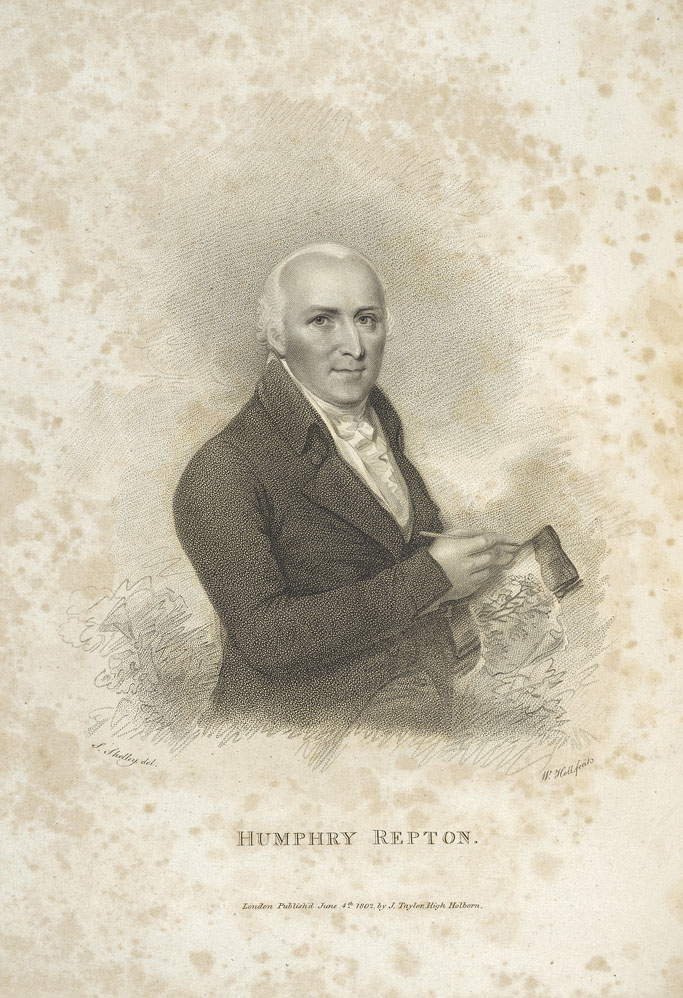
Humphry Repton


Humphry Repton from the frontispiece of his Observations on the theory and practice of landscape gardening, 1803

Humphry Repton from the frontispiece of his Observations on the theory and practice of landscape gardening, 1803

I’ve been teaching a course on 18thc garden history this term and finished with a class about Humphry Repton who was born in 1752 and died in 1818.  If I’m honest I’d never really given him a great deal of thought –  he’s not my period- as historians tend to say when stumped for something to say-  but there was roomful of people waiting to hear about him and so I looked him up on our database…

http://www.parksandgardens.org/places-and-people/person/1129

…and then sat down to read Stephen Daniel’s biography of him in preparation.  Within a short while I was hooked, partly because of Repton and partly because of the quality of Stephen Daniel’s writing and the book’s copious illustrations.  [Humphry Repton: Landscape Gardening and the Geography of Georgian England,  Yale UP, 1999].

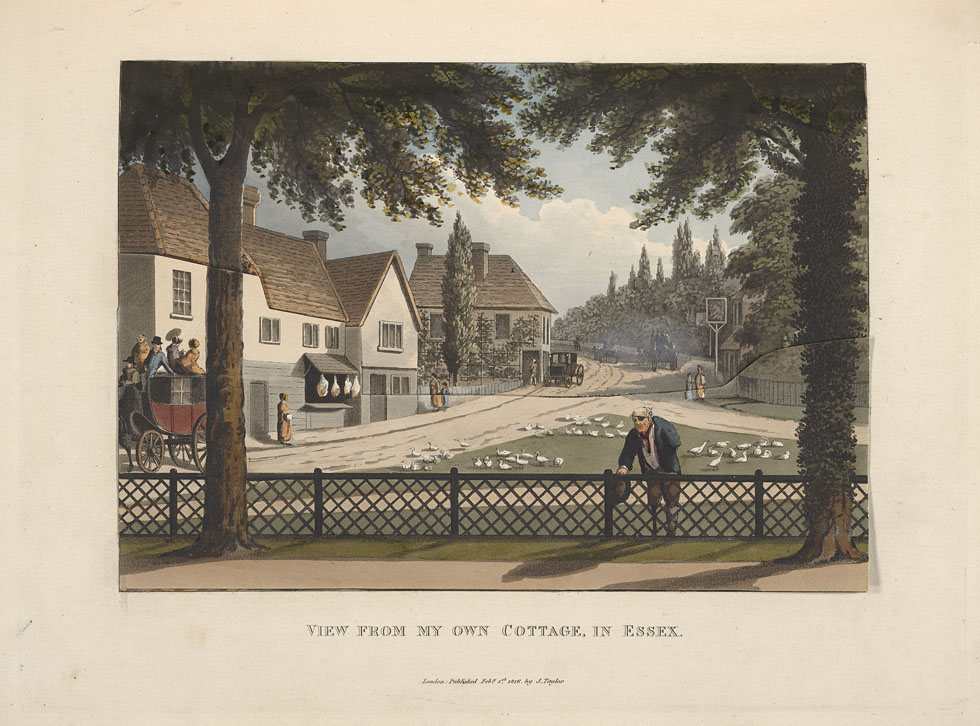
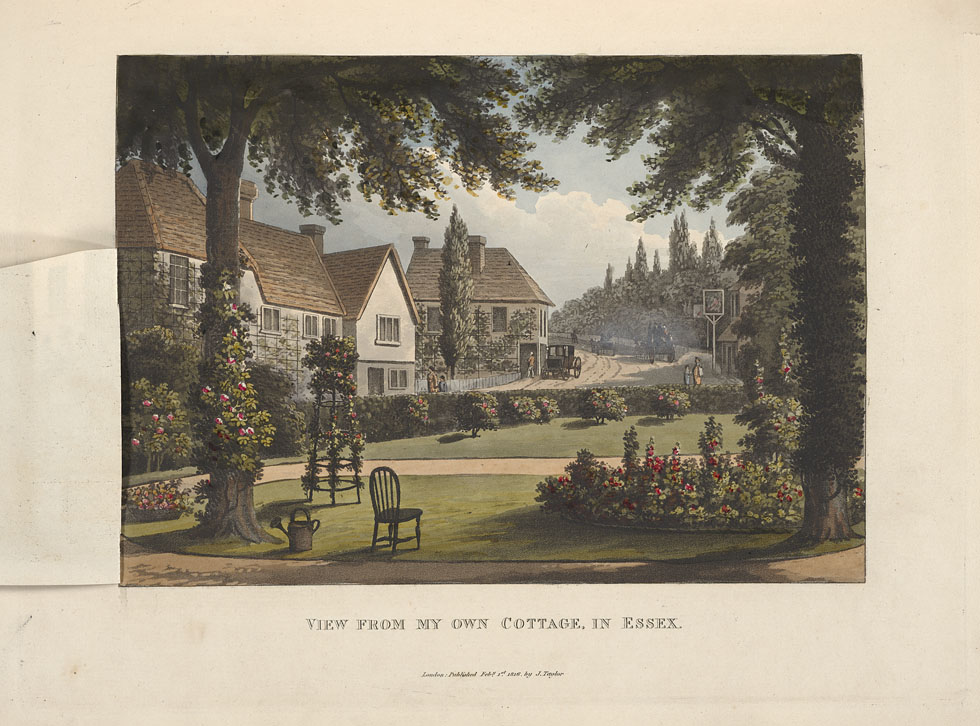
How could you not get intrigued by someone  who drew this  view from his own house which most of us would find fairly idyllic,  but then “improved” it by annexing the village green and planting roses!

The view from Repton's cottage at Hare Street from Fragments on the theory and practice of landscape gardening, 1816

The view from Repton’s cottage at Hare Street from Fragments on the theory and practice of landscape gardening, 1816

The improved view!

The improved view!

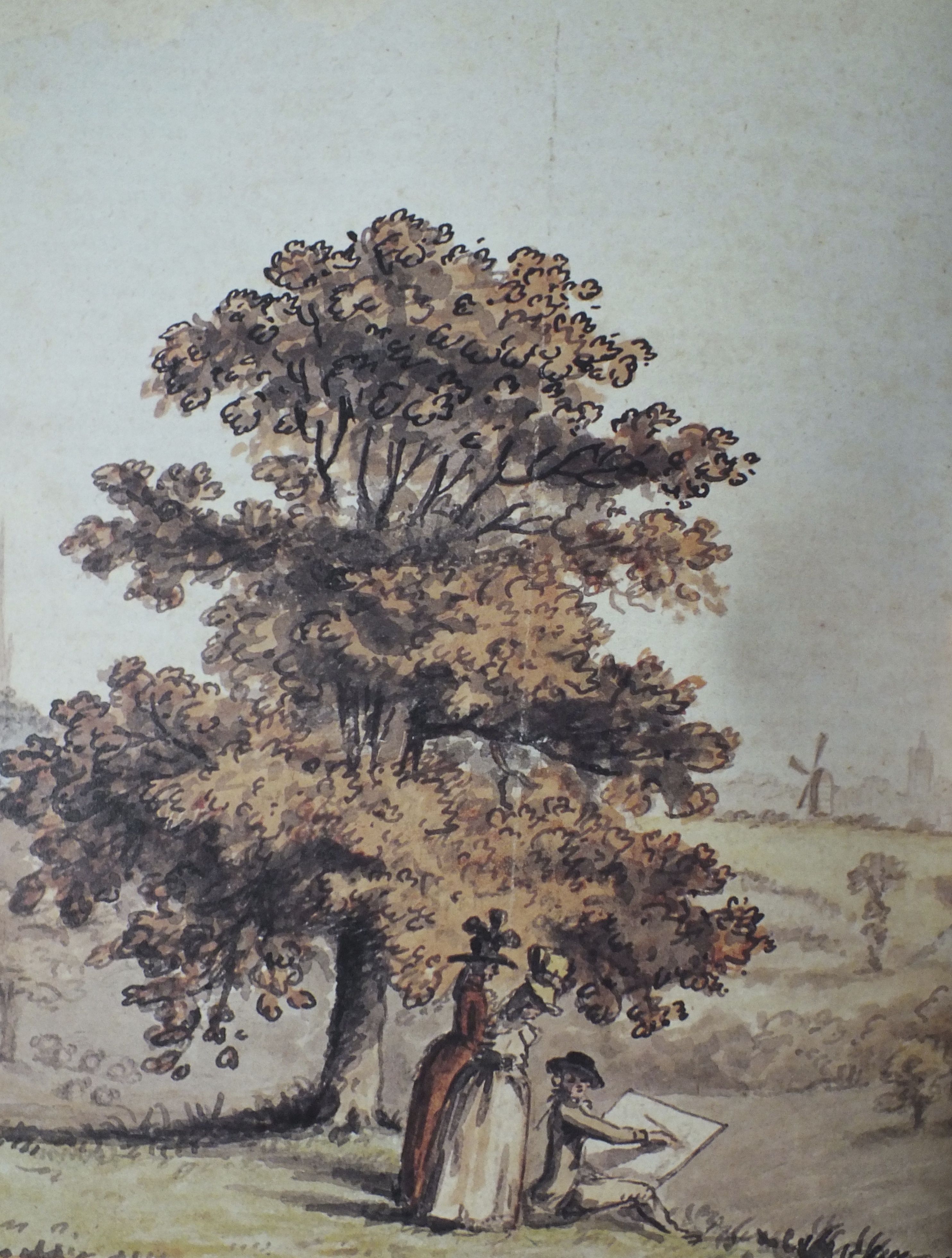
detail from Catton Park with Norwich in the Distance, 1788. Norfolk Museum Service

detail from Repton’s Catton Park with Norwich in the Distance, 1788. Norfolk Museum Service

Repton was clearly something of a character. He was a bit of a social climber – one commentator even called him ‘oleaginous’ – and he loved nothing more than mixing with his grander clients, and looking down on his inferiors.  In 1788, hard up and in “dread of poverty”  he turned one of his hobbies, sketching, into a new and profitable career as a landscape gardener to the wealthy.  He used that description on his business card, and indeed he was  the first person to call himself that, although the title must almost have been accidental since he was later to write “it ought rather to be called picture gardening”.  Charging 5 guineas a day for consultations, although it did not make him rich, soon put him “in a state of ease and comparative affluence”.

DSCF9752

Humphry Repton’s trade card

In his early career he followed very much in the footsteps of Capability Brown, whose drawings and other working documents he was given by Henry Holland, Brown’s son-in-law.  He designed Brown-like parks with clumps of trees, perimeter belts and serpentine drives and walks.

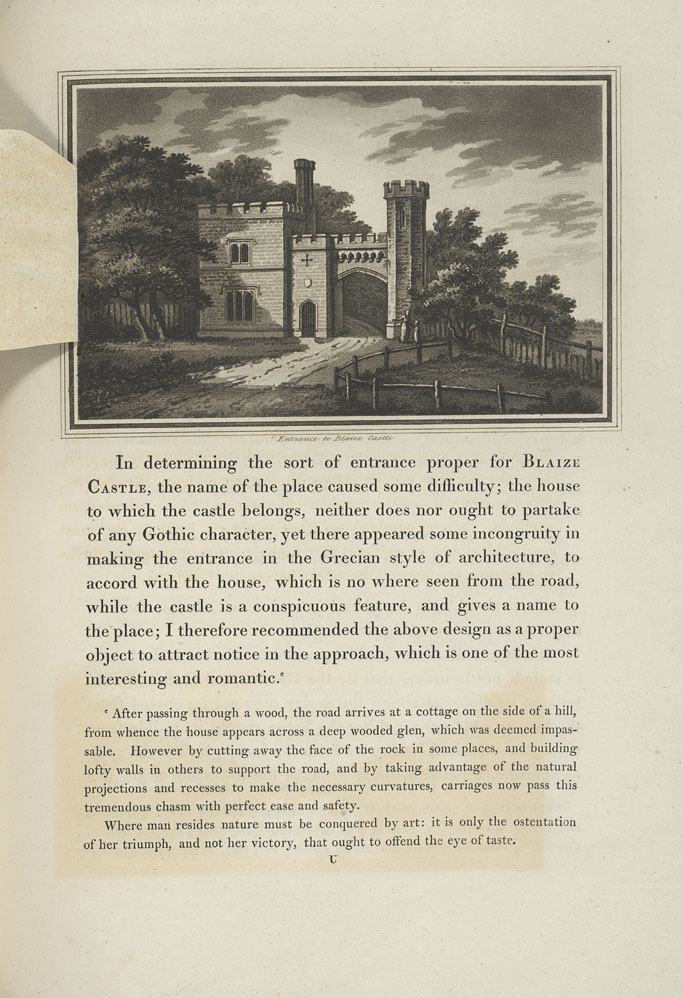
The Entrance Lodge at Blaise Castle, nr Bristol from Observations on the theory and practice of landscape gardening, 1803

The Entrance Lodge at Blaise Castle, nr Bristol from Observations on the theory and practice of landscape gardening, 1803

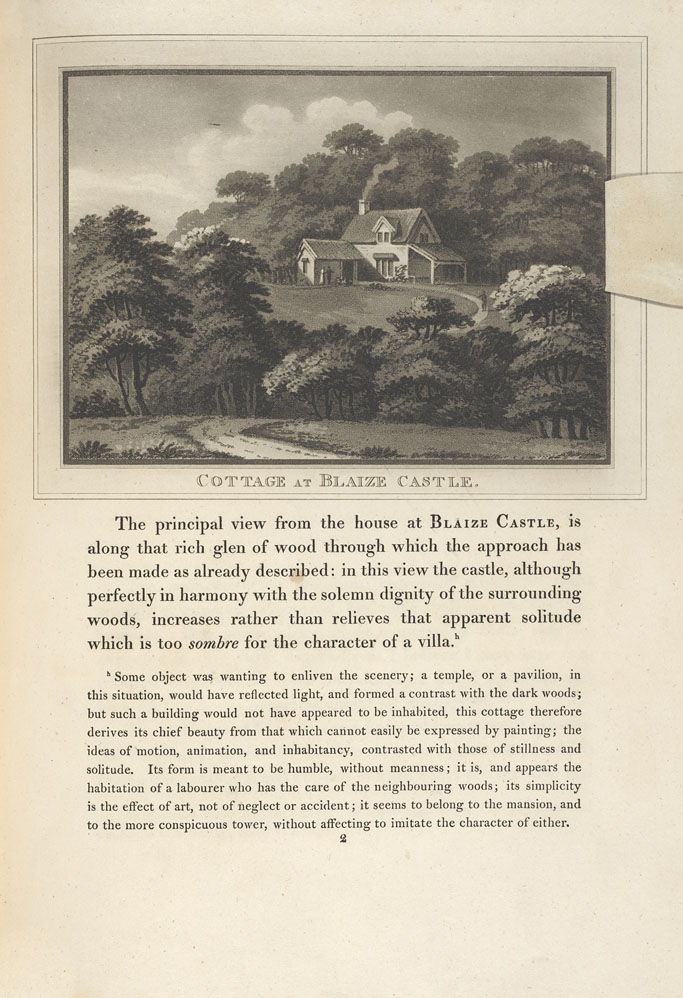
The Cottage at Blaise Castle from Observations on the theory and practice of landscape gardening, 1803

The Cottage at Blaise Castle from Observations on the theory and practice of landscape gardening, 1803

By mid-career he was moving  away from Brown’s expansive landscape to a much “wilder” picturesque style, and using gothic architecture for buildings rather than the classical orders.

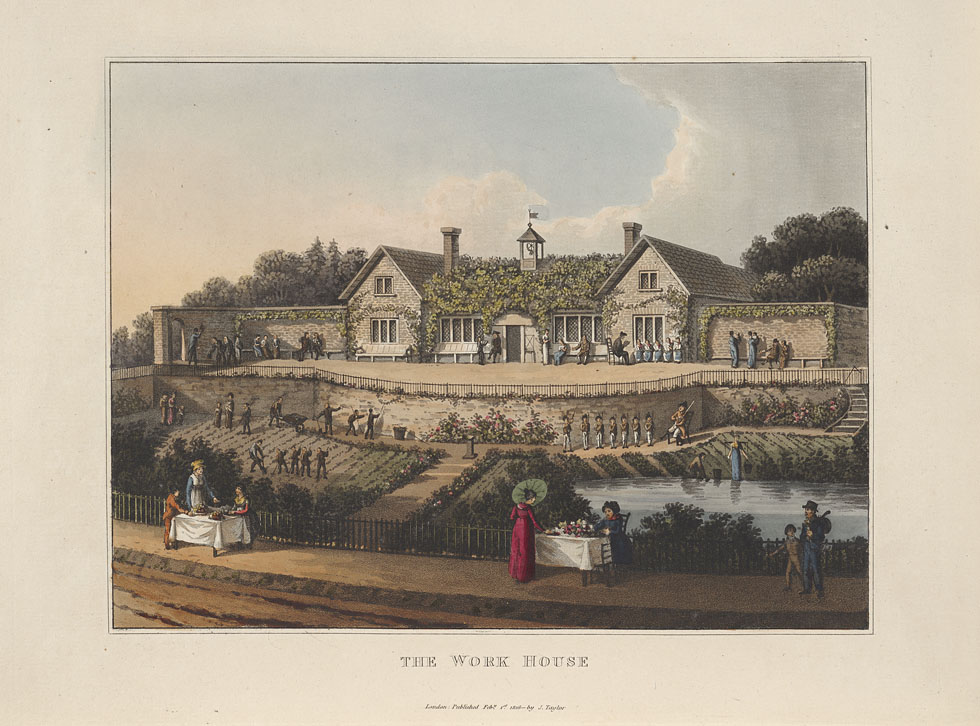
0348Finally,  towards the end of his career, although he continued to worked mainly in a folksy mock-mediaeval/Tudor way, [as in the workhouse he designed for the parish where his son was the rector] he surprised everyone, including I suspect himself, by branching out into the exotic. This was such an interesting and unexpected departure for the grand old man of his profession that I plan to talk about it in another post shortly.

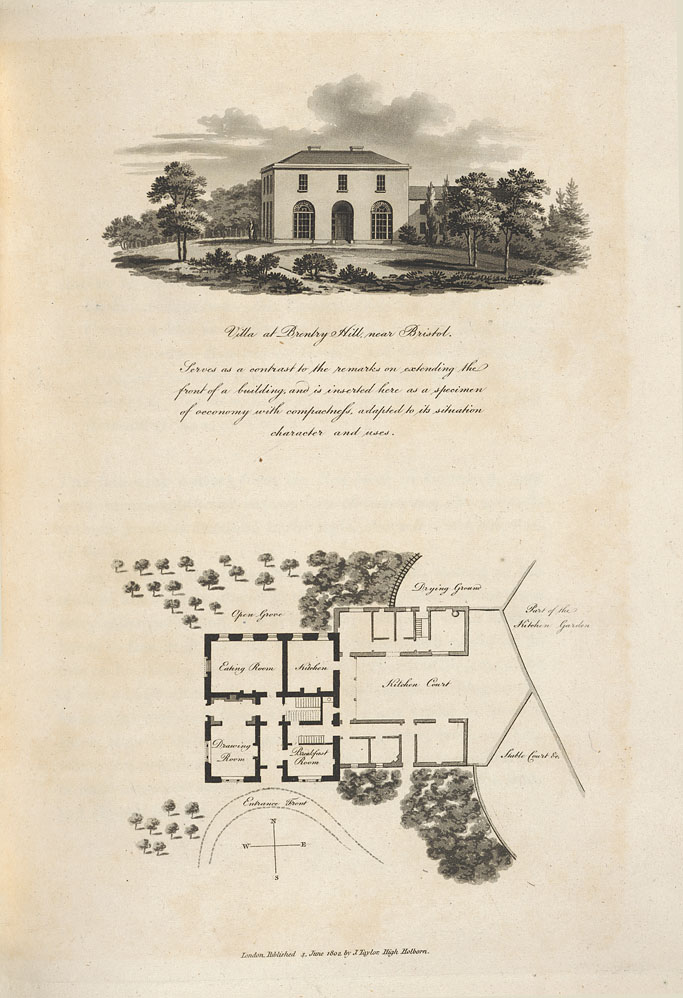
Design for a villa nera Bristol, Observations on the theory and practice of landscape gardening, 1803

Design for a villa near Bristol, Observations on the theory and practice of landscape gardening, 1803

Unlike earlier great designers Repton  often had to  work on a much smaller scale, creating “grand gardens” around the villas and smaller country houses of  the nouveaux riches of late Georgian/Regency England. As anyone who designs gardens will tell you, smaller is always harder.  He hated it – but not because it his attention to detail has to be much more assiduous. It was  because he despised “upstart wealth tramping over all I have been accustomed to look up to with respect.”

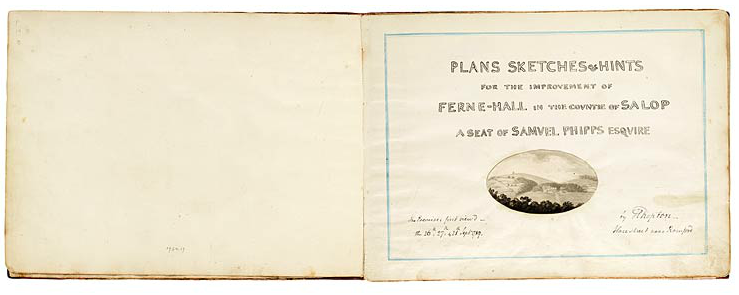
The changes in his approach can be most easily seen in his famous Red Books.  These were meticulously detailed, discussing his suggested ‘improvements’ for the garden, park and house.

The title page for Ferney Hall, Pierrepoint Morgan Library

The title page for Ferney Hall, Pierrepoint Morgan Library

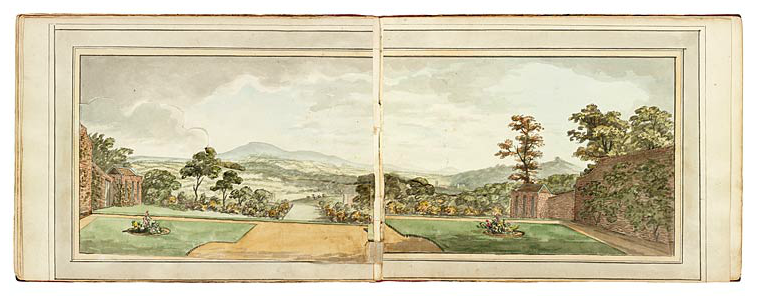
The elegant copperplate text was accompanied a number of sketches, often by Repton himself, which will he said, “better serve to elucidate my opinion than mere words”.

The view from the drawing room window before improvements

The view from the drawing room window before improvements, Pierrepoint Morgan Library

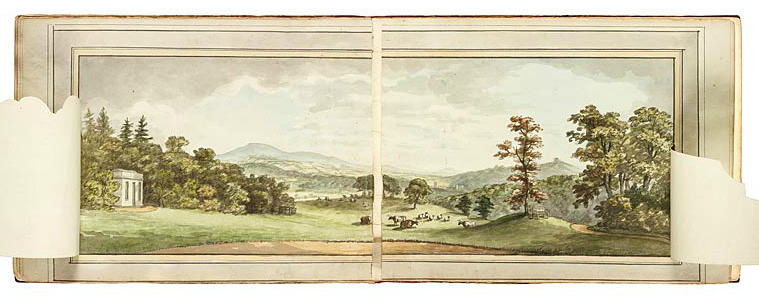
On first sight each sketch showed the site before Repton’s proposed improvements, but on closer inspection there was a flap or a slide of paper which when opened revealed how the site would look after the work was carried out.

The view from the darwing room window after Repton's improvements

The view from the darwing room window after Repton’s improvements

It was a simple theatrical technique but it was effective in conveying his ideas.  His changes may, in many cases, have been relatively simple – such as removing a fence, or thinning an overgrown shrubbery , but he had a good eye for creating or catching a view, introducing surprise, and providing variety in his gardens and landscapes.

Brandsbury before improvement, from Sketches and hints on landscape gardening, 1794

Brandsbury before improvement, from Sketches and hints on landscape gardening, 1794

Bransdbury after 'improvemnt' from Sketches and hints on landscape gardening, 1794

Bransdbury after ‘improvement’ from Sketches and hints on landscape gardening, 1794

Given his sense of humour and his love of theatre I doubt he’d have been too upset by critics who called his worked not “rural improvement but rural pantomime”  which showed his “tinsel kind of talent”.  Indeed he used humour in at least one of his red books, as  to show what would happen to clients who were foolish enough to choose another designer over him.

View from the house in its present character. The Red Book for Babworth from Stephen Daniel's Humphry Repton, p.13

View from the house in its present character. The Red Book for Babworth, 1792,  from Stephen Daniel’s Humphry Repton, p.13


The same view "altered according to 'Despotic FASHION', The Red Book for Babworth, 1792, from Stephen Daniel's Humphry Repton, p.13

The same view “altered according to ‘Despotic FASHION’, The Red Book for Babworth, 1792, from Stephen Daniel’s Humphry Repton, p.13

He would probably have been much more concerned that, despite being a good advertisement for his ideas, the Red Books did not always translate into commissions and many of the more than 400 red books he produced were never carried out.

View from the house at Tatton, showing the manner of connecting the two waters; and also the effect of the net fence as a false scale which lessens the sense of the near water. from Sketches and hints on landscape gardening 1794

View from the house at Tatton, showing the manner of connecting the two waters; and also the effect of the net fence as a false scale which lessens the sense of the near water. from Sketches and hints on landscape gardening 1794

Of course gardens are ephemeral and we learn most about Repton not from his surviving landscapes and gardens but from his extensive writings, which are usually extremely well illustrated with engravings of his own sketches.  Two of his Red Books, for Hatchlands and Ferney Hall , are available online at the Pierrepoint Morgan Library, and three of his most important books can be had as free downloads courtesy of the University of Wisconsin Digital Library for the Decorative Arts and Material Culture [see links below] and are easy to read – or at least to glance through to discover hs views, and  the wide range and scope of his style.

and the same view after 'improvement', from Sketches and hints on landscape gardening , 1794

and the same view after ‘improvement’, from Sketches and hints on landscape gardening , 1794

The Red Books are at:

http://www.themorgan.org/collections/works/repton/redbook.asp?id=FerneyHall

http://www.themorgan.org/collections/works/repton/redbook.asp?id=Hatchlands

And Repton’s books are at:

Sketches and hints on landscape gardening, 1794 can be found at:

http://digicoll.library.wisc.edu/cgi-bin/DLDecArts/DLDecArts-idx?type=header&id=DLDecArts.ReptonSketches&isize=M

Observations on the theory and practice of landscape gardening, 1803 can be found at:

http://digicoll.library.wisc.edu/cgi-bin/DLDecArts/DLDecArts-idx?type=header&id=DLDecArts.ReptonObservations&isize=M

Fragments on the theory and practice of landscape gardening, 1816

http://digicoll.library.wisc.edu/cgi-bin/DLDecArts/DLDecArts-idx?type=header&id=DLDecArts.ReptonFragments&isize=

← Back

Thank you for your response. ✨

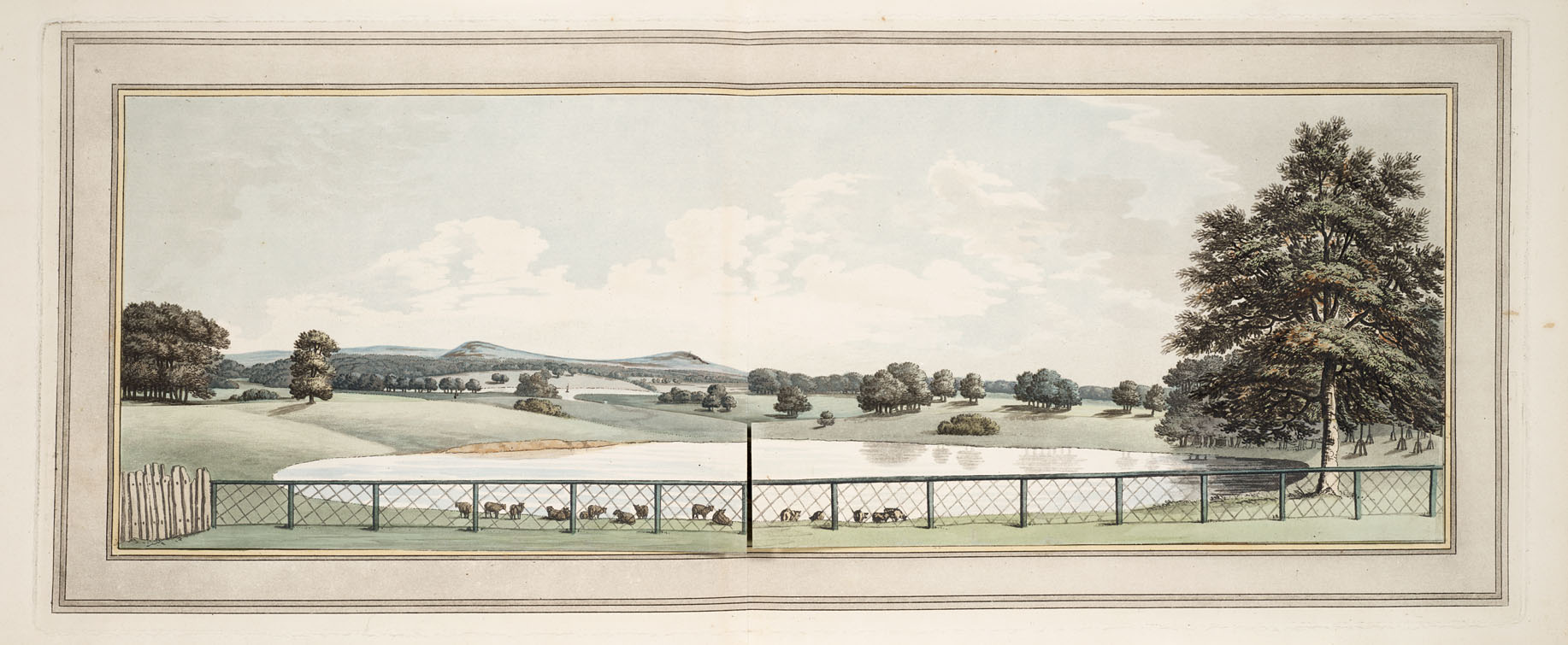
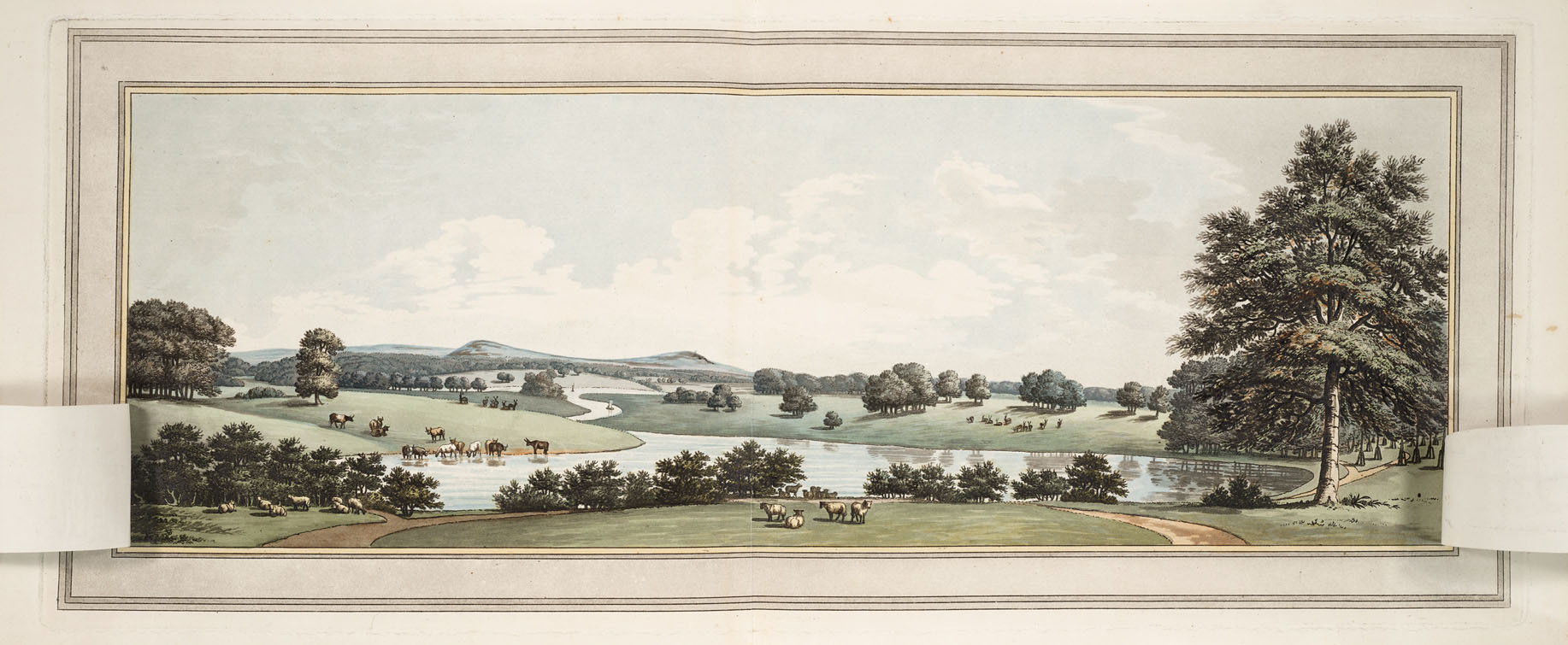
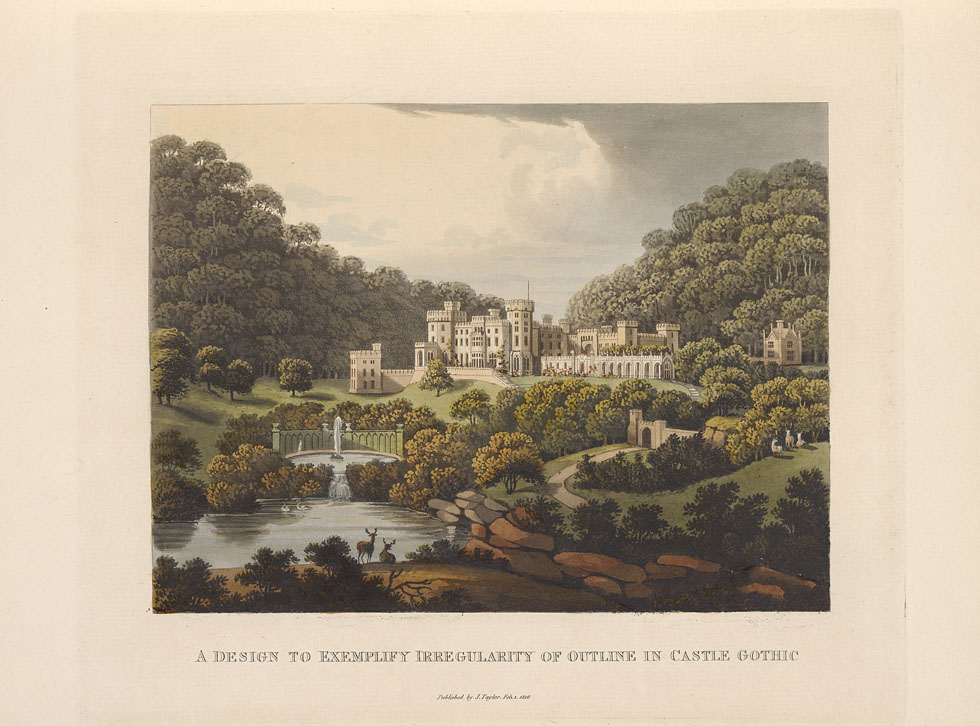
from Fragments on the theory and practice of landscape gardening, 1816

from Fragments on the theory and practice of landscape gardening, 1816

Posted in Uncategorized | Tagged , , , , , | Leave a comment