A Surprise at Southend 3….

Just to prove that garden history doesn’t always have to be about stately homes, statues of Queen Victoria or 18thc planting schemes,  the real surprise at Southend was nestling in the undergrowth at the foot of the cliffs.  Don’t read any further if you’re a purist or a snob!

Some of the remnants of Never Never Land https://twitter.com/YourSouthend/status/253867636545445889

Some of the remnants of Never Never Land
https://twitter.com/YourSouthend/status/253867636545445889

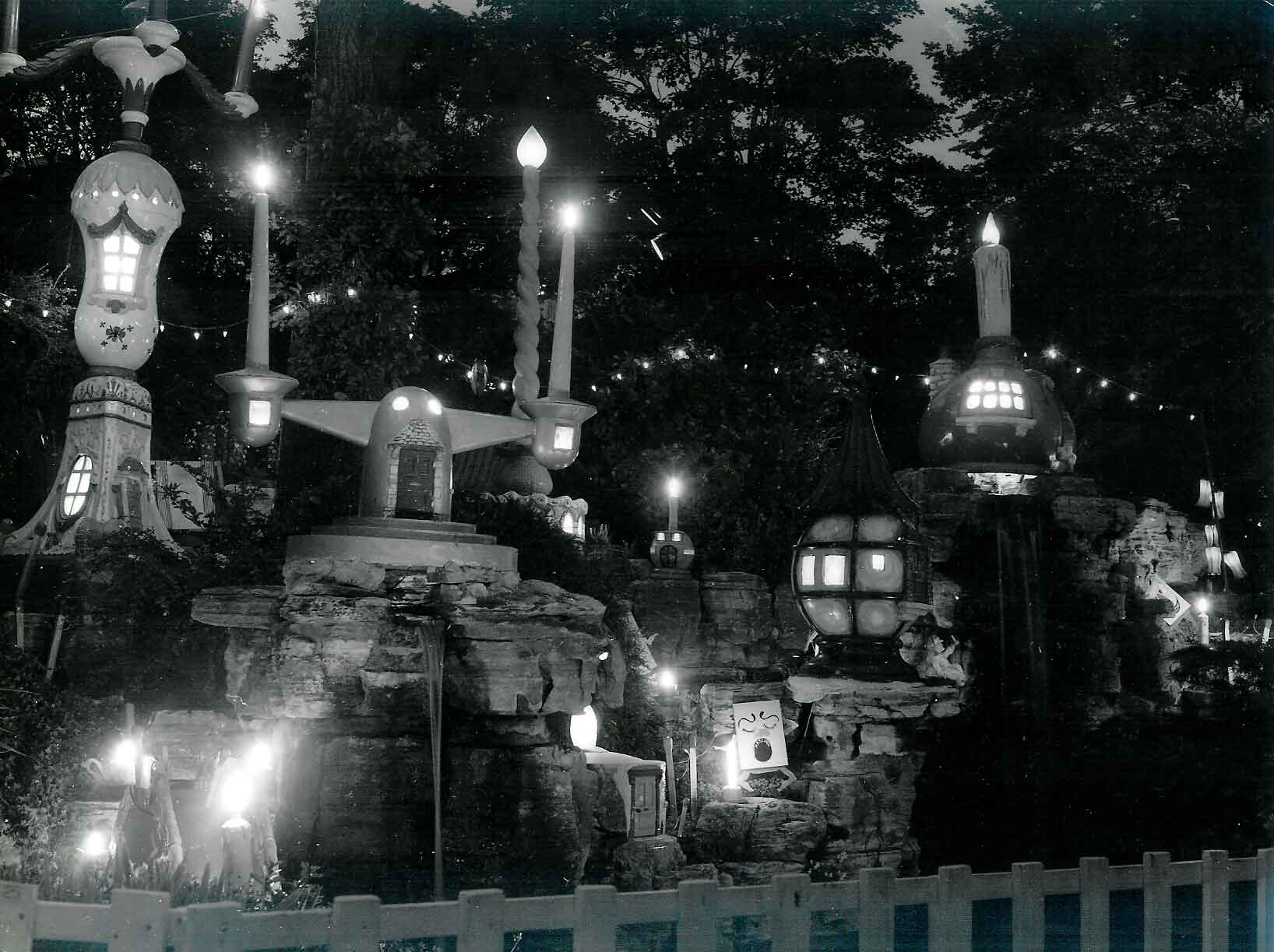
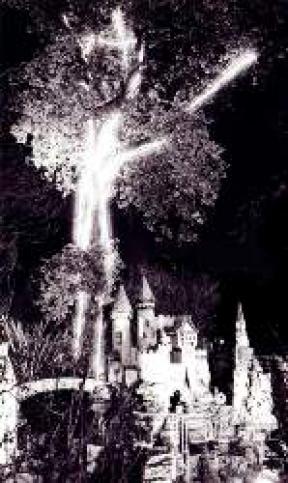
I spotted  the remains of what appeared to be a series of concrete castles and other bizarre structures that one might find on a mini-golf course.  perhaps that’s all it was, although it would be a strange golf course where you had to try to putt on a steep slope.   Then  I thought putting my garden history hat on, perhaps it was a  miniature village or ‘fairy’ garden.  I was getting closer because once I’d had the chance to do some research I discovered it was indeed something like that – a Never Never Land, once the pride and joy of Southend Council but now closed, abandoned and largely dismantled.

Reproduced by permission of English Heritage.NMR Reference Number: PC08947

Reproduced by permission of English Heritage.NMR
Reference Number: PC08947

What is it about Peter Pan, Tinkerbelle, Captain Hook and the rest of Barrie’s characters that attracted, and indeed still attracts us all?  Barrie’s imaginary world of  Never Never Land first appeared as a stage play in 1904, and he probably derived the name from a contemporary description of the wildest north Australian outback.  But he didn’t stick to it and when  the script became a book his fantasy world became simply Neverland.
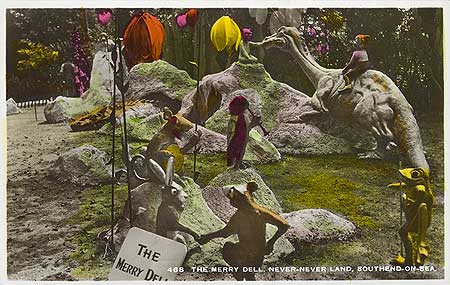
A view of figures in the Merry Dell Reproduced by permission of English Heritage.NMR Reference Number: PC08825

A view of figures in the Merry Dell
Reproduced by permission of English Heritage.NMR
Reference Number: PC08825

The most famous thing based on the Peter Pan legend is probably  the statue in Kensington Gardens which Barrie commissioned himself in 1902 following the success of the play, and which was erected in the park as early as 1912.

The creator of Peter Pan, J.M. Barrie, commissioned Sir George Frampton to build the statue in 1902. It was erected in Kensington Gardens in 1912 © Royal Parks

The creator of Peter Pan, J.M. Barrie, commissioned Sir George Frampton to build the statue in 1902. It was erected in Kensington Gardens in 1912 © Royal Parks

This led to a whole Peter Pan and other fairy-related  ‘industry’ there, including  the Elfin Oak designed by Ivor Innes in 1930 and which is now a Grade II listed structure.
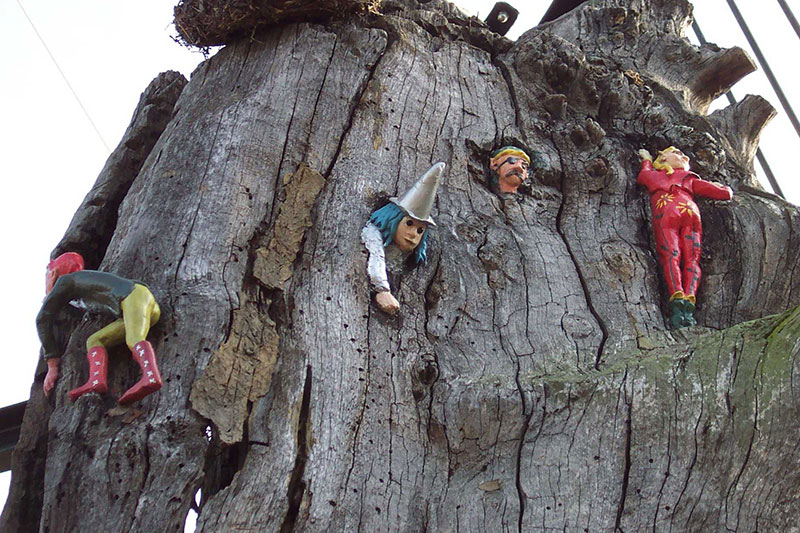
The Elfin Oak is a sculpture made from the hollow trunk of an oak tree that is carved with figures of fairies, elves and animals. - © Royal Parks

The Elfin Oak is a sculpture made from the hollow trunk of an oak tree that is carved with figures of fairies, elves and animals. – © Royal Parks
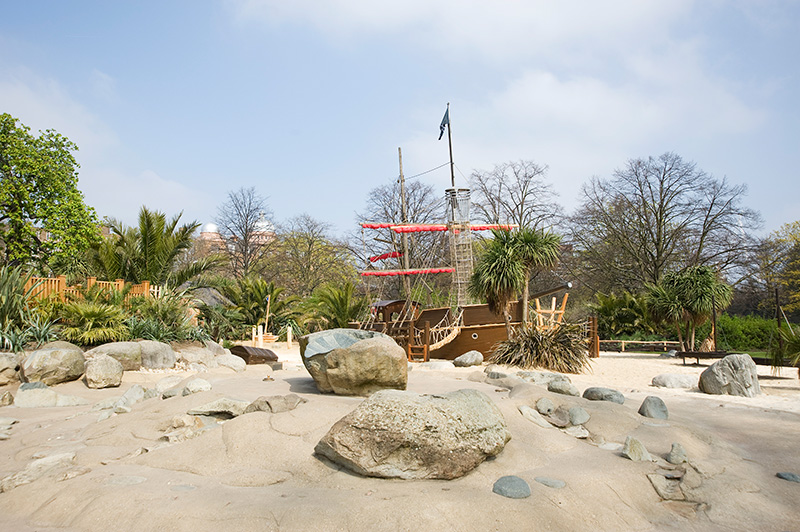
The Princess Diana Memorial Playground © Royal Parks

The Princess Diana Memorial Playground © Royal Parks

and the Princess Diana Memorial Playground which opened in June 2000 which features a large wooden  pirate ship, and a beach set against a lush backdrop of  trees and plants.

Now where do you go to research the origins and history of something unusual like Never-Never land? Luckily there’s a very good local history website – Southend Timeline – which has some basic information, and a websearch also revealed some memories of people visiting or working there. But nothing about who came up with the idea or any account of how it operated and how it developed.
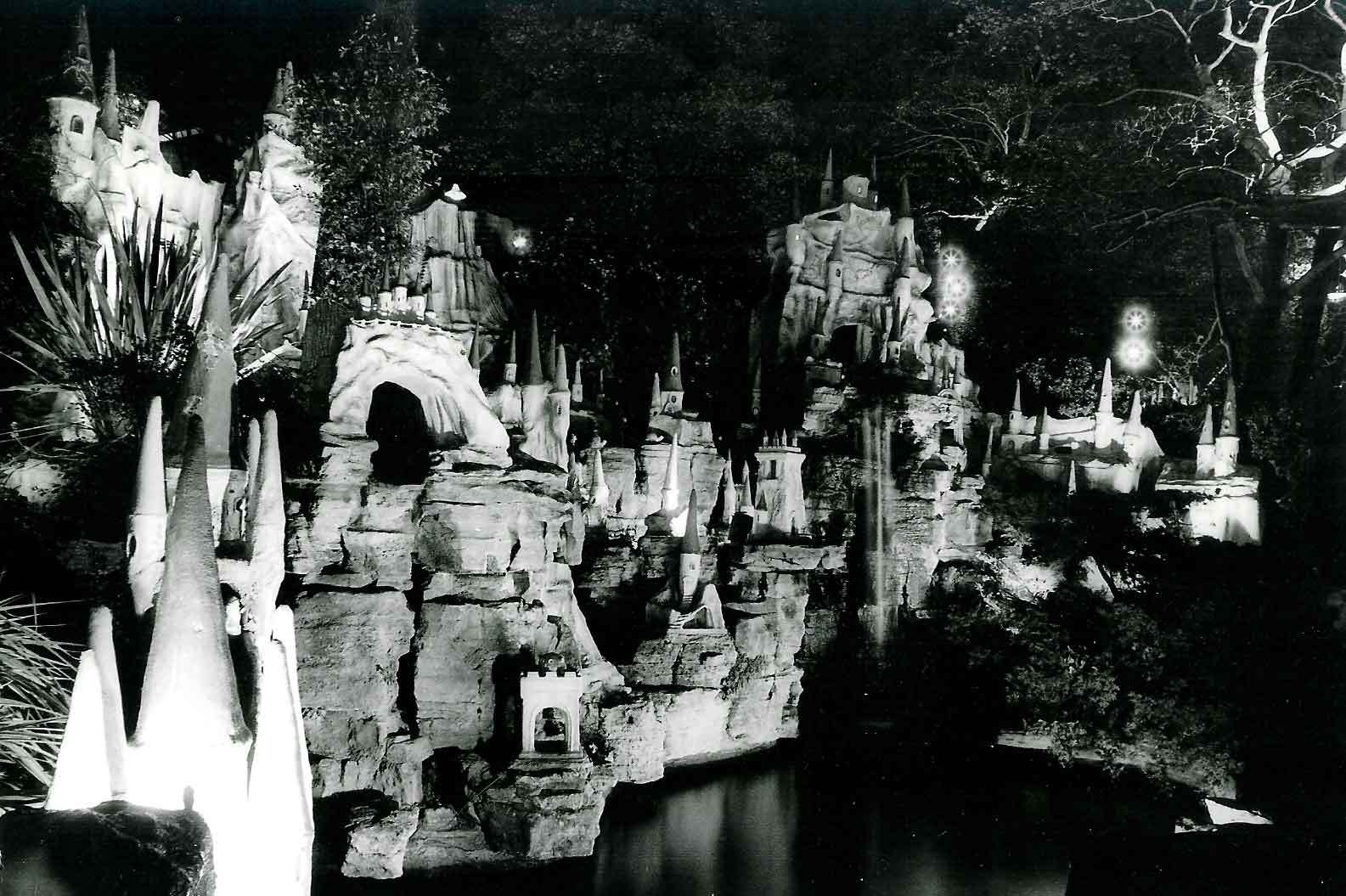
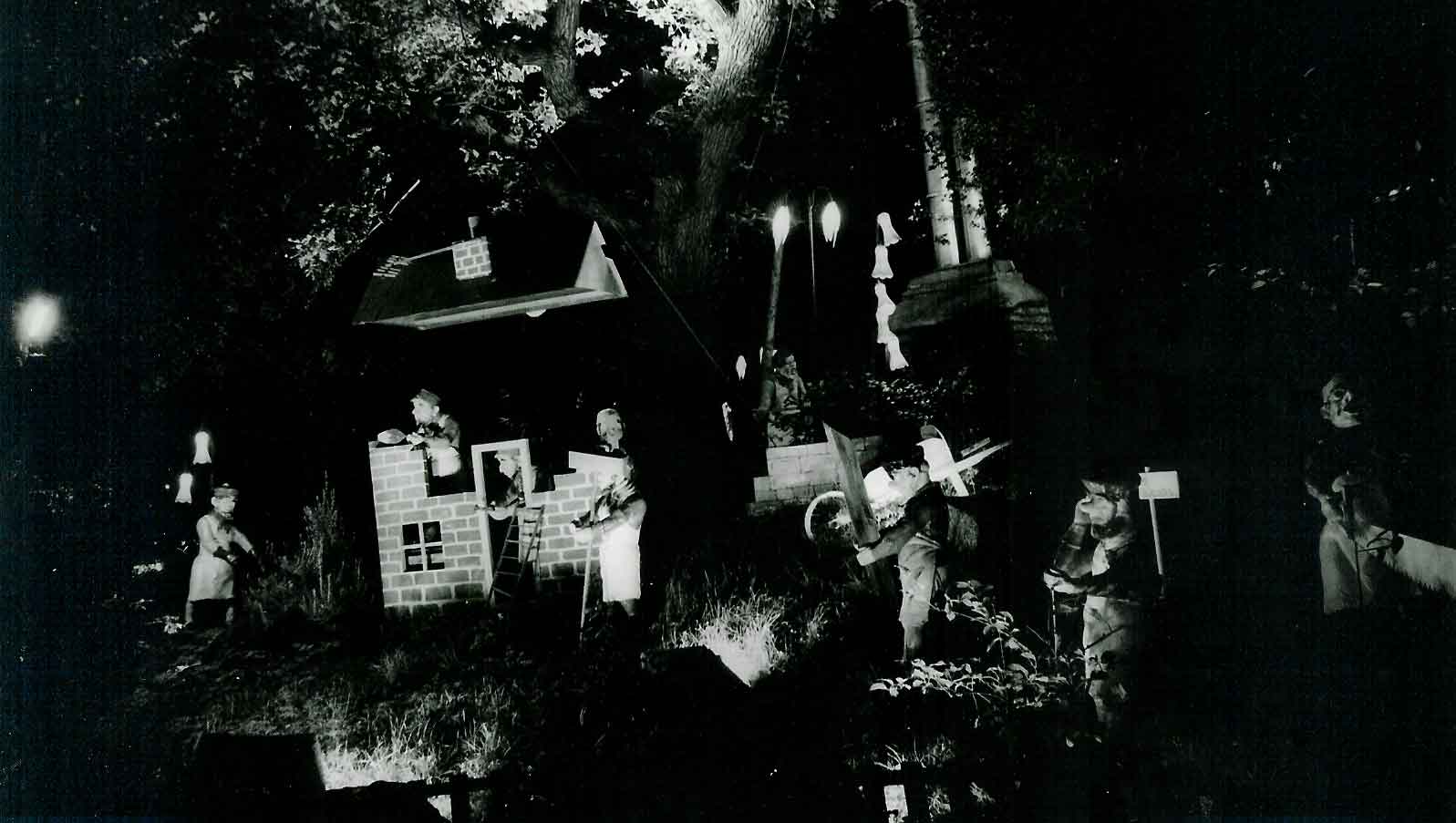
There is no doubt that Never Never Land caught the holiday making public’s imagination.  After it opened in 1935 it soon became popular, and by the 1950s people queued along the seafront for hours to get in.   Apart from the castles, waterfalls  mountains and caves and  it featured nighttime illuminations and a model railway as well as a host of imaginary creatures including fire-breathing dragons.

But, as tastes changed and more ‘exciting’ attractions became available so the crowds disappeared and in 1972 the gardens closed. Most of the exhibits were ripped out and the gardens returned to ordinary use with just a few almost indestructible miniature ruins  left in the bushes.1000x1000
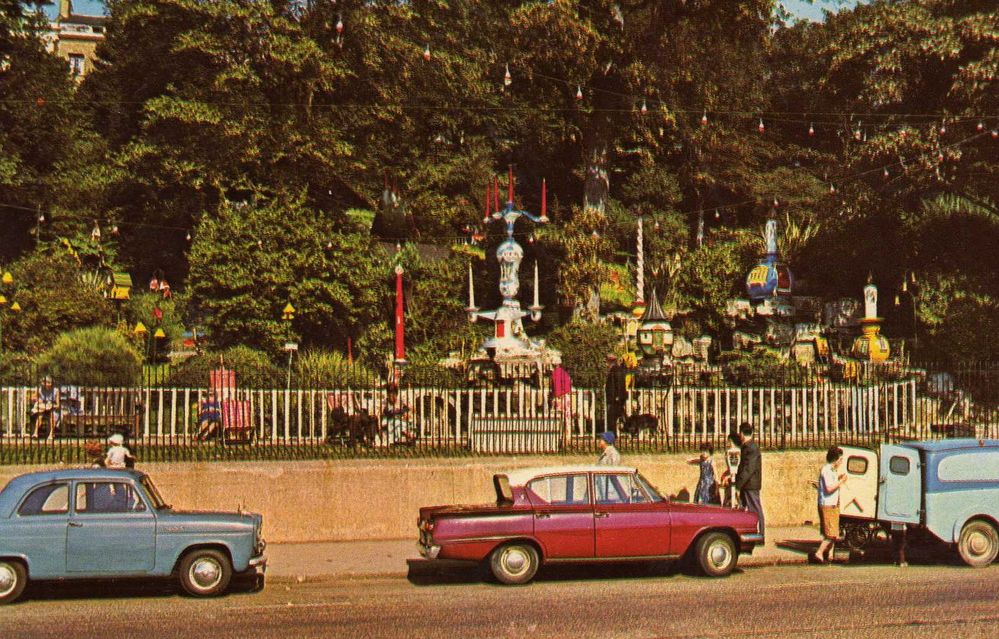
A rival attraction picked up on the same theme.  Just down the road Peter Pan’s Playground opened in 1976 complete with a boating lake and fairground attractions.

Boating Lake at Peter Pan's Playground in 1960 from the collection of Antony Ewart Smith (1927-1994) http://www.oldukphotos.com/essex_southend_on_sea3.htm

Boating Lake at Peter Pan’s Playground in 1960
from the collection of Antony Ewart Smith (1927-1994)
http://www.oldukphotos.com/essex_southend_on_sea3.htm

This opened on the site of another highly unusual garden – a seaside sunken one – which might explain the photo below taken during the 1953 floods.

$_12

Photograph of Peter Pan’s Playground, in the 1953 floods (D/Z 35/15) (Photo: Southend Standard).

Photograph of Peter Pan’s Playground, in the 1953 floods . Essex Rcord Office (D/Z 35/15) (Photo: Southend Standard).

There was an attempt to revive Never-Never Land with more hi-tech attractions in the late 1980s but despite all  best efforts it closed in 2000.   The on-line archives of the local paper, the Southend Echo only go back as far as to the late 1990s but it’s possible to trace the story of its demise through its columns.
A couple of episodes are quite humorous. There were  problems caused by starling droppings which made the paths too slippery and even turned Snow White’s cottage into “a no-go area”  despite cutting down large numbers of trees to stop the birds roosting.

Vandalism was a constant problem and there even was  a fire in the fairy castle. Reporting it the Echo quotes fire officer Rudy Jackson: “We found a window had been smashed and a fire started in the first floor of the castle. We broke in through a trap door and put the blaze out. It was not a really big fire but the castle is built of fibre-glass so the smoke was quite acrid. Whoever started it broke an outside window and set light to the corner of the castle inside. There is quite a lot of internal damage but the castle is still standing.”

Despite investing in new models and systems   the  numbers of paying visitors continued to decline sharply and made the whole venture unviable. A sad end to a once thriving attraction particularly as no-one seems to know what to do with the remnants.  There was even  an attempt to organise a Facebook campaign to re-instate it.
Meanwhile the rival Peter Pan park morphed into Peter Pan’s Adventure Island, and then recognising  the diminishing allure of pirates and fairies to the current generation of young people, simply Adventure Island. Claiming to be the country’s No.1 free admission amusement park it is full of rollercoasters as well as more sedate rides and attractions – and tropical looking plants – it’s a far cry from Barrie but it has captured the market so that even on a blustery February afternoon there was a long long queue of people waiting to get inside.

Taken from an interview with Philip Miller, owner of Adventure Island in gforce, the newsletter of UK theme parks © http://www.gforcemag.com

Taken from an interview with Philip Miller, owner of Adventure Island in gforce, the newsletter of UK theme parks © http://www.gforcemag.com

I’d love to know more about any and all of this. So if you know the history of Never-Never Land or know someone who does then get in touch and I’ll be delighted to share it with other readers of the blog.

For further information about Southend in general and Never Never Land in particular see:                       http://www.southendtimeline.com  and   http://www.echo-news.co.uk

← Back

Thank you for your response. ✨

Posted in Uncategorized | Tagged , , , | 1 Comment

A Surprise at Southend 2…..

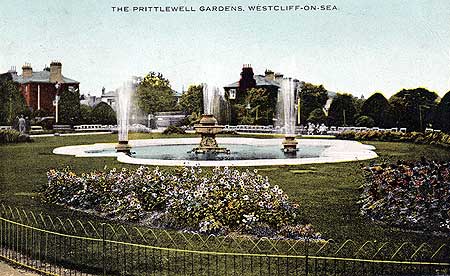
Having wandered up through the Cliff Gardens there were three more surprises in store for me.   I saw the first as I reached the top of the cliff path when I was greeted by sight of Prittlewell Square, a bijou Victorian public garden square which still retains much of its charm, and which is complemented by the surrounding period houses.

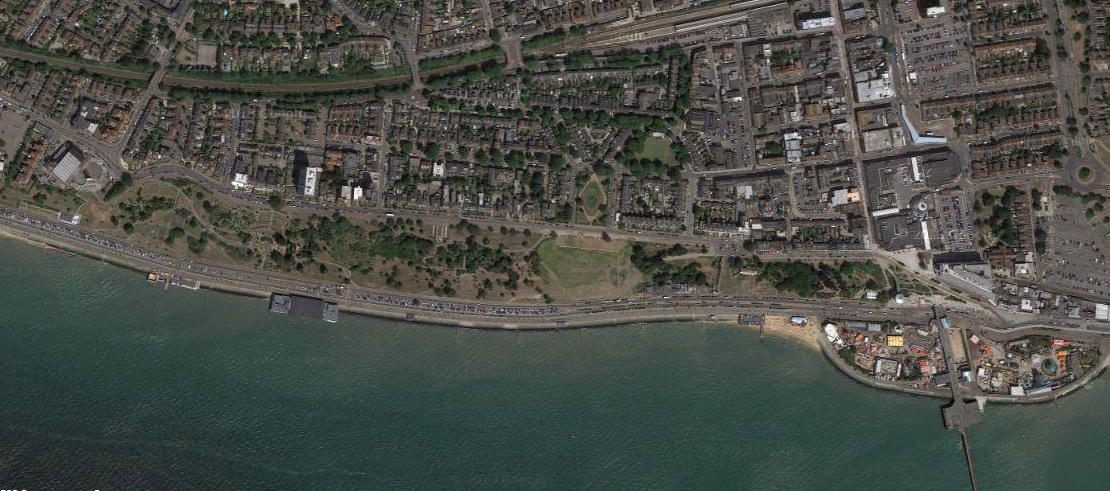
A satellite view of the Cliff Gardens at Southend. Prittlewell Square is the diamond shaped space in the centre.The area immediately between them and the sea is the site of the landslip. © Google

A satellite view of the Cliff Gardens at Southend. Prittlewell Square is the diamond shaped space in the centre.The area immediately between them and the sea is the site of the landslip. © Google

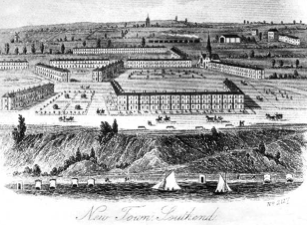
Etching showing the proposed development of Cliff Town in the 1850’s © Southend Borough Council

Etching showing the proposed development of Cliff Town in the 1850’s © Southend Borough Council

When the London-Southend Railway was finally completed in 1856 the town began to grow rapidly. The developer of the railway also leased forty acres of clifftop land for  Cliff Town, a  carefully planned Victorian suburb which included the  gardens  as an integral part of the layout. They formed a splendidly decorative centrepiece to the whole estate, a role they continue to play today.

PC09121

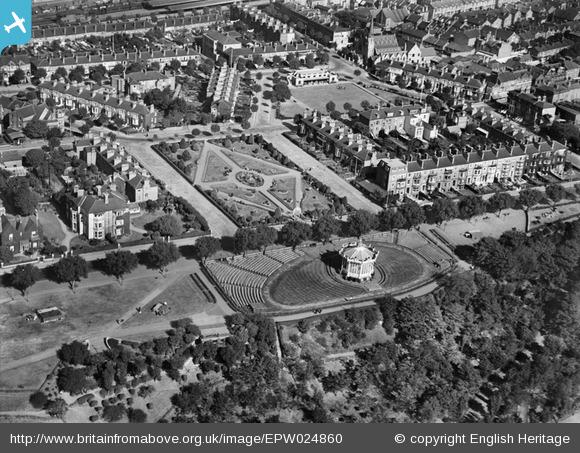
Clifftown was built in several ‘classes’ of property, depending on the extent of the sea view. The ‘First Class’ houses were those on the cliff top facing the sea whilst the ‘Second Class’ houses were those at an angle to the sea. Further back were the ‘Third and Fourth Class” houses who nevertheless still had glimpses. Apart from the gardens of the square there was also an area of market gardens which was later turned into the bowling green. An elegant bandstand was built in the clifftop gardens across the road.

EPW024860The gardens seems to have had an overhaul in the 1920s  and was being restored in 2002 by the Heritage Lottery Fund when the landslip occurred.

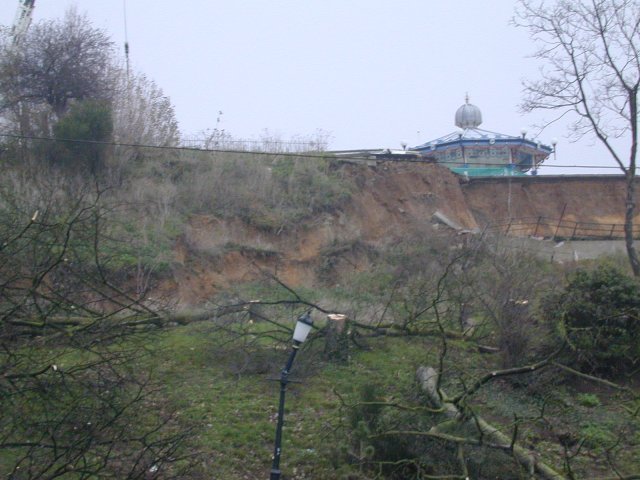
Shortly after the landslip in November 2002. Notice the bandstand just on the edge. © http://sucs.org/~dez/gallery/v/Walks/Landslip/?g2_page=2

Shortly after the landslip in November 2002. Notice the bandstand just on the edge. © http://sucs.org/~dez/gallery/v/Walks/Landslip/?g2_page=2

The bandstand which stood opposite the gardens had to be dismantled because it was in danger of toppling over the edge,  but was restored &  moved to another town park.

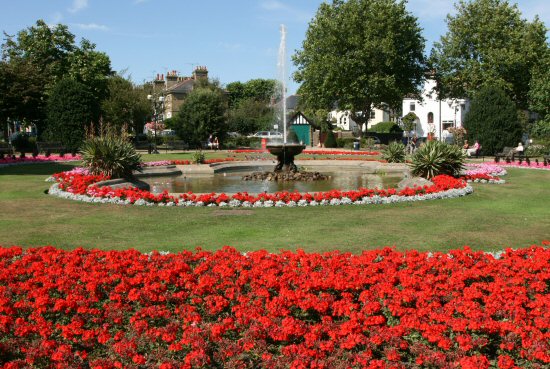
Bright summer bedding in Prittlewell Square © http://www.beautifulengland.net

Bright summer bedding in Prittlewell Square © http://www.beautifulengland.net

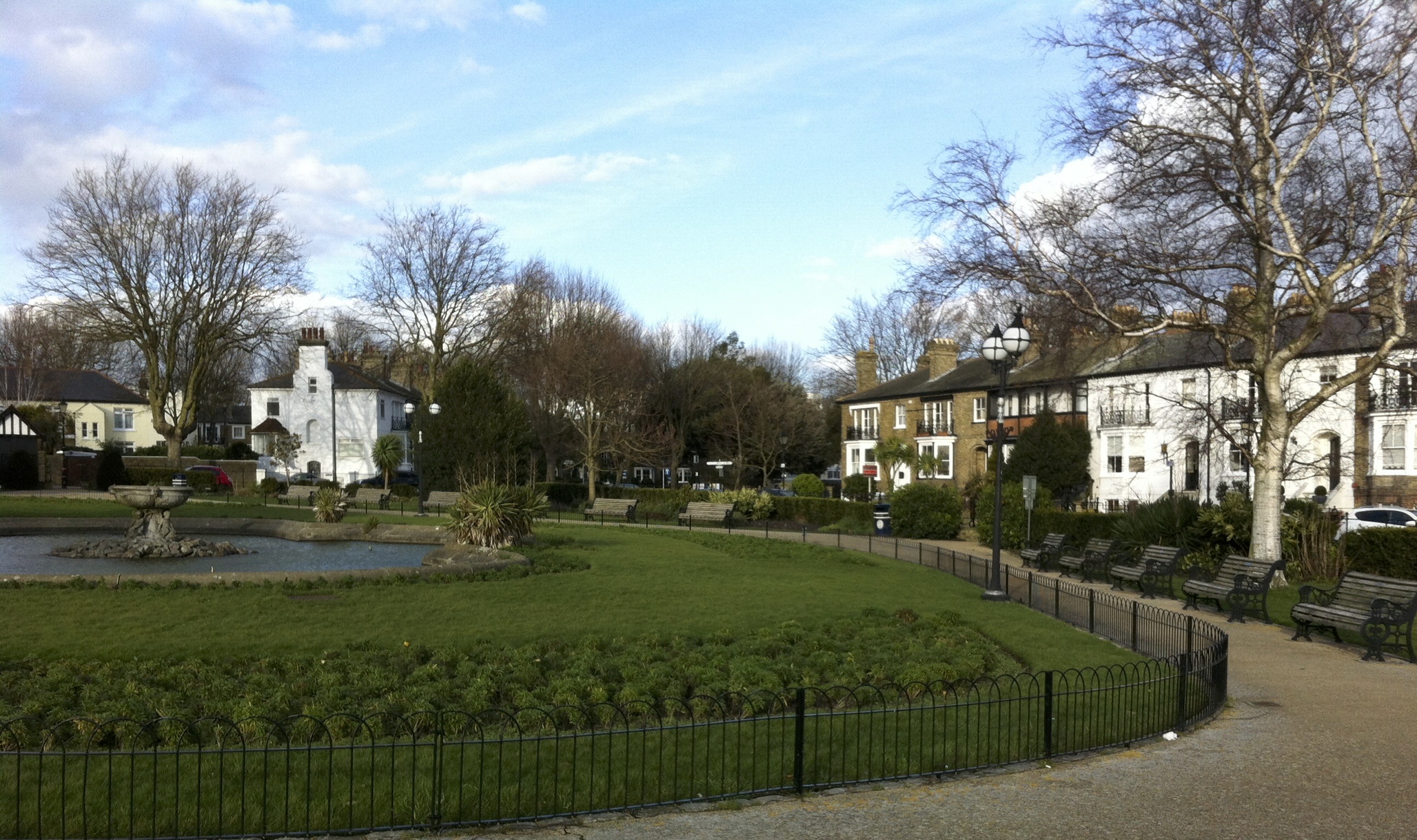
The gardens of Prittlewell Square © David Marsh 2014

The gardens of Prittlewell Square © David Marsh 2014

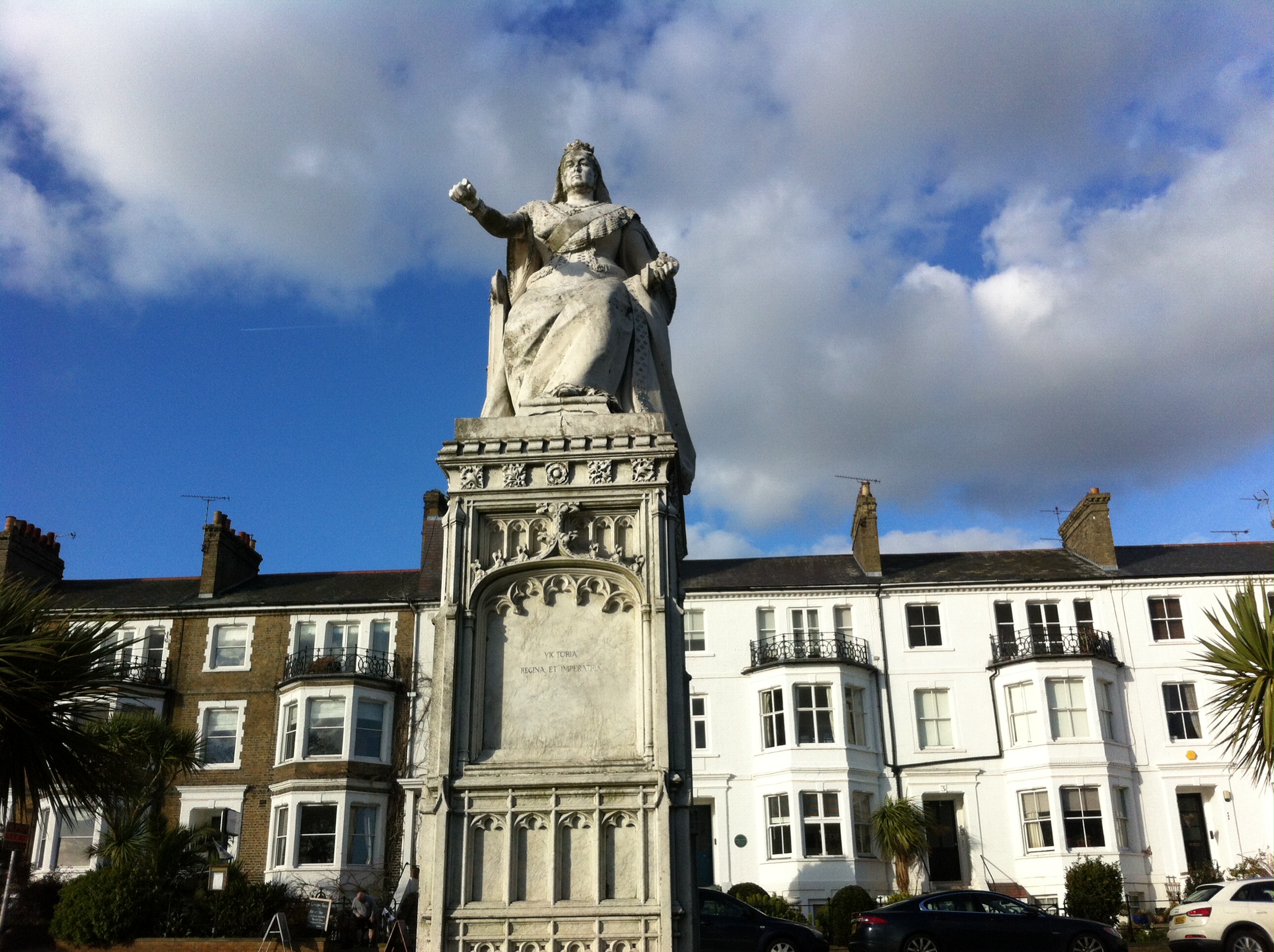
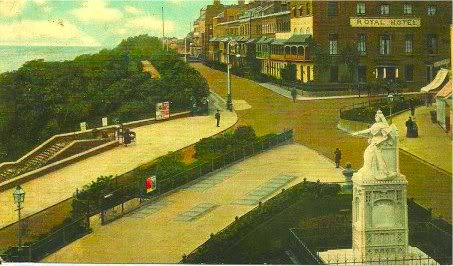
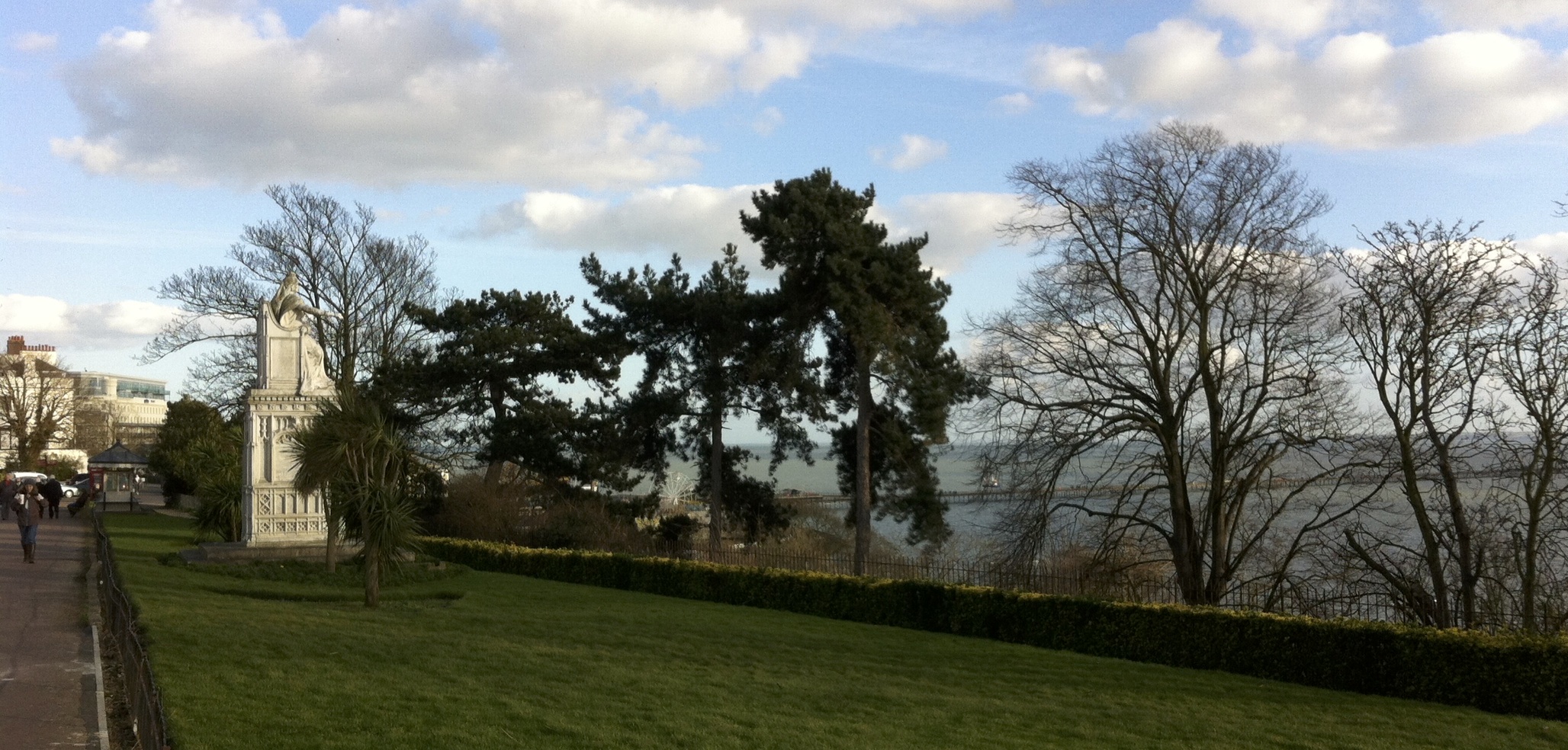
The second surprise was to see a large and imposing statute of Queen Victoria looking  her most imperial.  The statue  was presented to the town by the Mayor Bernard Wiltshire Tolhurst to mark the 1897 diamond jubilee.  It was originally situated at the top of Pier Hill, but  was moved to its present position in 1962 because residents joked that in her original position she appeared to be pointing to the gent’s toilets!

IN 1974 English Heritage placed the statue on the national listed buildings register (English Heritage Building ID: 122895) © David Marsh 2014

IN 1974 English Heritage placed the statue on the national listed buildings register (English Heritage Building ID: 122895) © David Marsh 2014

I suppose calling Prittlewell Square and a 3 ton statue of Queen Victoria surprises could be a bit of an exaggeration but my last discovery of the day  definitely was unexpected and rather strange but great fun More on that shortly!

PHi11

Queen Victoria statue in its old home on Pier Hill © http://www.southendtimeline.com

More information on Southend and its history can be found at :

http://rochfordessex.net/southend/A%20Brief%20History%20of%20Southend2.htm

And more information about the statue can be found at:

http://www.southendtimeline.com/pierhill.htm

http://www.echo news.co.uk/news/8902593.Southend_s_Queen_Victoria_statue_could_be_on_the_move/

← Back

Thank you for your response. ✨

photo 8

Queen Victoria’s statue in the Cliff Gardens © David Marsh 2014

Posted in Uncategorized | Tagged , , , , , | Leave a comment

A Surprise in Southend…

I had to go to Southend last week – a place I didn’t really know – and so I checked on the Parks and Gardens UK database to see if there were any interesting gardens to visit while I was there.  I was disappointed to find that we had nothing listed at all in the area. But it’s certainly not because there isn’t anything of  historical interest  but just because our volunteers haven’t had the time to do the research and add information.

 'A survey of the sea ground of the manors of Milton Hall & Prittlewell Priory ...', post 1822, Essex Record Office, D/DS 157/1

‘A survey of the sea ground of the manors of Milton Hall & Prittlewell Priory …’, post 1822, Essex Record Office, D/DS 157/1

Despite the fact it was a chilly & blustery day I went for  a walk along the seafront and was surprised to find, after the usual seaside paraphernalia of amusement arcades, fish and chip cafes and  donut emporia that there was a steep cliff garden with a row of rather elegant Georgian and Victorian houses at the top commanding great views across the estuary. They can be seen on the left in the estate map above, with Old Southend, just a tiny cluster of houses on the right.  A better sense of the topography is given by the print below. So I set off to explore.

Detail from an early 19thc print of the Royal Hotel And Terrace Essex Record Office, I/Mb 321/1/1

Detail from an early 19thc print of the Royal Hotel And Terrace
Essex Record Office, I/Mb 321/1/1

The oldest part of this development is Royal Terrace which was built in the 1790s as a rival to the delights of Margate, Weymouth and Brighton.   Although it attracted a season’s visit from Princess Caroline, the wife of the Prince Regent in 1804, poor transport links meant  the scheme for a new seaside resort was not a great success, and there was very little further building until the railway link to London was completed in the mid-century.

Royal Terrace, Southend On Sea, 1900 - 1920, Reproduced by permission of English Heritage.NMR Reference Number: PC11013

Royal Terrace, Southend On Sea, 1900 – 1920, Reproduced by permission of English Heritage.NMR
Reference Number: PC11013

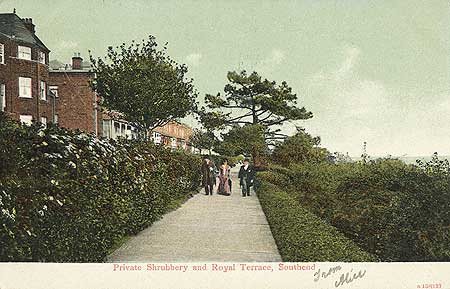
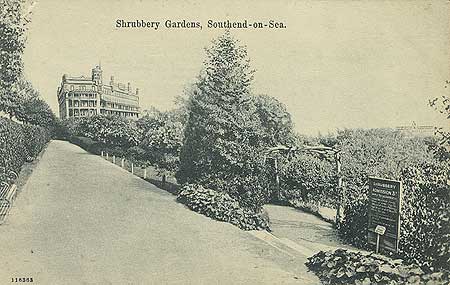
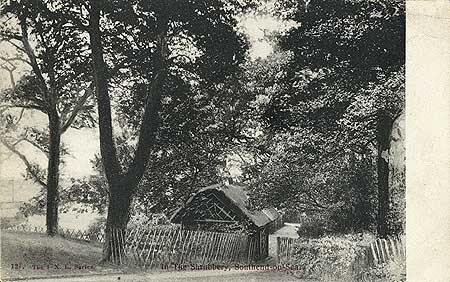
But it was the area between Royal Terrace and the sea and running down the cliffside that was most interesting.  This is “The Shrubbery” and I was surprised to discover, it was laid out at the same time as a private garden for the residents, since the rear of their properties was largely taken up by stables and mews. St2The gardens were later opened to the paying public for 3d.  They are now run by the local authority.  The Shrubbery was obviously popular and it features on many postcards. The ones below come from the  Nigel Temple collection which is now held by English Heritage and freely available on-line.

A view of the Shrubbery Gardens. The sign on the right shows an admission fee of 3d to enter. 1900 - 1930, Reproduced by permission of English Heritage.NMR Reference Number: PC08827

A view of the Shrubbery Gardens. The sign on the right shows an admission fee of 3d to enter. 1900 – 1930, Reproduced by permission of English Heritage.NMR
Reference Number: PC08827

The Shrubbery, Southend on Sea, 1900-1930Reproduced by permission of English Heritage.NMR Reference Number: PC08828

The Shrubbery, Southend on Sea, 1900-1930  Reproduced by permission of English Heritage.NMR
Reference Number: PC08828

A Thatched shelter in The Shrubbery, Southend on Sea, c.1900-1905 Reproduced by permission of English Heritage.NMR Reference Number: PC07136

A Thatched shelter in The Shrubbery, Southend on Sea, c.1900-1905 Reproduced by permission of English Heritage.NMR
Reference Number: PC07136

The Rose Bower in The Shrubbery, Southend on Sea, c.1900-1905, Reproduced by permission of English Heritage.NMR Reference Number: PC07139

The Rose Bower in The Shrubbery, Southend on Sea, c.1900-1905, Reproduced by permission of English Heritage.NMR
Reference Number: PC07139

A pleasant inland view from TQ8885 : Southend-on-Sea: pier viewing platform. © Copyright Chris Downer and licensed for reuse under this Creative Commons Licence

Royal Terrace and part of The Shrubbery today
© Copyright Chris Downer and licensed for reuse under this Creative Commons Licence

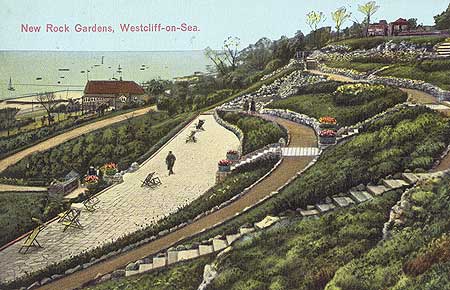
As Southend eventually  began to grow as a resort in the late 19th century, the rest of the cliffs began to be laid out as gardens with a wide sea-front promenade  that runs from Southend  to Westcliffe. Development lasted until the 1930s.

New Rock Gardens, Westcliff On Sea, Southend On Sea, 1927 - 1932, Reproduced by permission of English Heritage.NMR Reference Number: PC08952

New Rock Gardens, Westcliff On Sea, Southend On Sea, 1927 – 1932, Reproduced by permission of English Heritage.NMR
Reference Number: PC08952

Like The Shrubbery these other gardens have suffered from the vagaries of public spending cuts but are still relatively well maintained and brightly planted up in a traditional seaside bedding style every summer. Whatever one thinks of carpet bedding generally it just feels right in Victorian seaside settings, and Southend still seems to do it very well.westcliff shelter & cliff gdns excel c242-1

But while planting may have been maintained buildings and infrastructure  suffered and once again it was the Heritage Lottery Fund which came to the rescue in 1999.  The Cliff Gardens have several typical timber seaside shelters, and further along there is the splendid horseshoe-shaped sun shelter at Westcliffe.  According to the local paper, the Southend Echo, plans are now afoot to convert this into a cafe because it is “underused” and tenders are being invited for the lease.   There is also a cliff lift, now 102 years old which was also recently restored with a grant from the Heritage Lottery Fund .

The Cliff Lift on Southend sea front is 40m long and rises 17m between levels. Originally built as an escalator in 1901 it was converted into a funicular car lift in 1912. © Len Williams & licensed for reuse under Creative Commons Licence

The Cliff Lift on Southend sea front is 40m long and rises 17m between levels. Originally built as an escalator in 1901 it was converted into a funicular car lift in 1912.
© Len Williams & licensed for reuse under Creative Commons Licence

A part of the cliff park suffered a large landslip in November 2002 which was not fully stabilized until April 2013.  The area affected is now being turfed and planted with wild flowers but is due to become the home for a new Museum.

All this would have been interesting enough but there were several more surprises to come… of which more anon

Southend_on_Sea-1

Cliff Gardens from the collection of Beecroft Gallery
http://www.southendmuseums.co.uk/page/Visit-Beecroft

Further information can be found at:….

Archival records for The Shrubbery

http://seax.essexcc.gov.uk/Result_Details.aspx?DocID=270659

News stories from the local paper:

http://www.echonews.co.uk/news/10547859.Westcliff_seafront_shelter_to_be_turned_into_eatery/

http://www.echo-news.co.uk/news/8177832.Southend_s_Cliff_Lift_to_re_open_today/

← Back

Thank you for your response. ✨

Posted in Uncategorized | Tagged , , , , | Leave a comment

BEAUTIFUL BRITAIN: Romance and Reason 3…

I suppose the question I have been trying to pose over the last couple of posts has been : are we in danger of losing our sense of the ‘romantic’ in the pursuit of the rationally ‘perfect’?

Raglan Castle, from Beautiful Britain, 1894

Raglan Castle, from Beautiful Britain, 1894

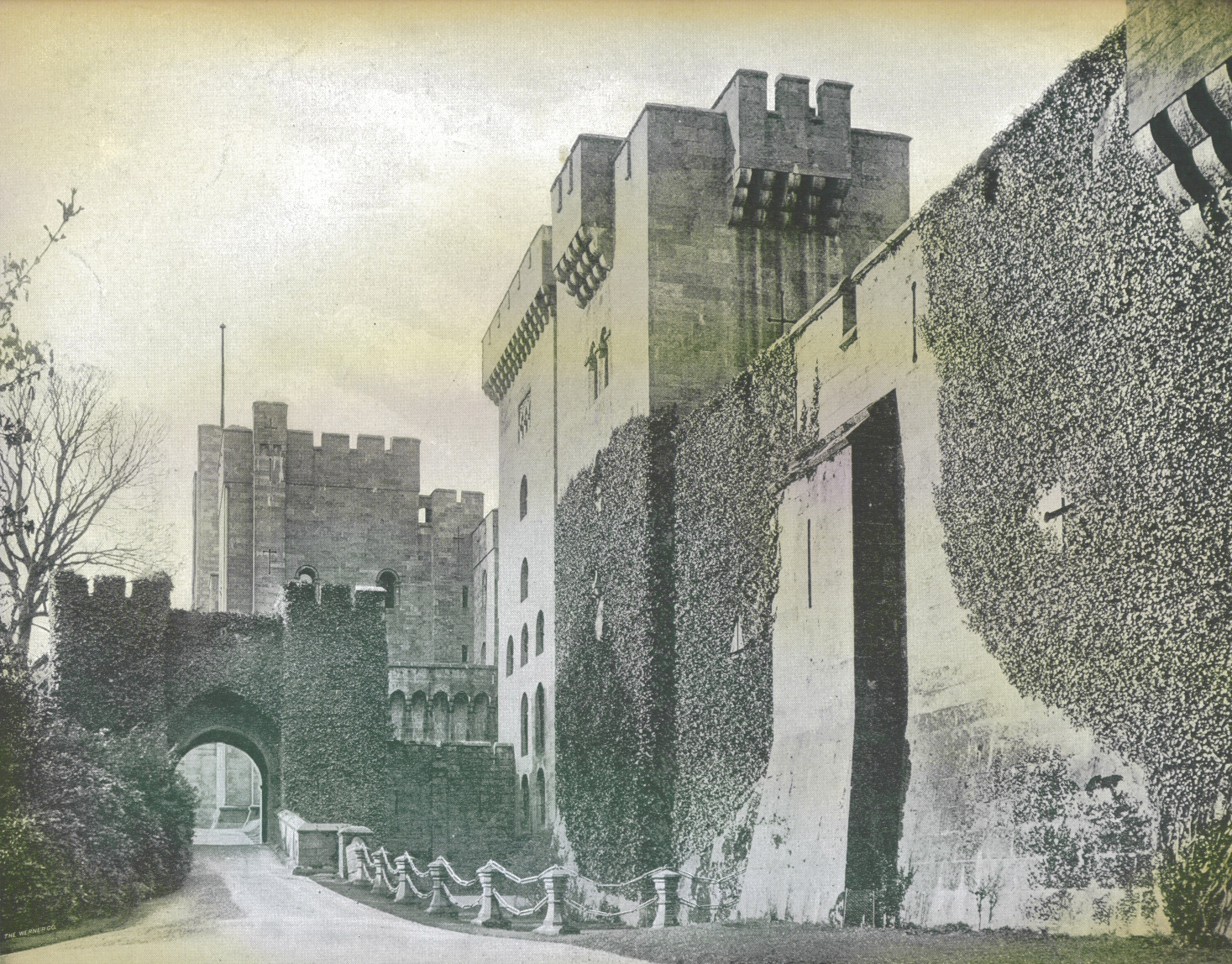
The late Victorians clearly thought that ivy was part of the romantic attraction of a house. Almost every site photographed for  Beautiful Britain has it clambering over the house and garden walls. And in some cases clambering is an understatement!

Scan 5

Hawarden Castle, from Beautiful Britain, 1894

Ruskin argued that  ‘It is impossible, as impossible as to raise the dead, to restore anything that has ever been great or beautiful in architecture’.  He and later William Morris campaigned vehemently against the cult of heavy-handed restoration. Instead they favoured steady maintenance and judicious repair which would enable the best of both worlds.

Unfortunately  The Office of Works had to employ drastic treatment if it was to prevent the virtual loss of most of the sites they took into their care. Settings and atmosphere definitely took second place. It took a long time for that attitude to alter but alter it has, for conservation reasons as much as romantic notions of what sites should look like.

In 2009 English Heritage published results of experiments on soft capping of walls entitled A better way of conserving ruins. These  ‘indicated that soft wall capping does play a useful role in the conservation of ruined monuments” but the report was  largely confined to the technical and practical implications and  “to better understand what effect it will have on the natural decay of monuments before philosophical and aesthetic judgements are made to determine whether or not it will be appropriate.”  The conclusions of the report suggest that at least a slight element of the  ‘romance’ of seeing ancient walls covered with vegetation might once again be allowed to creep in.

Given some of the historic mistakes that have been made in declaring a one-size fits all policy  this is probably both understandable and sensible. In a covering background essay  The Presentation of Ruins: A historical overview Jeremy Ashbee outlines much more lucidly than I have been able to do in these recent posts, the long debate about our many and varied attitudes to ruins.

Hailes Abbey, showing soft capping of some walls© Philip Halling & licensed for reuse under this Creative Commons Licence

Hailes Abbey, showing soft capping of some walls© Philip Halling & licensed for reuse under this Creative Commons Licence

In particular he cites the example of Hailes Abbey where ‘restoration’ work provoked much controversy and led James Lees-Milne of the National Trust  to comment “a wall of little architectural distinction has been completely rebuilt so that no vegetation will ever grow upon it again and it will henceforward always look artificial and self-conscious. It is the worst example I have yet seen of wanton sacrifice of aesthetic considerations to mere archaeological pedantry….‟

In 2010 English Heritage publihsed the results of  a research symposium Ivy on Walls which again detailed the results of case study experiments they had carried out.  Again there was a background essay by Jeremy Ashbee  – Ivy and the Presentation of Ancient Monuments -which sums up the generally unremitting hostility towards ivy in written commentaries but the rather more positive visual message it gives.

However using Netley Abbey as an example he shows how romantic writers like William Gilpin were alerting travellers to the picturesque quality of ruins and evoking the spirit of ‘melancholy contemplation.

After outlining how professional conservationists attitudes have changed are still changing he stresses it is ‘the ongoing survival of the monument’ that is critical and that might mean removing ivy if it ‘accelerate the process of deterioration’ – but before you think that means reason is still winning hands down he adds….but ‘whether we keep it off is another question’


← Back

Thank you for your response. ✨

Posted in Uncategorized | Tagged , , , , , , , , | Leave a comment

BEAUTIFUL BRITAIN: Romance and Reason 2…..

In my last post I was waxing lyrical about the way that history and ruins in particular were romanticized  in the 19thc, and how gradually Ruskin’s idea of trusteeship of  the ‘national heritage’ were adapted and adopted.  This came at a price.

The garden on top of the keep, Farnham Castle, Surrey in c.1890

The garden on top of the keep, Farnham Castle, Surrey from Beautiful Britain, 1894

I started with a photo of a late Victorian garden on the keep of Farnham Castle. It looks moodily if somewhat fussily romantic, almost sentimental and chocolate-boxy.  The foreground shows a formal plan around a font and a lot of lush planting while the background appears wilder, the tumbledown buildings and walls serving as a framework for trees and overgrown creepers especially ivy.

1904

The same garden on a postcard printed in 1904.

The garden was popular enough to be made into a postcard ten years later in 1904, and was presumably the pride of  at least one bishop’s wife because the castle, set in its 320 acre deer park,  was the country seat of the Bishops of Winchester. By 1930 the castle was  surplus to requirements and  the park was sold to the town council to save it from building development and shortly afterwards the ruined keep was transferred to the Office of Works and Public Buildings.

Thurley

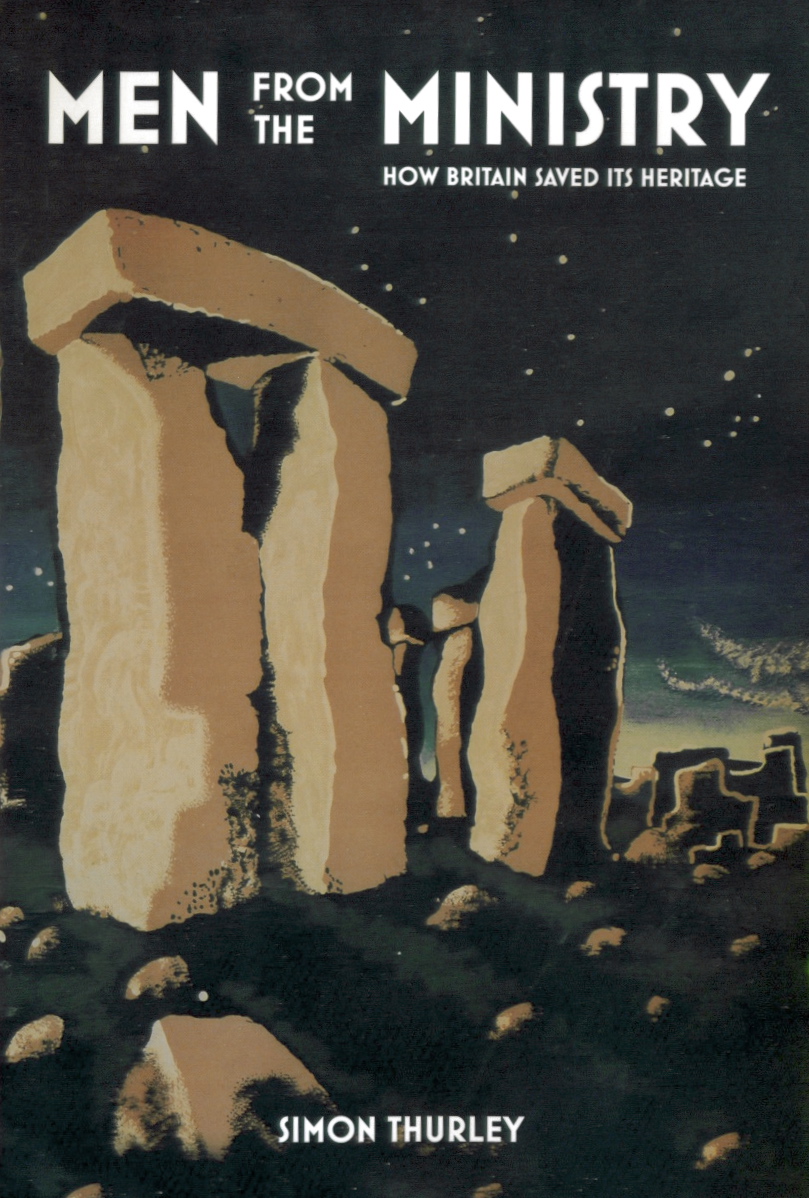
Men from the Ministry, by Simon Thurley, [Yale University Press, 2013]

As Simon Thurley points out in Men from the Ministry it became one of the 273 in their care compared with just 44 twenty years earlier.  The garden was probably grubbed up at that point as, like most of the other monuments,  the castle quickly became subject to that well-intentioned but rather ruthless simple landscaping that used to typify almost all ancient monuments.

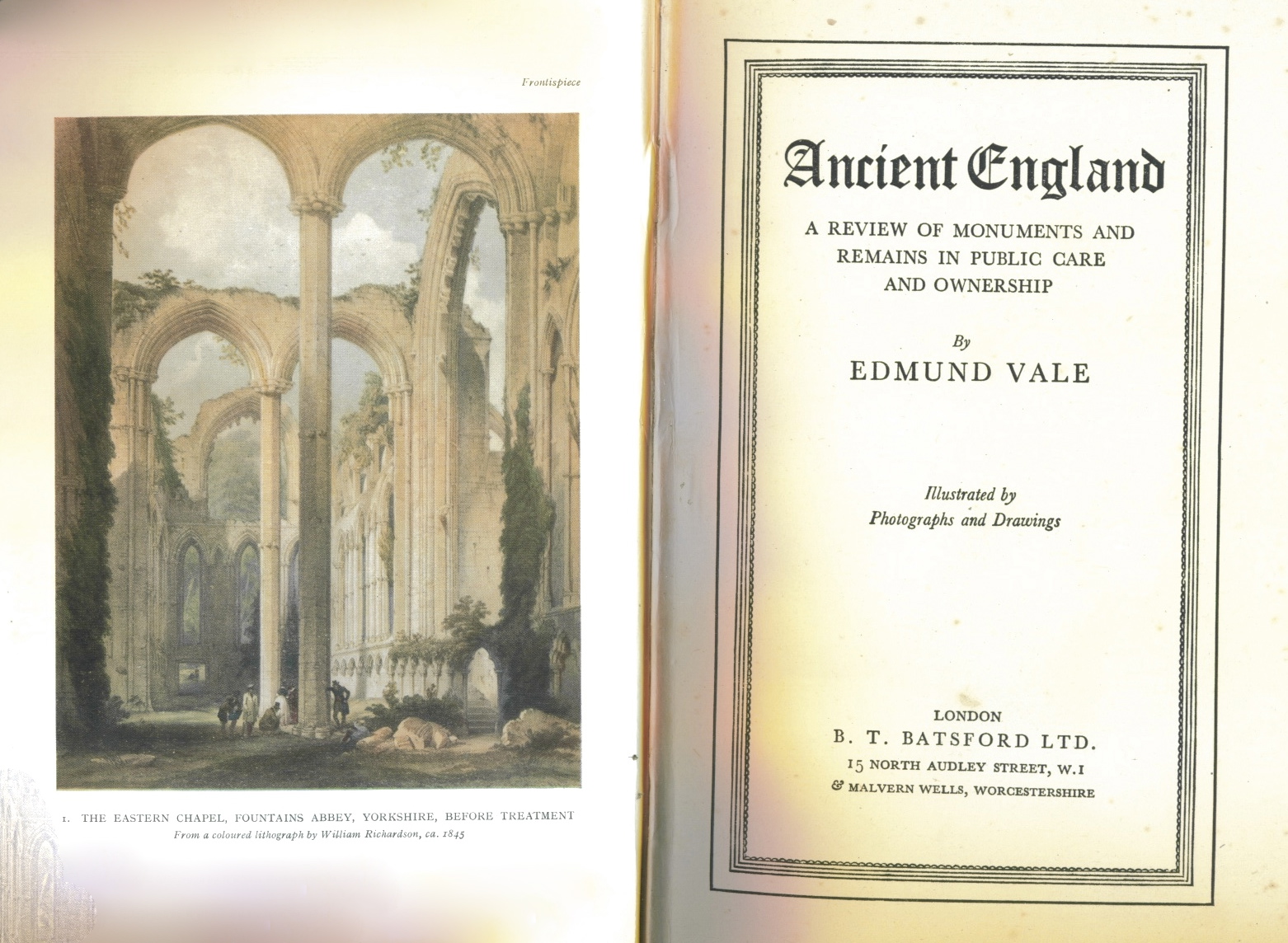
Edmund Vale, a contemporary author and commentator, wrote in Ancient England in 1941 that there were two kinds of ruins: ‘the Victorians preferred one kind and ourselves the other’. Theirs ‘moves slowly but surely from somethingness to nothingness, and may therefore be called a progressive ruin’.

Title Page of Ancient England, by Edmund Vale, 1941

Title Page of Ancient England, by Edmund Vale, 1941

For them the ‘good of a ruin’ was one that rouses the imagination of the beholder, either constructively or creatively. And a roused imagination is a fine thing …   They did not expect to get ‘exact knowledge but atmosphere and improvement…and to be put in touch with the romance of the situation. ‘   But he added ‘the progressive ruin is rapidly becoming a thing of the past.’ [pp.1-2].

Although the blame for this – if blame it is – is normally put on the historians and archaeologists who worked at the Office[later Ministry] of Works there were other earlier examples of  ‘tidying up’ and very simple landscaping. At Newark Castle, for example, the grounds were laid out in the 1880s to designs by H E Milner, as free public pleasure grounds as a memorial of Queen Victoria’s  Jubilee.

Newark Castle Gardens, from Beautiful Britain, 1894

Newark Castle Gardens, from Beautiful Britain, 1894

But after the Ancient Monuments Act of 1913  there is no doubt that a rigid housestyle was adopted. Since the Office of Works was only responsible for ancient monuments and not country houses, gardens or landscapes, they approached preservation, protection and presentation of a historic site in an entirely different way.   Removing the ivy and other vegetation, clearing the fallen stones,  and uncovering the structure and layout made the site easier to understand, and Thurley [p.135] suggests they felt ‘the loss to the imagination would be repaid by the gain to the intellect’. Edmund Vale was less optimistic: ‘It is too soon to say what we ourselves believe in when we visit our preserved ruins. The cult is a new one and its priesthood is puritanically inclined, so far as mysteries are concerned’ [p.2].

Penrhyn

Penrhyn Castle, from Beautiful Britain, 1894

Vale was not the only one concerned. The ministry’s approach also  horrified James Lees-Milne of the National Trust who talked of ‘the wanton sacrifice of aesthetic considerations to mere archaeological pedantry.’ Lees-Milne and the Trust set themselves up as champions of the more popular  romantic approach, in opposition to what they saw as the over-academic purists.

1459984_91c4243c

Penrhyn Castle © Robin Drayton & licensed for reuse under Creative Commons Licence

A good example of this can be seen in their approach to Penrhyn Castle near Bangor, pictured here in the 1890s and today.

Nonetheless the new aesthetic dominated state run properties until at least the 1980s.  You could tell the difference almost immediately between a National Trust property and one in the care of the ministry.

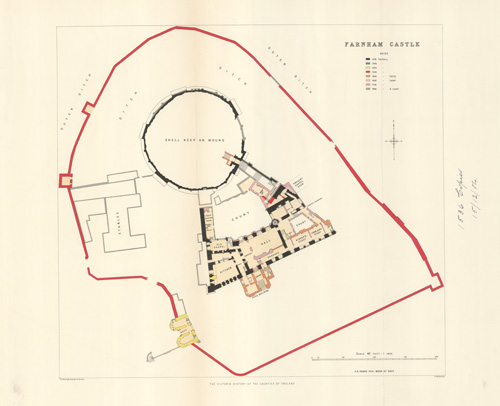
farnham_castle_key

Key to the phases of building plan published by Bartholomews in 1904 © Bartholmew Archive, National Library of Scotland.

farnham_castle

Phases of building plan for Farnham Castle, published by Bartholomews in 1904 © Bartholmew Archive, National Library of Scotland.

In fact, as Simon Thurley points out [p.140] it wasn’t merely archaeological tidying that was taking place. ‘The work may have been methodical but it was not archaeological… it was thoroughgoing  clearance.’ It led to the introduction of phased plans, outlining the development of the site but in the process led to destruction of most post-mediaeval additions and alterations,which were not considered particularly important.

2027481_ec9a272b

The protection for the mediaeval well at Farnham Castle © Richard Croft & licensed for reuse under Creative Commons Licence

At Farnham this meant that to preserve the castle’s structure and reveal its layout accurately, the garden had to go. In its place the preserved and somewhat sterile fabric were surrounded by the well-known manicured lawns and gravel paths.

This robbed the place of most of its aesthetic appeal and what little atmosphere was left after the initial clearance and consolidation work was further depleted by a shed put up over the excavated mediaeval well. Hardly a visually appealing swap for a ‘gothic’ ornament set in formal flower beds.

Yet as Rosemary Hill pointed out in her review of Thurley’s book in the Daily Telegraph: ‘It is the paradox of conservation that to preserve a structure the last thing you can do is leave it alone.’ There has to be a compromise between romance and reason. Had nothing been done Vale comments sadly, “only this and perhaps the next generation could have gone on enjoying these fruits of decay. The third generation would have had no ruined mediaeval buildings to look at, with or without ivy.’

to be continued….

For more information see:

http://www.parksandgardens.org/places-and-people/site/4292      Farnham Park

http://www.parksandgardens.org/places-and-people/site/2393       Newark Castle

http://www.parksandgardens.org/places-and-people/site/2603       Penrhyn Castle

← Back

Thank you for your response. ✨

Posted in Uncategorized | Tagged , , , , , , , , , , , , , , | 1 Comment