Copped Hall

fire

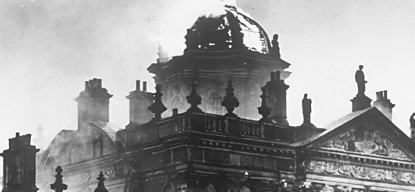
The Great Fire at Castle Howard, 9th November 1940 © Castle Howard

I love decay. Houses and gardens are not necessarily meant to last forever – whatever their creators might think – and every so often decisions have to be made about whether to preserve,  restore, recreate or perhaps just to allow to slide gently into oblivion.   Sometimes of course the reason for ruin is sudden and unexpected.  Fire has probably caused as much damage to our heritage as greed or neglect.  A gutted house can evoke many emotions and reactions – and raises many questions. Sometimes as at Castle Howard or Uppark, what is at stake is so important historically or architecturally that it is difficult not to begin rebuilding immediately.

10537_700

Witley Court © English Heritage

Elsewhere the destruction is too complete, and the money, need or concern is lacking. That’s not always a disaster: Witley Court in Worcestershire is now an elegant and evocative ruin. But in what one might call ‘lesser’ houses the choice is not so obvious.

DSCF9865

Copped Hall in 2004 © David Marsh

One such house is Copped Hall, a mid-Georgian house, in Essex.  The Palladian mansion was built between 1752 and 1758 for John Conyers as a replacement for an earlier Elizabethan house. It was later ‘improved’ by James Wyatt and Capability Brown probably helped redesign the gardens.   Bought in 1867 by a railway magnate he and his family extended the house several times and in 1887  commissioned Charles Eamer Kempe, better known as a designer of stained glass, to build a great conservatory, and make an extensive new  garden  to the west of the mansion, with temples, grand flights of steps, a parterre, gates, fountains and statuary.

DSCF9929

The ruins of Charles Eamer Kempe’s Italianate garden © David Marsh

In its heyday the gardens required no less than 31 gardeners to look after them.  Sadly in 1917 there was a massive fire which burned out the main 18thc block, and although the gardens continued to be maintained the house was never rebuilt.  The estate was sold off in 1952, and whatever remained of value remained inside the ruin and the gardens was removed and sold.

gates_2

© Copped Hall Trust

The original entry gates and railings are thought to have ended up in America – the gates themselves and the gateposts have already turned up in Washington – but there is no trace of the obelisks or railings. If you fancy yourself as an amateur sleuth, then a reward of $1,000 is on offer for anyone who can track down them down.

The splendid conservatory or Wintergarden was dynamited as late 1960. As a final blow the M25 was driven through a corner of the grounds, although luckily not so close as to be over-intrusive.  Nevertheless total demolition, probably followed by housing development seemed the likely outcome.

Yet that was not to be. From 1986-1995 a campaign was successfully fought by a committee comprised of representatives of local conservation societies against repeated large-scale aggressive development proposals for the mansion and parkland. The first success came in  1992 when the parkland was bought by the Conservators of Epping Forest (part of the Corporation of London). Three years later, in 1995, the vandalised and overgrown  mansion, outbuildings and gardens were acquired by the Copped Hall Trust, and in 1999 they were also able to acquire  the 4 acre kitchen garden.
DSCF9897

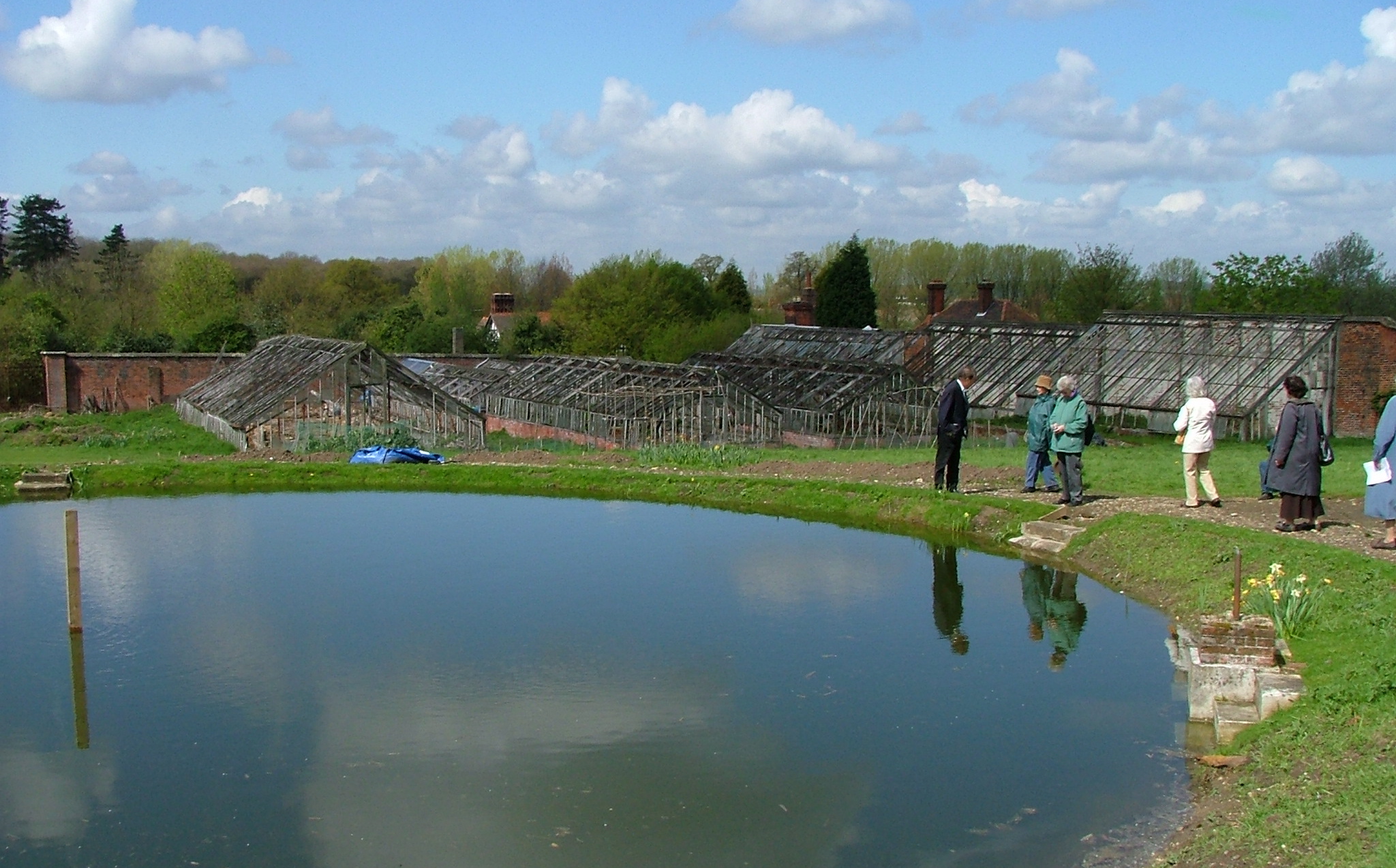
The kitchen garden in 2004 © David Marsh

The task facing them must have been daunting, to put it mildly.  But with the aid of a large Friends group the Trust has made enormous progress towards it aim of careful restoration of  the buildings and gardens and putting them  to educational, cultural  and community use.

DSCF9935

The mansion in 2004 © David Marsh

Essential structural repairs and work to the roof and flooring have been followed by restoration of the stables and racquets court and one of the glasshouses in the now once again very productive kitchen garden.  Much of the garden has been cleared of invasive vegetation, replacement trees have been planted and the lawns re-seeded.

DSCF9902

The unrestored kitchen garden 2004 © David Marsh

There are regular opportunities to visit the gardens or take a guided walk around the mansion and gardens and see progress for yourself.  And of course, when you’ve finished almost as good, you can enjoy some tea and homemade cake and contemplate the hard work that the Trust and its volunteers have put in. It might even convince you to sign up to give Copped Hall a hand yourself!

Further information about Copped Hall can be found at

http://www.coppedhalltrust.org.uk

and http://www.parksandgardens.org/places-and-people/site/920

DSCF9932

architectural fragments © David Marsh

← Back

Thank you for your response. ✨

DSCF9904

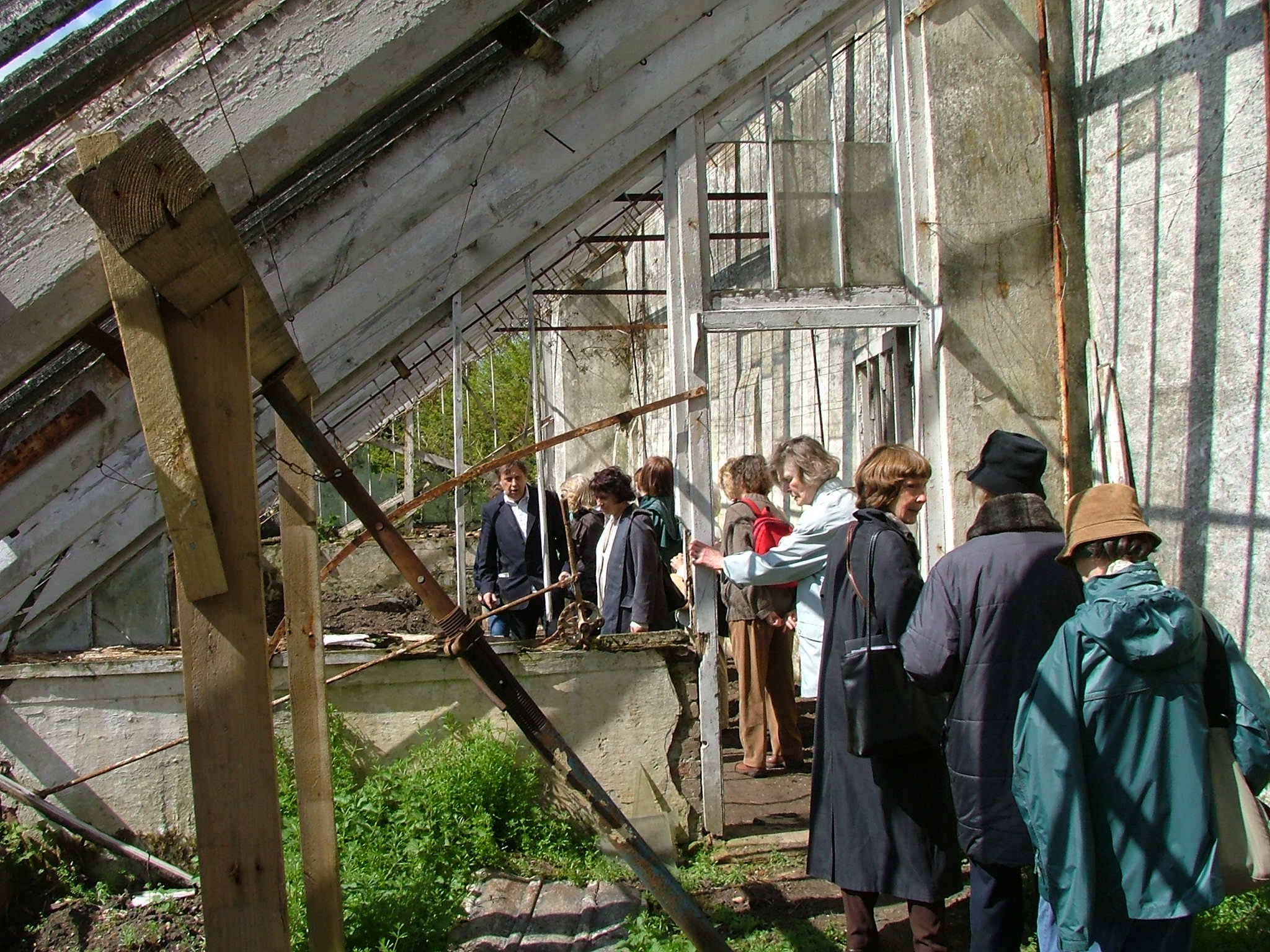
A tour of one of the unrestored glasshouses in 2004 © David Marsh
Posted in Uncategorized | Tagged , , , , , , , , , , , , , , , | 1 Comment

Croome Park

This gallery contains 9 photos.

Winter walks seem to be one of the main topics in the garden-related press at the moment – although most of them will have been written before the weather prevented most of us from going anywhere!  The Daily Telegraph, for … Continue reading

More Galleries | Tagged , , , , , , , , | Leave a comment

The First Post: Stowe

When we started planning this blog we thought what better way to start than by suggesting a winter walk through one of our great historic gardens and landscapes.  Unfortunately the weather probably stopped most of us being able to do that over the last few days but don’t give up on the idea because as soon as the rain stops there’ll be plenty of chances to get outside and enjoy the wintery weather.  It may be cold but winter does have its advantages. One is that it reveals the framework of gardens and the structure of landscapes more clearly than when they are lush and leafy in the summer. This can often help you understand the changes and alterations that have taken place over time, and can make the links & connections between the various parts of the site more obvious. Another is that the colours and contrasts are much stronger – which is great even if you’re not a photographer.

Image

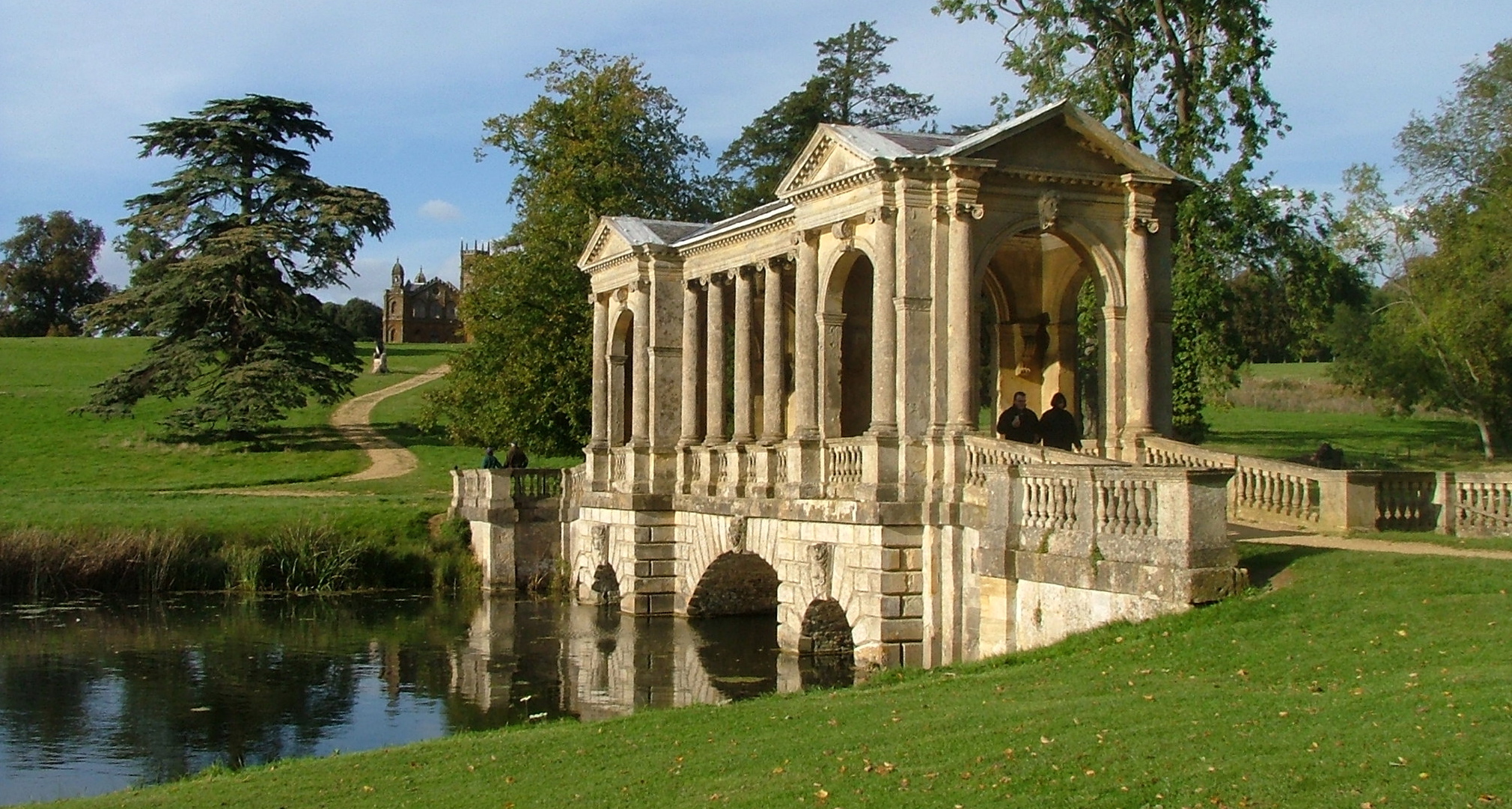
The Palladian Bridge and Gothic Temple,  Dec 2013 © David Marsh

One garden I was going to suggest for that walk was Stowe in Buckinghamshire.  I’d gone there just a week before Christmas when it was bright and clear, to see the changes that the National Trust have been making recently.  Stowe is an iconic landscape and has a fascinating but complex history.  As you’ll see from our database Sir Richard Temple laid the foundations of the current house in the mid-17thc and from 1668 started improvement works on the garden, but it was his son Viscount Cobham who was responsible for much of what we see today.  In 1711 he completely redesigned his father’s garden and instead laid out a vast and elaborate parterre.  Over the next few decades he called in a succession of leading landscape designers and architects to help him lay out one of the most impressive gardens in the country. Charles Bridgeman was responsible for creating long axial vistas, and woodland walks, for the ha-ha that still forms much of the boundary, and for the Octagon Lake. John Vanbrugh added pavilions and James Gibbs more temples and the Palladian bridge.  More famously William Kent “saw that all Nature was a garden” and created the Elysian Fields with its stunning collection of garden buildings in a naturalistic setting.   Apart from their intrinsic appeal they also reveal a lot about Lord Cobham’s politics [and if you wonder how that’s possible then see the links at the end of this post].  And finally the 25 year old Capability Brown was appointed head gardener in 1741. He laid out the Grecian Valley in what was to become his characteristic style: clumps and belts of trees, large expanses of short grass and serpentine curves. He also began altering the work of his predecessors, notably “naturalizing” Bridgeman’s lake.  Incidentally it will be the tercentenary of Brown’s birth in 2016 and Stowe is a good place to start discovering perhaps the best-known English garden designer of all time.  For more about his career and the other gardens he designed, take a look at  http://www.capabilitybrown.org/

DSCF8092

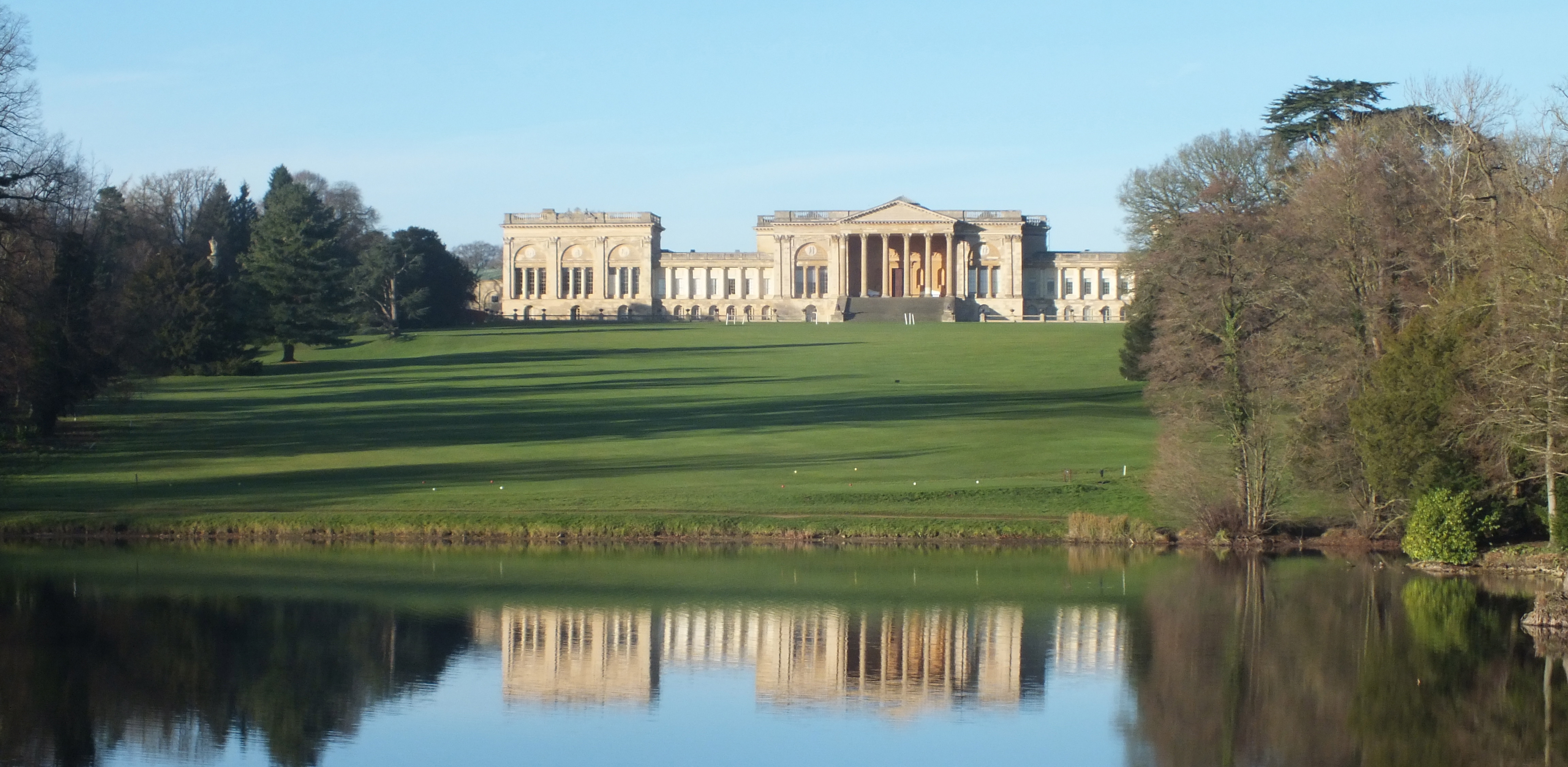
The House across the Octagon Lake, Dec 2013 © David Marsh

But nothing stays the same for ever, especially in a garden. Not even in a garden as grand as Stowe.  No sooner had Cobham died in 1749 than the new owner, his nephew Earl Grenville, began a series of major alterations, softening the formal lines, classicizing buildings and turning grand avenues into clumps of trees.

DSCF1739

The Temple of Concord and Victory, Dec 2013 © David Marsh

Later owners opted for a grander style once again, building new entrance lodges and laying out exceptionally long approach avenues that cut across the entire estate.  Although today this is somewhat marred by the paraphernalia of a gold course, you still get a sense the scale and grandeur of the original conception.

DSCF8173

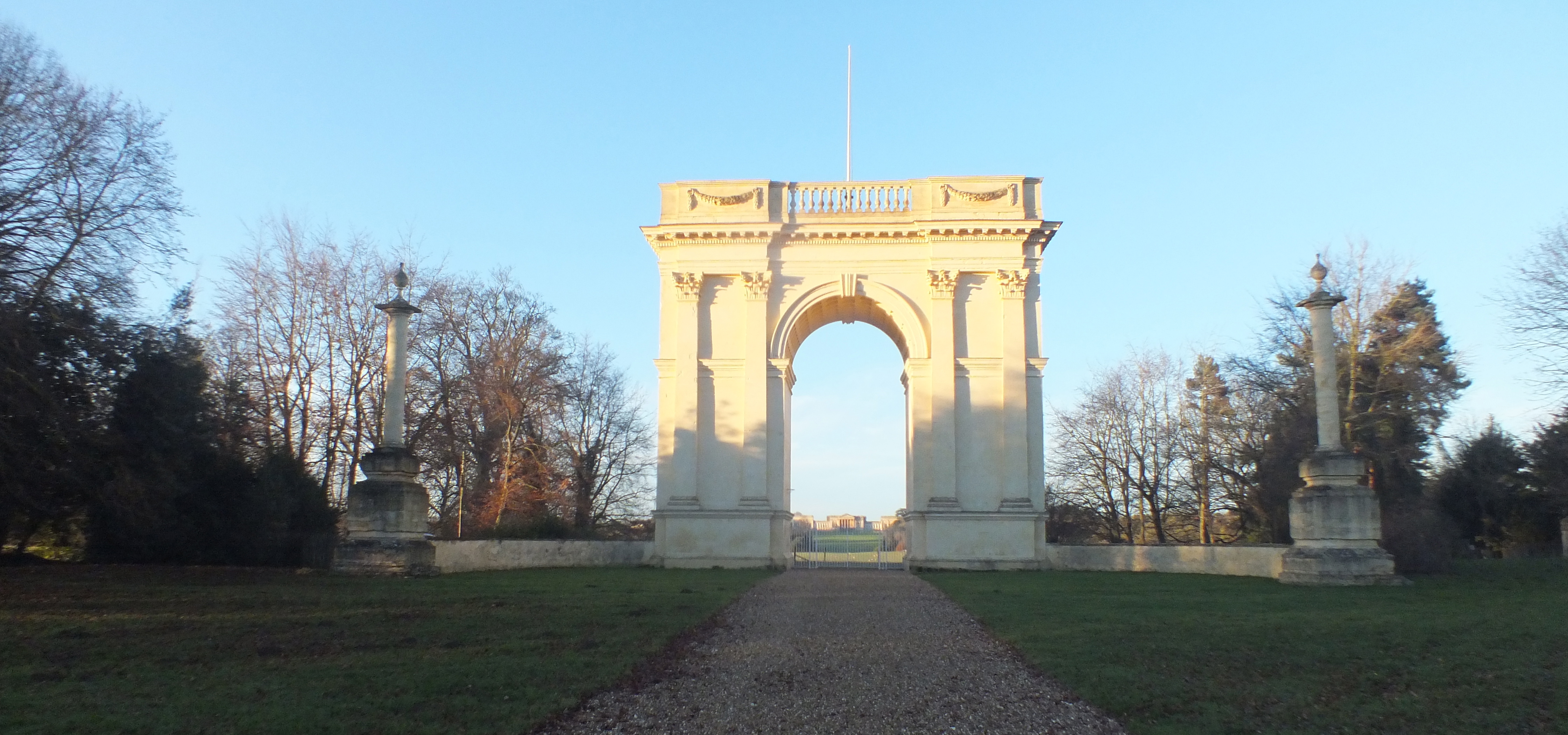
The house seen through the Corinthian Arch, Dec 2013 © David Marsh

DSCF8121

View from the house back to the Corinthian Arch, Dec 2013 © David Marsh

Of course all this cost money and the family began to run out, finally selling up in 1921 when the estate was sold and became a public school. Some restoration work was undertaken during their tenure of the garden, before the National Trust acquired most of the garden and much of the park in 1989 and embarked on a long-term comprehensive garden restoration scheme.

DSCF8170

The Gothic Temple and Lord Cobham’s Monument, Dec 2013 © David Marsh

Stowe is a great example of how successive owners and designers leave their mark on the land, but equally how ephemeral that mark can be.  A walk around the estate now shows layer after layer of history. The new entrance via the former New Inn, crosses Bridgeman’s ha-ha, passes by garden buildings adapted to new uses, gives a view of the house through the branches of trees and across undulating parkland and then reveals new eye-catchers at almost every turn. But it is not the individual buildings themselves, marvellous though they are, that are the main attraction of Stowe. As Patrick Taylor says  it is “the large-scale animation of the landscape that is the most thrilling and memorable quality of Stowe. Some very large gardens, often designed to proclaim the importance of the owner, can crush the spirit. Stowe has the opposite effect: it induces a feeling a of delighted exhilaration.” [The Gardens of Britain and Ireland, London: Dorling Kindersley, 2003, p.108]

DSCF8112

The statue of Venus in The Rotunda, Dec 2013 © David Marsh

In short Stowe is much more than a living document of English garden history at its best it is also a magical and enjoyable place just to be.  So, ignore the cold and the wet, go and see for yourselves….and by the way there’s a very nice cafe at the new entrance to warm up & reward yourself in afterwards!

DSCF8103

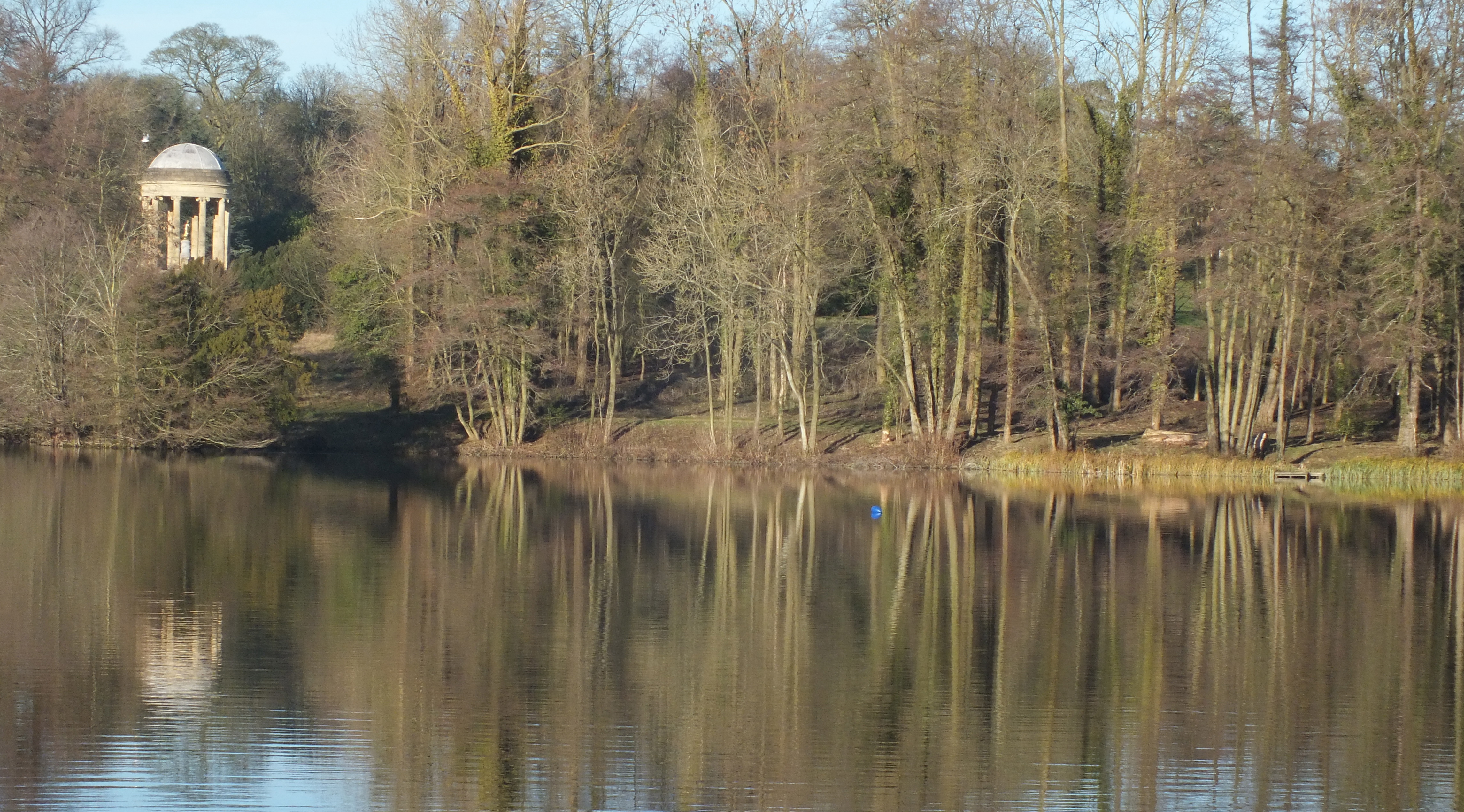
The Rotunda seen across Eleven Acre Lake, Dec 2013 © David Marsh

Here are some links and suggestions for further reading if you’d like to know more about Stowe and its history.

For opening times& other visitor information:  http://www.nationaltrust.org.uk/stowe/

For a detailed history & descriptive guide to the gardens and its monuments: http://faculty.bsc.edu/jtatter/summary.html    and http://en.wikipedia.org/wiki/Stowe_House

Selected further reading:

Michael Bevington, Stowe: The People and the Place, (National Trust, 2011)

Michael Bevington, Stowe: the bibliography: the landscape garden, park, house, estate and school, (Leeds: New Arcadian Press, 2004)

Patrick Eyres (editor), How pleasing are thy temples now?: The political temples of Stowe, New Arcadian Journal, 1997

G.B.Clarke (editor), The Description of Lord Cobham’s gardens at Stowe (1700-1750), (Aylesbury: Bucks Record Society 1990)

Timothy Mowl, Gentlemen & Players: Gardeners of the English Landscape, (Stroud: Sutton, 2000)

Steffie Shields, ‘Mr Engineer Brown’: Lancelot Brown’s Early Work at Grimsthorpe castle and Stowe, Garden History, Vol.34 no.2 (Winter 2006), pp.174-191

DSCF8163 - Version 2

Detail of the Palladian Bridge, Dec 2013 © David Marsh

David Marsh.

31st December 2013.

We’d welcome your comments and feedback on our blog.  Please note that all views expressed are the responsibility of the author and not Parks and Gardens UK.

← Back

Thank you for your response. ✨

Posted in Uncategorized | Tagged , , , , , , , , , , , | Leave a comment