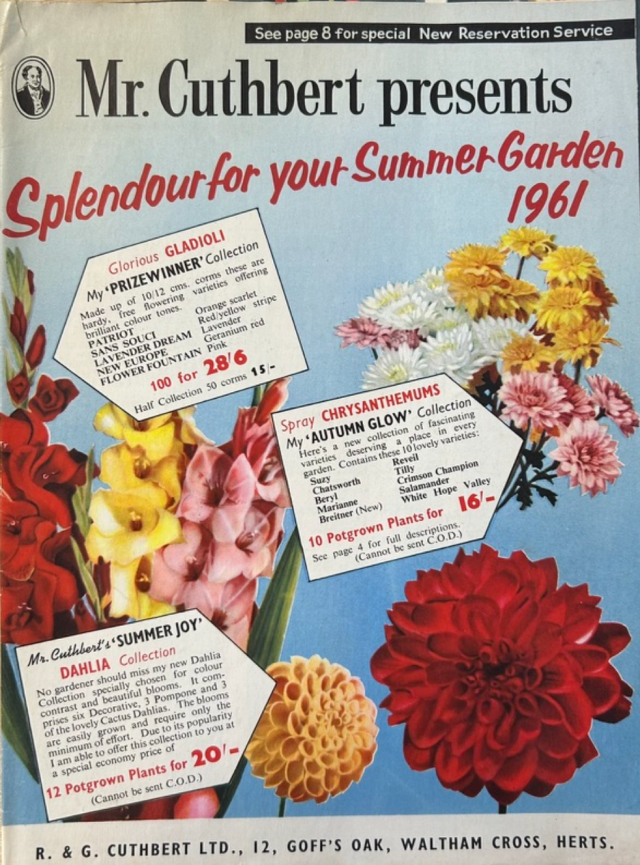
Mr Cuthbert: “The Nation’s Gardener since 1797”

Ive always been surprised at how many great horticultural businesses just disappear  almost without trace, I’ve already looked at the stories of  two which did – Carters and Ryder Seeds – so a few moths ago thought I’d research Cuthbert’s  who I remembered  from my childhood.    I thought I knew quite a lot but in fact it turns out I  didn’t – and nor did Mr Google – and what information there was  often turned out to be of dubious quality!

The story starts out simply but then quickly became very confusing so it has taken me many months to get it straight, but the process helped make me realise is how important it is to check your sources properly and cite them when you write anything…and luckily there are lots of nice pictures!

Continue reading

Posted in Uncategorized | Leave a comment

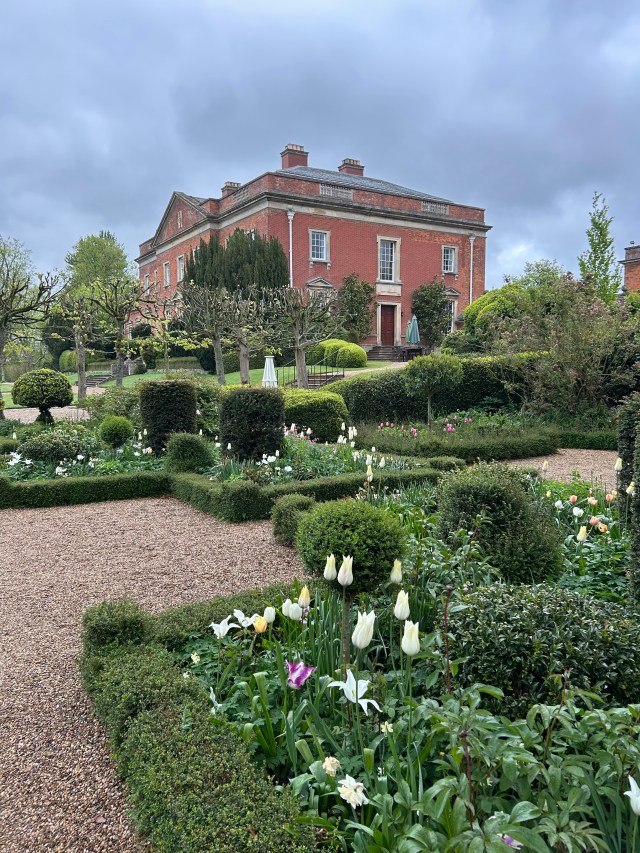
Nancy & Norah at Kelmarsh

If you’d like to see  a house with “a perfect, extremely reticent design… done in an impeccable taste” and  with a garden to match can I recommend Kelmarsh Hall in Northamptonshire.
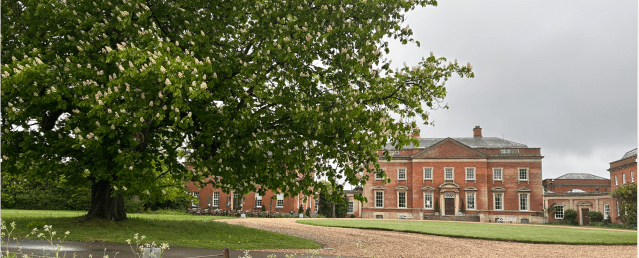
That opening quote came from Pevsner and when I first visited Kelmarsh over 25 years ago,  I could immediately see what he meant. The red-brick Palladian building  by James Gibbs had a wonderful “liveable” feel, while its gardens largely created by Nancy Lancaster, with help from Norah Lindsay and later added to by Geoffrey Jellicoe, although then sadly in need of some tlc  clearly had a glorious past and  future potential.

The estate had just passed into the hands of a charitable trust after the death of the last owner and we were taken around by the late Keith Goodway, who was a trustee, met the head gardener and heard about their exciting plans for its future.  After the tour I could see why  they were both so enthusiastic, but would it all actually happen?

I finally managed to return a couple of weeks ago and yes it has – and more!

Continue reading

Posted in Uncategorized | 1 Comment

Papendiek & Hulmandell: Kew in 1820

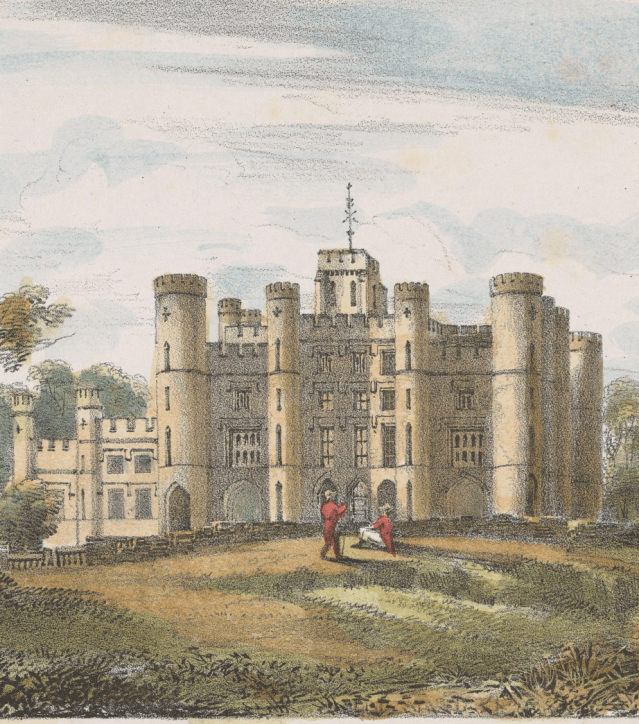
The “New Palace”

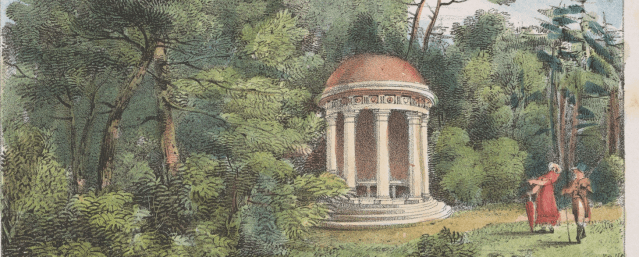
Papendieck and Hullmandel might sound like an obscure German plant nursery  or perhaps a Victorian music hall double act but they were actually the people behind a collection of colour images of the royal gardens at Kew  in the final days of Georgian England.  While no-one who has visited Kew can have missed the pagoda or failed to see any of the remaining classical buildings dotted around the gardens, they probably don’t realise how cluttered the place was  two hundred years ago.  Amongst many other things  littering the gardens were ten temples, several ruins, and a huge royal palace resembling a medieval fort, that cost a fortune, was never lived in and was demolished about 25 years later.

detail of The Temple of Pan

Continue reading

Posted in Uncategorized | Leave a comment

Prospect Cottage

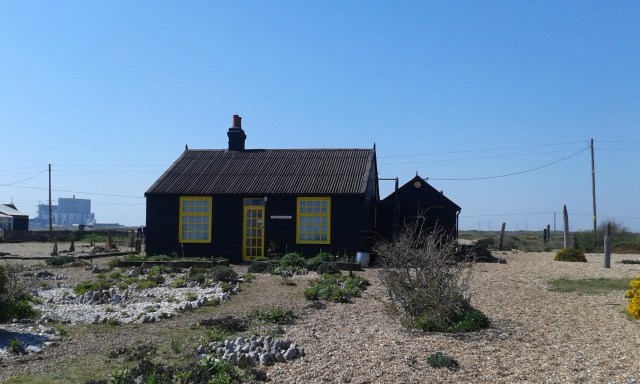
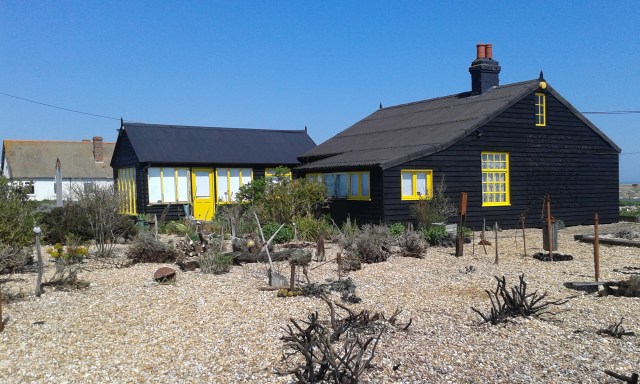
Prospect Cottage stands on the spit of shingle that is Dungeness on the Kent coast, the most south easterly corner of England, sometimes known as the fifth quarter of the globe, a phrase which evocatively describes the uniqueness of this windswept, desolate landscape. The beach between the cottage and sea is littered with long abandoned fishing boats and huts, the flotsam and jetsam which has found its way into every corner of the garden. The shingle stretches in every direction as far as you can see and overlooking it all is the looming spectre of Dungeness nuclear power station.

And yet, in this most unlikely of locations, around this black timber cottage with its cheerful yellow frames, a garden has been made. An extraordinary garden, created by one man, against all the odds – this is Derek Jarman’s garden at Prospect Cottage.

I’m delighted to welcome my first guest contributor to the blog. My friend Jill Francis, well known for her work on the history of the early modern garden may seem to have changed tack with this lovely piece on Derek Jarman’s garden, but as I was surprised to see maybe she hasn’t really…

Continue reading

Posted in Uncategorized | Leave a comment

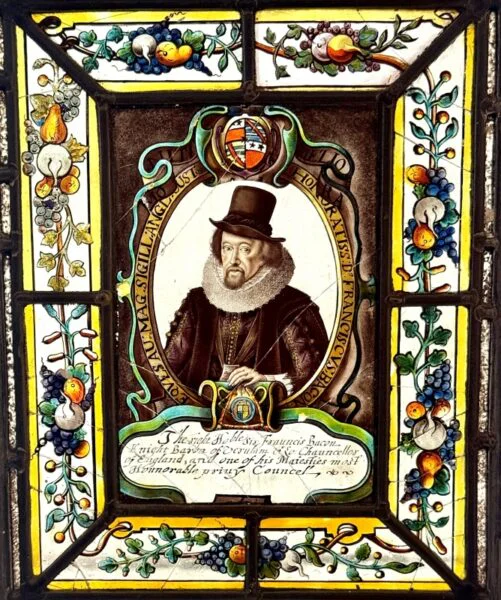
Francis Bacon and His Later Gardens

Last week’s post looked at the gardens created by Sir Francis Bacon before he managed to climb the greasy pole of political advancement. This week I’m going to look at the gardens, theoretical and real, that he designed once he’d reached the top.

These include the imaginary garden setting he planned for a magnificent court masque, and the water gardens he created at his Gorhambury estate near St Albans.

Of course greasy poles are notoriously slippery and it was not long before his rapid fall and dramatic disgrace  sent him back to Gorhambury where he spent the last five years of his life writing, including  what have been described as the “greatest philosophical works of the English Renaissance., and of course his famous Essay “On Gardens”.

Continue reading

Posted in Uncategorized | 1 Comment